
Key points:
- Growing up in a traditionalist church but now on staff at a reconciling congregation, Kendra Weddle feels there is room at the table for everyone.
- Our Christology encourages us to trust that God is with us in resisting forms of oppression.
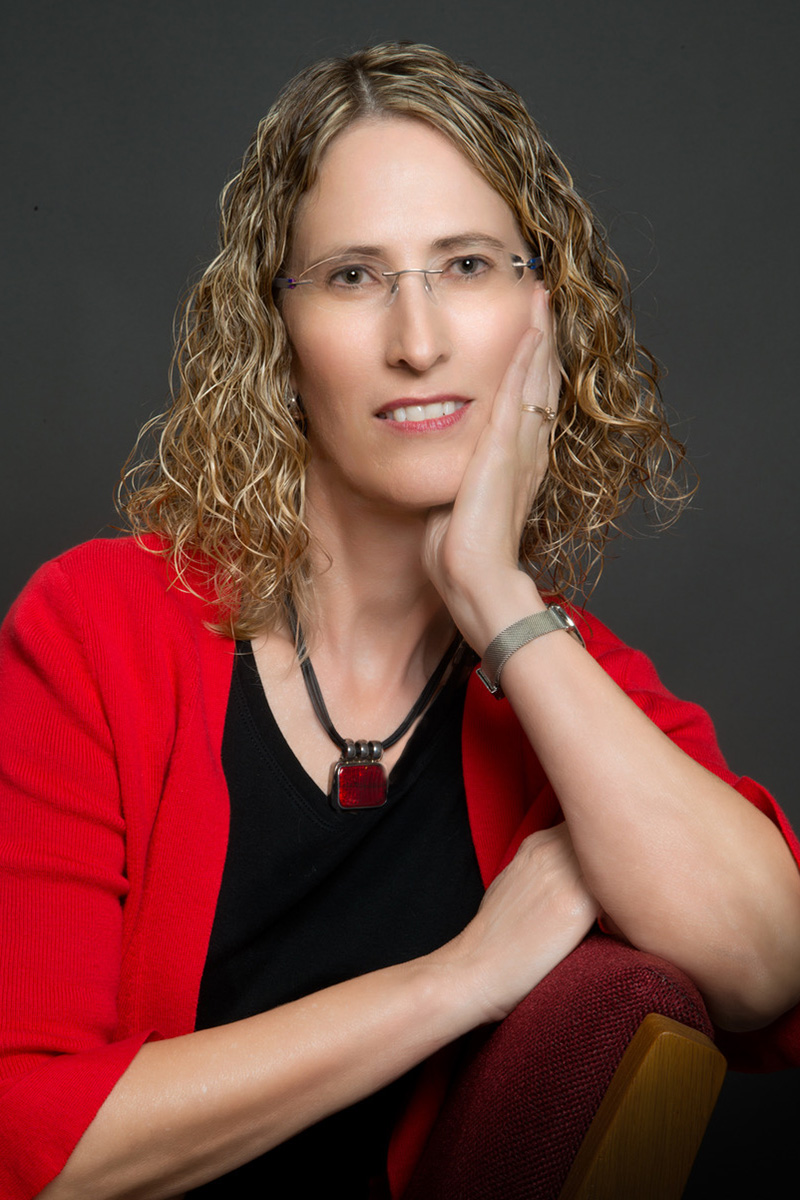
Photo courtesy of the author.
Commentaries
I grew up feasting on Sunday evening pot luck dinners and singing “We are Climbing Jacob’s Ladder.” It was Ruth Andrews’ favorite, and she never grew weary of its seemingly endless verses.
I recall skipping down the stairs to the church basement, catching a whiff of its dampness as I entered the dimly lit space, its darkness offset by the bright display of love in the friendly faces of Sunday school teachers.
Sitting in wooden pews in the sanctuary, I studied criss-crossing wrinkles etched on the necks of those seated in front of me. That I remember this detail probably reveals my boredom during an especially long or uninspiring sermon. But, I also imagine that learning the markings of age and bearing witness to it in the context of community, was a lesson all its own.
I remember Reverend Winn winsomely explaining how we needed to be like “mashed potato” Christians. He wanted us to see that separately, on their own, potatoes and salt and butter aren’t especially delicious, maybe even exceptionally bland. But taken together, they complement each other and can make something altogether different — something quite delectable.
Upstairs, in the large room overlooking the sanctuary, the high school Sunday school class met. It was the place where, if you were early enough, you could sit on one of the broken-in sofas. There we’d talk not only about faith but also school and sports and our futures. During the summer break, we often had a college student as our teacher, giving us a front-row seat to life beyond Minneola, Kansas.
When I was 16, it was in this church during a Sunday morning that I felt my own heart strangely warmed. I certainly didn’t know this was how John Wesley described his calling, nor did I know then what my calling might mean for me. Over 30 years later, by way of university teaching and now as the scholar-in-residence at my local church, I have understood my vocation as a response to this life-altering moment.
Subscribe to our
e-newsletter
This church of my calling, however, recently voted to disaffiliate. Even though it has been over 30 years since I was a part of this United Methodist congregation, I can’t help but feel immensely sad.
At the other end of the spectrum, I’ve made my home in one of the North Texas Conference’s reconciling churches. Years of biblical and theological training, witnessing the vibrant faith of people whose sexual orientations differ from mine, sitting with students as they poured out their pain — a result of the church’s failure to see their struggle — have led me away from my evangelical past to a much more expansive present.
Being formed and fed by two communities that represent the full spectrum on LGBTQ+ understanding and inclusion, however, points to the vast potential we have to embrace our differences and support each other — trusting there is room at the table for everyone.
Those familiar with John Wesley’s writings know he did not expect people to agree, theologically or otherwise. And yet, here we are, on the precipice of a widening chasm — or as the Rev. Dr. William B. Lawrence recently wrote, “a splintering” — over just these kinds of differences.
I don’t for a second think that I have the answers to this perplexing problem. Solving the differences that have been simmering for quite some time will surely require astute insight beyond what I can offer.
This conflict is being brought into focus again as General Conference has been delayed until 2024, and as theological conservatives move toward disaffiliation. As Christians, in the midst of this uncertainty and pain, we have the benefit of finding in the gospels witness to how Jesus lived in tumultuous times. Our Christology encourages us to follow the way of Jesus, which is the path of sacrifice, of faithfully trusting that in resistance to forms of oppression, God is with us.
What would happen if we could meet at the intersection of personal and social transformation, the nexus that brings us face-to-face with our neighbors — especially our neighbors who are gay and/or transgender? Could we gather there and from that place see if our questions and positions shift? What could we learn if we took those difficult steps that de-center one particular (dominant, i.e. cisgender) view of sexuality and instead center those who surely feel this discord the most, those who have been marginalized?
In 1978, two friends, Letha Dawson Scanzoni and Virginia Ramey Mollenkott, wrote “Is the Homosexual My Neighbor?: A Positive Christian Response.” In it they conclude that, of course, there can be no lines drawn over who is one’s neighbor and who isn’t. Everyone is a child of God and a reflection of the image of God. Additionally, they show that the act of loving one’s neighbor requires getting to know someone to the point of realizing that one’s own well-being is wrapped up in the well-being of that neighbor. “…[T]here can be no boundaries,” they say, “no separation-by-classification, in this matter of love.”
My hope and prayer is that God will, indeed, help us to be the unified church, and to trust that God gives us the ability to see and to hear what our neighbors tell us.
Can you imagine a more compelling witness to our splintering world?
Weddle holds a doctorate in religion and is scholar-in-residence at Northaven Church in Dallas.
News contact: Joey Butler or Tim Tanton at (615) 742-5470 or [email protected]. To read more United Methodist news, subscribe to the free Daily or Friday (weekly) Digests.


