

Puntos Clave:
- A finales del año pasado, 32 personas participaron en una capacitación de evangelización en Antananarivo, preparándose para realizar labores en el extremo sur de Madagascar.
- Gracias a una subvención de 12.000 dólares otorgada por la Junta de Ministerios Globales de La Iglesia Metodista Unida, el equipo llevó a cabo campañas al aire libre y actividades de evangelización casa por casa, distribuyó Biblias y construyó un refugio para el culto en Andranovory.
- Andranovory, Ankilimidega, Marovahatse y Toliara se encuentran ahora entre los nuevos lugares donde La Iglesia Metodista Unida está echando raíces en el sur de Madagascar.
Una misión evangelizadora llevada a cabo en el extremo sur de Madagascar está abriendo un nuevo capítulo en el establecimiento de La Iglesia Metodista Unida en la isla. La misión respaldada por una subvención de 12.000 dólares de la Junta de Ministerios Globales de La Iglesia Metodista Unida (IMU), la iniciativa tuvo como objetivo proclamar el Evangelio en una región marcada por la pobreza, la sequía, la escasez de servicios básicos y una presencia cristiana limitada.
Hacia el final de la campaña de cuatro meses, las comunidades metodistas unidas habían comenzado a tomar forma en Andranovory, Ankilimidega, Marovahatse y Toliara, mientras que otro punto permanecía en etapas preliminares.
Para los/as líderes misioneros/as, este progreso forma parte de una historia más amplia, ya que la primera parroquia oficial de La IMU en Madagascar se inauguró en 2018 y desde entonces, la presencia metodista unida se ha expandido a nuevas áreas.
“Buscamos almas y queremos hacer discípulos/as para el Señor” dijo el Rev. Éric Kalumba, misionero de Ministerios Globales proveniente de Tanganica, Congo asignado como plantador de iglesias en Madagascar.
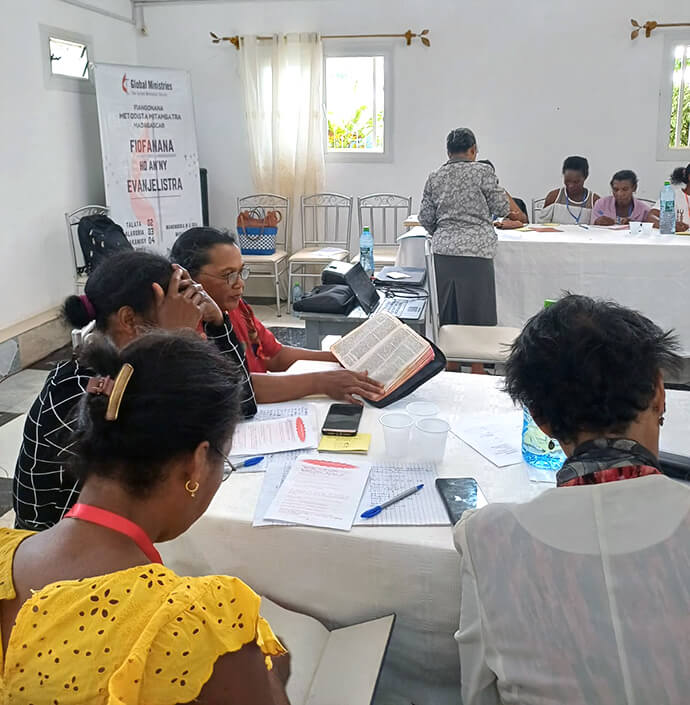
Evangelistas metodistas unidos/as se reúnen durante una sesión de capacitación sobre técnicas de evangelización, dirigida por el, misionero de Ministerios Globales. La capacitación reunió al grupo con el fin de equiparlos con los mejores enfoques para evangelizar en diferentes áreas, particularmente en el sur de Madagascar. Foto de Esdras Rakotoarivony, Noticias MU.
A finales del año pasado, 32 personas participaron en una capacitación en Antananarivo, centrada en la evangelización de campo, la vida misionera en zonas remotas, las realidades geográficas y culturales del Sur Profundo y los métodos más idóneos para compartir el Evangelio en contextos difíciles. También se fomentó el apoyo mediante la oración.
Aunque el malgache es el idioma oficial, los dialectos varían de una región a otra; por ello, algunos/as evangelistas procedentes de Antananarivo y del norte de Madagascar se prepararon para servir en un entorno cultural y lingüístico distinto al suyo, a más de 620 millas de sus hogares.
“Para evangelizar, se necesitan evangelistas preparados/as, por lo que decidimos comenzar con la formación. Sin ella, no tendríamos iglesias” explicó Kalumba.
Para Razafindrabe “Nicko” Notahiana Miando, la motivación provino tanto de su llamado como de su deseo de ir a lugares donde el Evangelio es aún poco conocido: “Por encima de todo, mi primer viaje a esa zona tenía el objetivo de proclamar el Evangelio a quienes nunca lo habían escuchado y de extender mi iglesia hacia esa región”.
Tras la capacitación, el equipo emprendió un viaje de 18 días, cuando difíciles condiciones de las carreteras y el clima adverso ralentizaron el avance del equipo. La labor evangelizadora se llevó a cabo en varios lugares estratégicos a lo largo del trayecto, donde se abrieron puertas y los/as residentes mostraron un deseo genuino de escuchar la palabra de Dios.
En Andranovory a mitad de la ruta, antes del camino embarrado que conduce a Ampanihy, una mujer expresó su deseo de convertirse en metodista unida. Su decisión animó al equipo a organizar una campaña evangelística en esa comunidad, donde los/as evangelistas fueron de puerta en puerta para invitar a las familias, mientras que el equipo de sonido adquirido en Antananarivo se utilizó para compartir el Evangelio durante reuniones al aire libre.
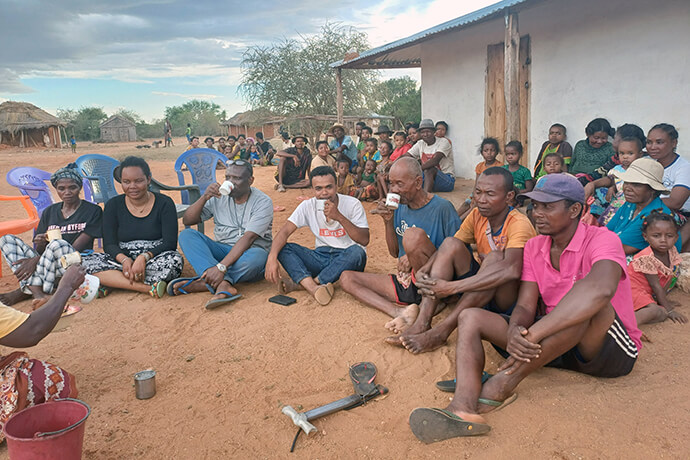
Evangelistas metodistas unidos/as comparten una bebida en Ankilimidega, Madagascar una de las varias localidades que visitaron en la parte sur de la nación insular. El equipo llevó a cabo campañas al aire libre y labores de evangelización casa por casa en comunidades donde nunca había habido una iglesia y donde el cristianismo resultaba novedoso para muchos/as. Foto de Tinasoa Tsimanavaka, Noticias MU.
Cerca de Ejeda, otra comunidad situada a lo largo de la ruta, el equipo también recibió una cálida bienvenida cuando jóvenes y niños/as salieron a su encuentro. El jefe tradicional recibió al equipo y movilizó a los/as residentes de varias pequeñas aldeas ubicadas en un radio de unas siete millas. La oración marcó el inicio del primer encuentro. A continuación, se ofreció café a los/as evangelistas antes de que comenzaran las conversaciones sobre la campaña programada para el día siguiente.
Aquella bienvenida conmovió profundamente a los/as evangelistas, especialmente porque la región sigue siendo de difícil acceso. Durante la temporada de lluvias, incluso los vehículos de gran tamaño tienen dificultades para transitar. Para quienes realizaron el viaje, esa realidad confirmó la urgencia espiritual y humana de la misión.
“El mayor desafío que enfrentamos fue la infraestructura, pues el mal estado de las carreteras no siempre nos permitía realizar nuestra labor con la eficacia que deseábamos” dijo Ramainty Clémence, responsable de evangelismo en Madagascar.
Ralivony Silly Monique coincidió: “Cuando fuimos allí, llovía mucho”.
Miando recordó un momento en el que el equipo pensó que tal vez no podrían continuar: “Un testimonio impactante es el de nuestro vehículo que quedó sumergido en el agua y algunas piezas esenciales se empaparon, lo que provocó que el motor se detuviera por completo. Nos sentimos desanimados, muy lejos de todo y sin nadie que pudiera ayudarnos. Así que oramos. Dios nos ayudó a encontrar soluciones y el vehículo volvió a arrancar”.
Las condiciones de vida fueron lo que más profundamente afectó al equipo. “Lo que más nos conmovió fue la forma en que la gente está sufriendo; hay una pobreza extrema... cosas que uno no podría imaginar que a la gente le falten. Resulta doloroso ver a personas viviendo en lugares donde se busca desesperadamente agua potable, donde el hospital siempre queda a cierta distancia y donde las escuelas también están lejos” dijo Kalumba.
En ese contexto, las campañas evangelísticas no fueron meras reuniones religiosas; fueron también una forma de llevar esperanza a lugares donde el aislamiento, las privaciones y las adversidades climáticas pesan enormemente sobre las familias.
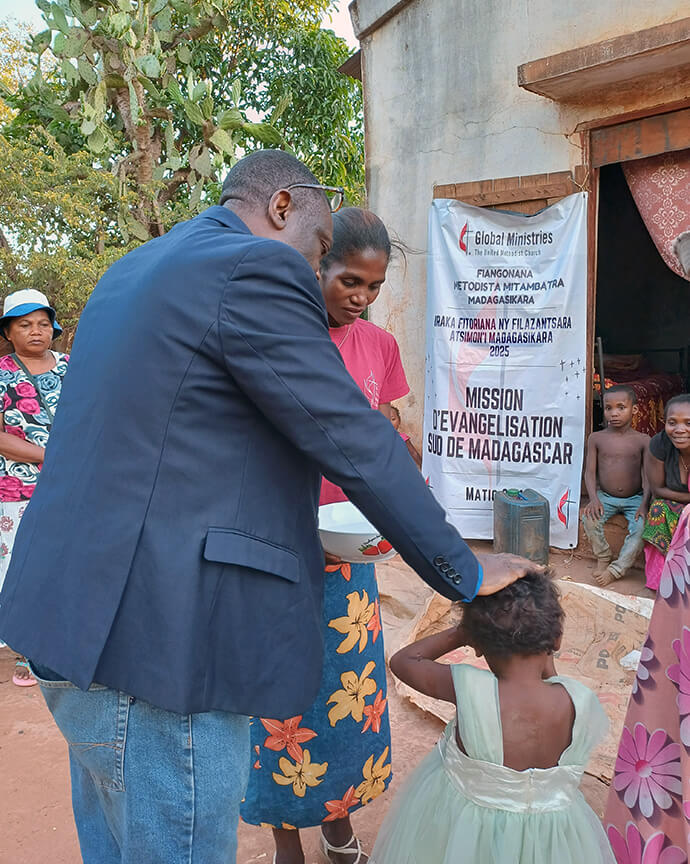
El Rev. Éric Kalumba, misionero de la Junta de Ministerios Globales de La Iglesia Metodista Unida, bautiza a un niño durante la jornada de evangelización de la iglesia en Andranovory, en el sur de Madagascar. Kalumba bautizó y confirmó a personas en muchas de las localidades donde se llevó a cabo la labor de alcance. Foto de Esdras Rakotoarivony, Noticias MU.
A lo largo del viaje, las personas de Ankilimidega y Marovahatse también respondieron al llamado del Evangelio. El equipo llevó esa misma visión a Toliara, la ciudad principal del suroeste y capital de la provincia, donde comenzó a surgir otra comunidad metodista unida.
Para Ramainty Clémence, el fruto espiritual de la misión sigue siendo el aspecto más impactante. “Realmente vi milagros cuando fuimos al sur, pues muchas de las cosas que el Señor hizo entre las personas que conocimos trascienden nuestra comprensión. Recibieron a Jesús. Algunos/as habían asistido anteriormente a otras iglesias, pero habían dejado de servir a Dios; regresaron y ahora están listos/as para orar con los/as metodistas” afirmó.
Perasoa Olivia asintió y agregó: “Aunque la cultura de las personas que conocimos en el sur de Madagascar es diferente de la nuestra, muchos/as recibieron a Jesucristo y están listos/as para caminar junto a nuestra iglesia”.
Para fortalecer lo que se había sembrado, los/as líderes entregaron Biblias a quienes se mantuvieron firmes en la fe y comprometidos/as con la comunidad metodista unida. En Andranovory, el equipo construyó un refugio para proporcionar a los/as nuevos/as creyentes un lugar donde reunirse. En varios otros lugares, los/as fieles oran bajo los árboles o en salas prestadas, a veces en escuelas.
Kalumba expresó su satisfacción con lo logrado en el sur de Madagascar, pues con los informes y las fotografías recibidas desde el terreno, supo que las congregaciones metodistas unidas continúan reuniéndose y que el refugio ya está siendo utilizado por nuevos/as creyentes. Vio claros indicios de que la misión verdaderamente había dado fruto y de que la obra de Dios sigue avanzando en la región.
Para el equipo, la campaña arrojó resultados visibles y confirmó el valor de la preparación. “La capacitación que impartimos aportó algo importante, porque tuvimos evangelistas capacitados/as que cumplieron su función, acompañados /as por Dios mismo. El resultado es positivo” afirmó Kalumba.
Los/as líderes afirman ahora que se han fundado cuatro nuevas iglesias metodistas unidas, y que otra nueva congregación se encuentra aún en proceso de formación. La gratitud hacia la Iglesia en su conjunto se manifiesta con gran fuerza en los testimonios. Para quienes participaron en la misión, el apoyo de la Junta General de Ministerios Globales (GBGM por sus siglas en inglés) fue mucho más que una simple asistencia financiera; fue una prueba concreta de que La IMU a nivel mundial tiene presente a Madagascar en su visión misionera, señaló Monique.
“Realmente damos gracias a Dios y a la GBGM porque Dios los está utilizando verdaderamente como un instrumento para apoyar el desarrollo de La IMU. Proporcionaron materiales, mediante apoyo financiero, para hacer posible esta jornada de evangelización. Gracias a ello, pudimos proyectar videos, elaborar carteles, predicar al aire libre, difundir el mensaje a través de los medios de comunicación y construir un refugio que permite a los/as nuevos/as creyentes comenzar a reunirse como una iglesia de La IMU en su región” afirmó Monique.
* Rakotoarivony es comunicador para el campo misionero de Madagascar de La Iglesia Metodista Unida. Contacto con los medios de comunicación: Julie Dwyer editora de noticias. Puede escribirle a [email protected] o llamarla al 615-742-5469.
** Leonor Yanez es traductora independiente. Puede escribirle a IMU Hispana-Latina @umcom.org.


