
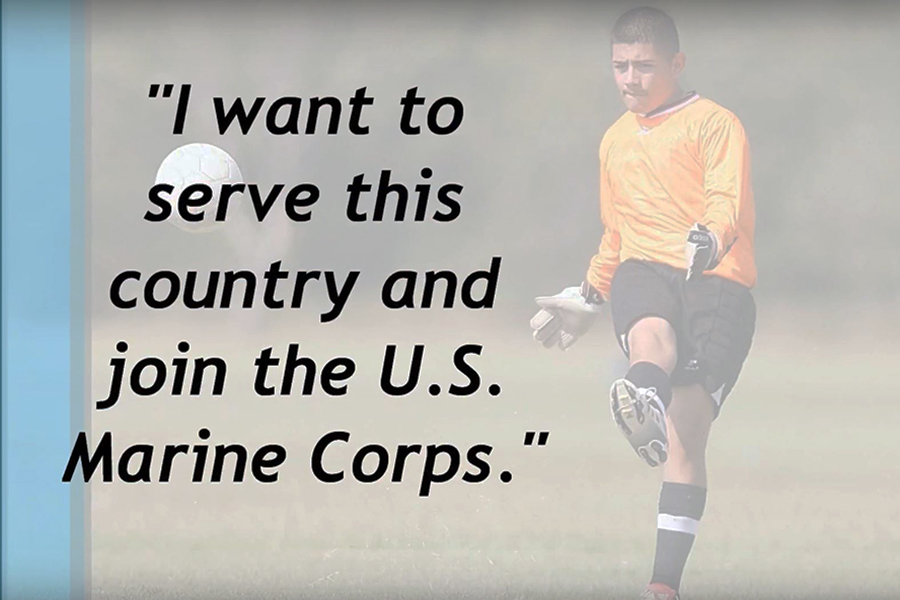
Dreamers are not villains, they are children of God, said United Methodist Bishop Minerva Carcaño.
“I have been very concerned about the way Dreamers, young people, are being villainized and used in this whole appropriations process,” said Carcaño, chair of the United Methodist Council of Bishop’s Immigration Task Force and episcopal leader of the California-Nevada Conference.
Dreamers or DACA (Deferred Action for Childhood Arrivals) recipients are young people brought to the United States by their parents as children. Under President Barack Obama, DACA allowed some minors a renewable two-year period of deferred action from deportation and made them eligible for a work permit. Since 2012, the status has been issued to 800,000 young people.
President Donald Trump ended the program last September.
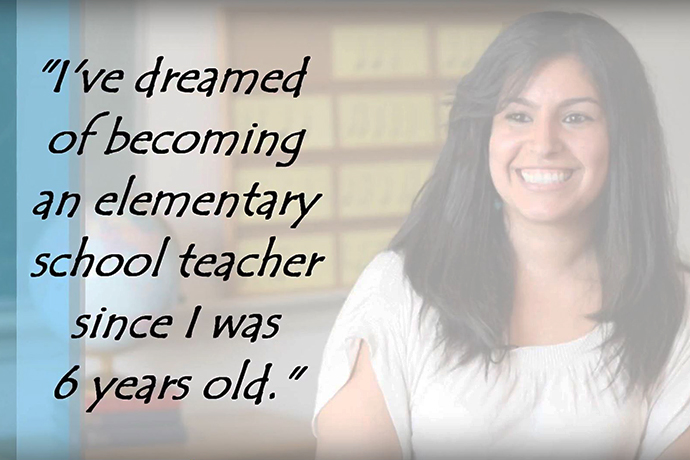
A Dreamer, this young woman hopes to teach young people as her profession. Video image from “The JFON DREAMers,” courtesy of Justice for Our Neighbors.
“It’s deeply troubling that Dreamers are being used as a bargaining chip in budget negotiations. Legislative solutions should not pit one immigrant group against another, and proposals to help Dreamers should not come at the expense of targeting their parents for deportation,” said Rob Rutland-Brown, executive director of the United Methodist National Justice for Our Neighbors network.
“Nearly 75 percent of Americans agree favor granting permanent legal status to Dreamers, so this solution should not be conflated with other, more controversial policies such as a border wall (which 40 percent of Americans support),” he said.
Sanctuary churches
A number of United Methodist churches have offered sanctuary to people facing deportation. Here are some of those stories.
Second Man Seeks Sanctuary at New Haven UMC
Philadelphia church offers sanctuary to shield father from deportation
After almost a year inside a church, undocumented immigrant leaves sanctuary
United Methodist facing deportation
Jeania Ree Moore, director for civil and human rights, United Methodist Board of Church and Society, said Congress passed a continuing resolution funding the government through February 8. She added that the majority leaders in Congress agreed to address the plight of Dreamers in the next two to three weeks.
“This means that the most important thing we can do right now is call our members of Congress and demand the passage of the Dream Act,” said Moore, who added that
The United Methodist Church has called for the passage of the Dream Act since 2012 in the Book of Resolutions — Number 3164 The DREAM Act.
Republican U.S. Sens. Tom Cotton of Arkansas and David Perdue of Georgia, both United Methodists, along with Iowa Republican Sen. Church Grassley have all said any DACA deal must include an end to chain migration.
The senators wrote a commentary for The Hill, a political website, in which they called chain migration “one of the biggest problems in our immigration system today.”
“Current law allows legal permanent residents and American citizens to sponsor both their immediate and extended family members for immigration to the United States. In other words, our system prioritizes people based on their family ties, instead of their ability to contribute to our nation's economic well-being,” they wrote.
WATCH VIDEO

Since DACA first began on Aug. 15, 2012, the JFON network has helped thousands of young undocumented immigrants become “DACAmented,” enabling them to pursue their dreams in the only country they’ve known.
Watch "The JFON DREAMers" on YouTube.
“Simply doing this without changing our nation's immigration laws will encourage low-skilled parents from around the world to illegally immigrate to this country with their small children in hopes of obtaining citizenship. And once they and their children receive citizenship, other extended family members will follow, continuing a never-ending cycle of falling wages and mass migration.”
Carcaño counters that “chain migration” is a negative term for family reunification.
The New York Times reported Jan. 25 that Trump had proposed legislation to provide a path to citizenship for as many as 1.8 million young undocumented immigrants. The proposal includes an end to family-based migration policies, a border wall and a crackdown on other immigrants living in the country illegally.
Those proposals are not consistent with The United Methodist Church’s Social Principles and some churches are taking direct action to help immigrants avoid deportation.
Several families have taken sanctuary at United Methodist churches. One of the latest is the Rranxburgaj family. Ded, his wife Flora, and sons Lawrence and Eric began living in Central United Methodist Church in Detroit, Michigan, on Jan. 16.
Suffering oppression and hardship under Communism, Ded and Flora left Albania and lived for a time in Europe and Canada before arriving in the United States in 2001. In Michigan, Ded has worked as a cook, in construction and for a landscaper.
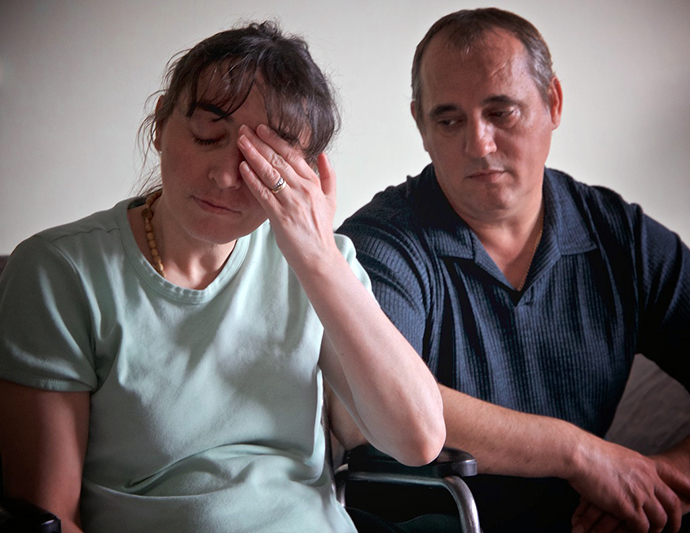
Flora and Ded Rranxburgaj of Southgate, Mich., have been offered sanctuary at Central United Methodist Church. Flora, 44, suffers from multiple sclerosis and Ded, 48, takes care of her. The Albanian couple arrived in the United States in 2001. Photo by Mark Doyal, the Michigan Conference.
Flora suffers from multiple sclerosis and Ded has been her primary caregiver since she fell ill.
The Rev. Jill Zundel, pastor of Central United Methodist Church, said the church voted to become a sanctuary congregation in January 2017.
Other United Methodist churches are serving or have served as sanctuary churches for families like the Rranxburgajs.
“We continue to call the church to prayer. Prayer is a means of grace,” Carcaño said. “We need the fullness of God’s grace that we might be a moral voice in these troubled times. Prayers that immigrants may be comforted, hearts may be touched, that we might do what Jesus would do.”
Gilbert is a multimedia reporter for United Methodist News Service. Contact her at 615-742-5470 or [email protected]. To read more United Methodist news, subscribe to the free Daily or Weekly Digests
Like what you're reading? Support the ministry of UM News! Your support ensures the latest denominational news, dynamic stories and informative articles will continue to connect our global community. Make a tax-deductible donation at ResourceUMC.org/GiveUMCom.


