
Key points:
- The Rev. Dr. Martin Luther King Jr.’s faith drove him to confront injustice and inequality, and his words continue to challenge the nation — and church — today.
- In the face of threats, he refused to confuse peace with quiet, and he understood that calls for patience often function as tools for preserving unjust systems.
- As United Methodists, we vow to “resist evil, injustice, and oppression,” yet we have often become comfortable in systems that perpetuate racism and inequality, writes the Rev. Dr. Jefferson M. Furtado. What we are willing to change so that justice may take root among us?
- To honor King faithfully is not simply to quote him once a year, but to allow his witness to interrogate our assumptions and reshape our commitments.
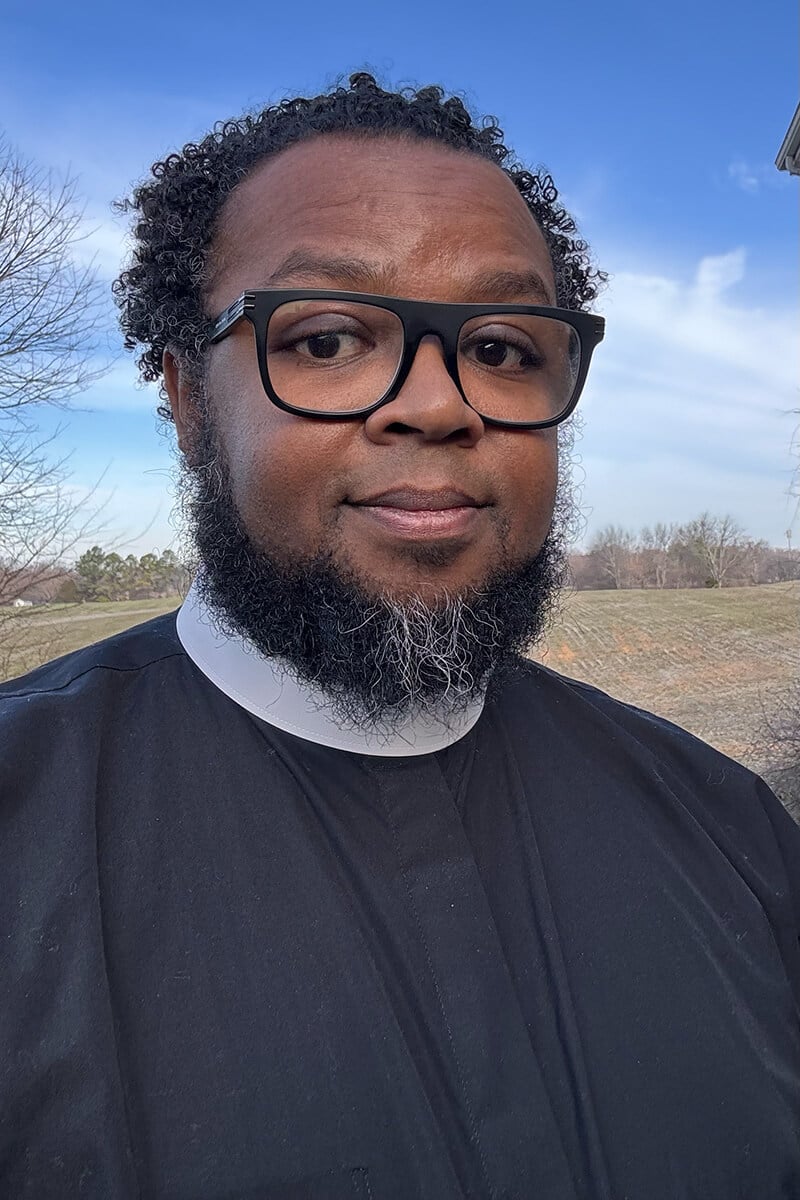
Photo courtesy of the author.
Commentaries
This week our nation pauses to remember the life and legacy of the Rev. Dr. Martin Luther King Jr., a powerful figure who too often is misinterpreted, misunderstood and at times minimized.
Despite the popularity of selective quotations and carefully curated soundbites, Dr. King was not a safe or sentimental figure. He was a prophetic Christian leader whose faith compelled him to confront racism, economic injustice, militarism and the deep moral contradictions of the American ideal. King’s witness unsettled polite religion and challenged a nation — and a church — tempted to confuse order with justice and comfort with faithfulness.
I first became familiar with the words and work of Dr. King when I moved to the United States in 2001. My journey took me from Rio de Janeiro, Brazil to Holly Springs, Mississippi, a small town of fewer than 10,000 people in north Mississippi, about an hour south of Memphis. Rust College and the surrounding community became my introduction to American life and, with it, the myths, contradictions and stories that shape this nation’s identity.
Holly Springs was not an abstract classroom for learning about race, history or justice. It was living memory. The past was not hidden or distant; it lingered in the architecture, the social patterns, the quiet assumptions and the silent stares that permeated the community. In that context, Dr. King’s words took on flesh for me. His speeches were no longer preserved artifacts but living questions pressing against everyday realities.
That same year, the state of Mississippi was engaged in a referendum on whether to change its state flag, a symbol deeply entangled with the legacy of the Confederacy and white supremacy. Fierce debate echoed across the college campus and into daily conversations. In those moments, I was reminded of King’s words from his book “Beyond Vietnam”: “We as a nation must undergo a radical revolution of values. We must rapidly begin the shift from a ‘thing-oriented’ society to a ‘person-oriented’ society.” Standing in the Deep South, amid conversations about flags and racialized symbols, that sentence did not feel theoretical; it felt diagnostic.
That realization sharpened my awareness of how deeply context shapes moral perception. What was being debated in Mississippi was not only a piece of cloth or a historical artifact, but competing visions of whose lives, stories and suffering mattered. It was through that lens that I began to hear King not only as an American voice but as a global Christian witness.
Coming from Brazil — a nation marked by a profound legacy of racism and inequality, yet one where racial hierarchies are often masked by the language of harmony and mixture — I was struck by the moral clarity of King’s witness. Even in the face of threats, he refused to confuse peace with quiet or unity with avoidance. In “Letter from Birmingham Jail,” King named with piercing honesty the danger of deferred justice: “For years now I have heard the word ‘Wait!’… This ‘Wait’ has almost always meant ‘Never.’” King understood that calls for patience often function as tools for preserving unjust systems rather than dismantling them.
It is possible that today we continue to struggle with many of these same realities — not because we do not know better, but because we resist admitting how deeply we are implicated in their persistence. Xenophobia, racism, homophobia, sexism and the criminalization of immigrants are no longer hidden realities; they are public, visible and contested. Families are separated, communities are destabilized and fear is wielded as policy. And yet, for those protected by distance or privilege, these realities can remain abstract — until we are willing to listen to those who bear their weight. King understood this dynamic, as did writer James Baldwin, who decades ago offered a searing diagnosis of American justice, a diagnosis still relevant today. Baldwin wrote:
“if one really wishes to know how justice is administered in a country, one does not question the policemen, the lawyers, the judges, or the protected members of the middle class. One goes to the unprotected — those, precisely, who need the law’s protection most! — and listens to their testimony... ask the wretched how they fare in the halls of justice, and then you will know, not whether or not the country is just, but whether or not it has any love for justice, or any concept of it…”
Ignorance, Baldwin warned, “allied with power, is the most ferocious enemy justice can have.”
These critiques are not rooted in the politics of niceness or civility; they are grounded in the demands of the Christian faith itself. King’s vision of justice was profoundly theological. He believed the gospel carried unavoidable public consequences. “The church,” he warned, “must be reminded that it is not the master or the servant of the state, but rather the conscience of the state.” For King, Christian discipleship required moral courage — the willingness to stand in tension, to speak truth and to act in love, even when doing so came at great cost. And for him, and so many others, that cost was real.
In the later years of his ministry, as King spoke more directly about economic exploitation and the violence of war, his popularity declined. He was no longer easily embraced by political leaders or religious moderates. Yet he persisted, convinced that love must be embodied through justice. “True peace,” he wrote, “is not merely the absence of tension; it is the presence of justice.” The question before us today is not whether justice matters, but what justice demands of us — locally, denominationally and personally.
As United Methodists, we vow to “resist evil, injustice, and oppression in whatever forms they present themselves.” Yet we have often learned to live comfortably within systems that perpetuate racism, discrimination and inequality. Even as our most recent General Conference took important steps to remove harmful language — particularly language rooted in homophobia — from the Book of Discipline, we have remained remarkably patient with jurisdictional and structural arrangements originally designed to dilute the leadership and influence of historically marginalized communities.
We have offered apologies for the church’s racist past, while taking timid, incremental and uneven steps toward economic, appointive and leadership equity. We have offered words of repentance, while continuing practices that neither challenge nor compel United Methodists to live as torchbearers of a gospel that proclaims, “There is neither Jew nor Greek; there is neither slave nor free; nor is there male and female, for you are all one in Christ Jesus.” (Galatians 3:28, Common English Bible).
I am also mindful that there was a moment in Methodist history when leaders imagined a different future. In the early 1950s, Methodists spoke boldly of becoming a church not defined by the sins of segregation but shaped by a reconciled vision of God’s reign. They dared to proclaim that Christ’s work on the cross was greater than every racial, cultural and social division, and that the church could become a truly inclusive and racially integrated body. That dream was not denied — but it has been deferred.
The Rev. Dr. Chester R. Jones named this truth with clarity and pastoral honesty when, in August 2004, he and other Black Methodists gathered for the first reunion of the Central Jurisdiction since its dissolution in 1968. While the reunion celebrated resilience, leadership and faithfulness forged within a segregated church structure, it also served as a sobering reminder that the work of racial reconciliation within The United Methodist Church remains unfinished.
Subscribe to our
e-newsletter
Jones observed that, despite progress at general and jurisdictional levels, the promises made in the merger that created the denomination had not been fully realized — particularly in the life of local congregations. The church, he warned, too often functioned as a taillight rather than a headlight, lagging behind society’s pursuit of justice rather than leading it. The enduring reality that “11 o’clock on Sunday morning” still reflects deep racial division revealed not merely an institutional failure, but a spiritual one.
For Jones, remembering the Central Jurisdiction was not about nostalgia or guilt; it was about truth-telling, repentance and action. Until the church undergoes genuine spiritual transformation — one that reshapes leadership, appointments, congregational life, and discipleship itself — the legacy of segregation will continue to cast a long shadow over our common witness.
The question before us, as people who confess faith in a crucified and risen Christ, is not whether justice belongs to the gospel. The question is what we are willing to change so that justice may take root among us. What does the composition of our boards, agencies, cabinets, conference offices and local church staff reveal about our commitments? Whose voices shape our decisions — and whose are still missing?
My early encounters with Dr. King’s life and words continue to shape my understanding of faith, ministry and public witness. I am reminded again and again that faith is never passive; it presses us toward action. To honor King faithfully is not simply to quote him once a year, but to allow his witness to interrogate our assumptions and reshape our commitments. The arc of the moral universe, King insisted, “bends toward justice” — but only because people of conscience are willing to bend with it.
As we remember Dr. King this week, may we resist the temptation to domesticate his legacy or reduce him to a ceremonial voice safely confined to history. Instead, may we hear again his urgent call: to love boldly, to speak truthfully and to labor faithfully for a world more closely aligned with God’s justice and grace.
To learn more about the themes explored in this reflection, readers may engage the writings of King, particularly “A Testament of Hope” and “Why We Can’t Wait”; James Baldwin’s “No Name in the Street”; and scholarship on United Methodist history and race, including works by Morris L. Davis, Russell E. Richey and the reflections of the Rev. Dr. Chester R. Jones on the legacy of the Central Jurisdiction.
Furtado serves as the senior pastor of Hilldale United Methodist Church in Clarksville, Tennessee, and is the cohort district superintendent for the board of ordained ministry and conference secretary for the Tennessee-Western Kentucky Conference of The United Methodist Church.
News media contact: Julie Dwyer, news editor, [email protected]. To read more United Methodist news, subscribe to the free UM News Digest.


