

Key points:
- The bishops released a statement Sept. 8 denouncing the Africa Initiative and Wesleyan Covenant Association, which they say “are wrongly influencing God’s people in our areas.”
- The statement was released at the close of the African bishops’ retreat, which was held Sept 5-8 at Africa University.
- All of the continent’s active bishops, with the exception of Nigeria Area Bishop John Wesley Yohanna, signed the statement.
African bishops have called for unity in The United Methodist Church while condemning traditionalist advocacy groups looking to break up the denomination.
The bishops released a statement Sept. 8 denouncing the Africa Initiative and Wesleyan Covenant Association, which they say “are wrongly influencing God’s people in our areas.”
The statement was released at the close of the Africa Colleges of Bishops retreat, which was held Sept 5-8 at Africa University. The denomination’s bishops are organized by colleges, or groups, based on their regions; Africa has three such colleges.
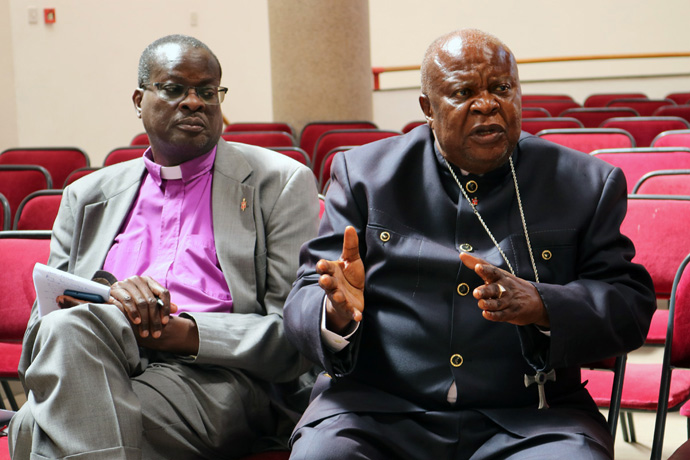
The bishops’ statement said the Africa Initiative is working with the Wesleyan Covenant Association to destroy the church in Africa through its support of the Global Methodist Church, a denomination not yet recognized by General Conference.
“We will dissociate from any activities of the Africa Initiative and will not allow any activities of the Africa Initiative in our areas,” the bishops said, noting that “the Africa Initiative has lost its original goal of helping The United Methodist Church in Africa.”
The bishops also addressed misinformation that is being spread in the church.
“We will not tolerate anyone giving false information about The United Methodist Church,” the statement said.
All of the continent’s active bishops, with the exception of Nigeria Area Bishop John Wesley Yohanna, signed the statement.
Yohanna sent a brief statement by email to UM News, stating that while he respects his fellow African bishops’ views, he continues to support the Africa Initiative and WCA.
“The Africa Initiative and Wesleyan Covenant (Association) are pushing for obedience to the Bible and the Book of Discipline. Why should we not associate with them?” said Yohanna, who did not attend the meeting. Yohanna is a member of the United Methodist Commission on Communication, which oversees UM News.
Jay Therrell, the WCA's president, said the advocacy group and sister organizations have long worked together with African leaders as equal partners, and the WCA's Global Council has leaders from across the African continent.
"We are deeply disappointed, but not surprised, by the statement purported to come from all the African bishops," he said. "We have been told the statement is not supported by all the bishops in Africa and lament that it insinuates that it is."
He added that the WCA believes "strong-arm control tactics by some African bishops infringe upon the Christian freedom of their members to speak into the current and future direction of The United Methodist Church and their role in it. We remain committed to working with theologically conservative Methodists across the continent of Africa to empower their witness to the faith and their right to make informed decisions about their future in the church."
Bishop Eben K. Nhiwatiwa, president of the Africa Colleges of Bishops, said the church is thriving on the continent and there is no need to break away from the denomination.
“Unity is our constant point of reference. The bishops are saying there is no need for breaking away from The United Methodist Church and joining another denomination,” said Nhiwatiwa, who leads the Zimbabwe Episcopal Area.
He said the Global Methodist Church has nothing new to offer Africans.
“We are not seeing anything new because we are traditionalist from start to finish here in Africa. If you want to see people who are conservative, come to Africa.
“If anything happens which will make us feel uncomfortable in the future, we will sit down and see how we channel our efforts in the church.”
After decades of intensifying disagreements about the status of LGBTQ people in the church, General Conference was set to vote on a denominational separation plan in May 2020.
But after a third postponement of the denomination’s top lawmaking assembly, organizers of the Global Methodist Church decided to launch on May 1. The Wesleyan Covenant Association, a theologically conservative unofficial advocacy group in The United Methodist Church, has served as the main organizing force behind the new denomination. The Africa Initiative is an unofficial traditionalist advocacy group representing laity and clergy in Africa.
Eight bishops, including retired Bishop Ntambo Nkulu Ntanda of North Katanga, attended the retreat. Several bishops were unable to attend the meeting but signed onto the statement: Bishops Benjamin Boni (Côte d'Ivoire), Gabriel Unda (East Congo), Joaquina Nhanala (Mozambique), Gaspar João Domingos (Western Angola) and interim Bishop Warner Brown (Sierra Leone).
Subscribe to our
e-newsletter
The statement appears to be a shift for some bishops who have a history with the Africa Initiative. Bishops Kasap, Quire and Yohanna attended the Africa Initiative’s meeting in May in Nairobi, Kenya, as the group pondered the future of Methodism in Africa. The bishops indicated at the time that their presence at the gathering was not sanctioned by the African bishops as a group, but that they were attending with the understanding that they would brief their colleagues.
In a Sept. 12 press release, the Africa Initiative responded to the bishops’ statement. The group expressed respect for the bishops, but also asserted its rights as an advocacy group whose membership includes General Conference delegates.
“It is unthinkable that anyone would think and believe that it is possible to stop us from standing up for Jesus Christ or from debating all the issues of The United Methodist Church,” the release said.
The group went on to say its mission has not changed.
“The Africa Initiative remains undauntedly committed to its vision, to see biblical Christianity taught, lived and sustained within the three central conferences of Africa in the Wesleyan spirit.”
The release said the Africa Initiative prays that the bishops would see the group as a “reliable and trustworthy partner in the holistic growth and development of the UMC in Africa.”
The bishops’ retreat, which was themed “Learning and Worship,” included presentations on principles of effective leadership by Pamela Machakanja, Africa University interim deputy vice chancellor, and effective Christian worship from the Rev. Beauty R. Maenzanise of the United Methodist Board of Higher Education and Ministry.
The gathering culminated in a visit to the Chin’ando prayer mountain at Old Mutare, which was developed by United Methodist women in the Zimbabwe Episcopal Area.
During the meeting, the bishops shared their joys and hopes for the future and also noted some of the challenges facing the church in Africa.
“Sometimes we do not have enough resources. It’s a common problem in Africa, but our people are working very hard building churches, schools, waiting mothers’ shelters even during the COVID-19 lockdowns,” Nhiwatiwa said.
He urged church leaders to be bold and brave in their leadership.
“We try to give direction; that is what leadership is all about. You cannot be a leader if you just want to be in a comfort zone.”
Those thoughts were echoed at the close of the bishops’ statement.
“We will continue to be shepherds of all of God’s people throughout our beloved continent.”
Chikwanah is a communicator of the Zimbabwe East Conference.
News media contact: Julie Dwyer, news editor, [email protected] or 615-742-5469. To read more United Methodist news, subscribe to the free Daily or Weekly Digests.


