

Key points:
- Undocumented migrants were forced to leave South Africa during protests aimed at enforcing immigration laws and prioritizing services for locals.
- The South Africa Conference provided relief for migrants awaiting deportation, while the Zimbabwe, Zambia, Malawi and Botswana Episcopal Area cared for returnees upon arrival in Zimbabwe.
- The United Methodist Church provided meals, blankets, clothing, baby supplies and other essentials.
United Methodists in southern Africa are providing humanitarian relief to undocumented migrants who have fled anti-immigration attacks in South Africa in recent months.
The United Methodist Church has donated and distributed food, clothing, toiletries and other essential supplies to migrants at repatriation centers following a wave of anti-foreigner protests that spread across South Africa.
More than 178,000 African immigrants have left the country in recent months, according to figures released by governments of migrants’ home countries. That’s a combination of people deported by South Africa and those who have taken repatriation offers by South Africa or their home countries, mainly Zimbabwe and Malawi, the Associated Press reports. Mozambique, Nigeria, Ghana and Lesotho also have reported citizens returning.
“South Africa is going through difficult times with many people losing their jobs, lives, and others being injured because of these so-called Afrophobia attacks,” Bishop João Filimone Sambo, resident bishop of the Mozambique-South Africa-Eswatini-Madagascar Episcopal Area, said in a statement.
“I look forward to a moment or time in life when brothers may see each other eye to eye with love, respect and dignity,” he said. “I pray for people in decision-making positions to enforce the laws of the country and say, ‘Enough is enough.’ And provide a platform where God’s children can sit, eat together, pray and, if needs be, cry together.”
The South Africa Conference of The United Methodist Church and the Zimbabwe, Zambia, Malawi and Botswana Episcopal Area mobilized their districts, ministries and members to respond with compassion and practical support to displaced individuals and families.
Tracy Mbalo-Tshungwana, South Africa Conference projects director, assisted districts with funds to purchase essentials for migrants waiting for repatriation.
“We realized that many affected individuals were facing a period of uncertainty and vulnerability while awaiting repatriation, with immediate humanitarian needs such as food, clothing, hygiene products and other necessities,” she explained.

Cape Coastal District members distributed supplies to immigrants from Malawi, Zimbabwe and Angola who were at the repatriation center in Epping near Cape Town, South Africa. A group visiting Cape Town from North Cross United Methodist Church in Kansas City, Missouri, assisted in food distribution.
Christopher Mondleki, the episcopacy chairman leading the distribution, said there had been no food for displaced people before the United Methodist teams arrived. “When we arrived at the repatriation center it was chaotic; there were many people being processed for repatriation. We distributed hot meals, fruits and sanitary wear.”
Anti-immigration movement roots
The March and March movement calling for stricter immigration enforcement was founded by Jacinta Ngobese-Zuma, a former radio personality, in March 2025. Ngobese-Zuma was later joined by anti-migrant activist Ngizwe Mchunu and other political figures who started mass demonstrations in the South African provinces of KwaZulu-Natal, Gauteng, Western Cape and Eastern Cape. Other provinces such as Mpumalanga followed suit.
Protesters claim undocumented migrants are taking jobs and contributing to South Africa’s high unemployment rate, while also taxing public services.
The Rev. Thobekile Maloi-Hoffman, Ikhwezi District superintendent, thanked the conference for the funds to assist Malawian migrants at camps in Durban, South Africa.
“This will go a long way in assisting our fellow Africans who are in repatriation centers waiting for buses to be repatriated to their countries of origin,” Maloi-Hoffman said.
In Johannesburg, migrants were camping at the Zimbabwe Consulate. Families with young children, elderly people and individuals waited for hours or days with little certainty about when buses would arrive to repatriate them to Zimbabwe and Malawi.
They were sleeping in the open, braving the cold nights of winter as their numbers increased daily.
“When we heard about our African brothers and sisters who were staying at the repatriation center with no food or shelter, we could not sit and watch,” said Mirriam Chibvongodze, finance chairwoman for United Women in Faith in the South Africa Conference.
Meanwhile, United Methodists in the Zimbabwe, Zambia, Malawi and Botswana Episcopal Area rallied with other mainline denominations under the Zimbabwe Council of Churches to support returnees.
Church circuits donated blankets, clothing, food and toiletries through their districts, and the council distributed them.
The church’s Bulawayo Midlands District was at the center of the relief efforts as it encompasses the Beitbridge border with South Africa and Bulawayo (Zimbabwe’s second-largest city), where a temporary transition center was established at the United Church of Christ in Southern Africa sanctuary in Njube suburb.
The Rev. Heather J. Zisengwe, superintendent for the Bulawayo Midlands District, said the situation of some of the returnees was depressing.
“My heart broke when I saw an 18-year-old teen mother with a six-week-old baby who looked malnourished. The baby had not been vaccinated since birth, and we had nurses who came to the center to arrange for the baby to get medical care and the mandatory vaccines.
“My message to all the returnees is that we love them. We are their family; we are their village,” Zisengwe said.

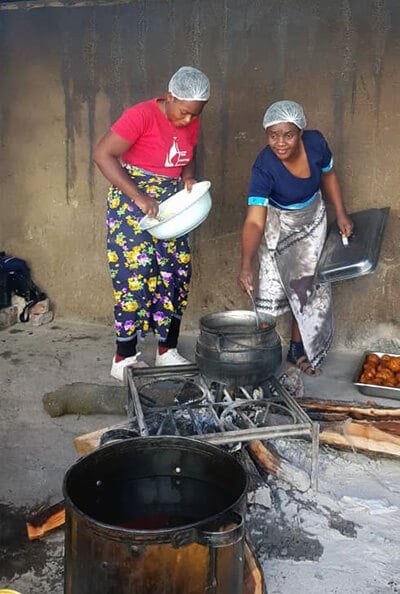
On July 20, United Methodists cooked and cleaned at the transition center near Bulawayo. They also distributed goods and provided counseling and healthcare to displaced families.
Tsitsi Bessie Mabambe, the wife of Bulawayo Central United Methodist Church pastor the Rev. Tafadzwa Mabambe, spoke with some of the women who were staying at the church awaiting transportation to their homes.
“I felt sad and traumatized. I felt sorry for them and just praised God that their lives were spared and they survived the ordeal,” she told UM News.
Some women said they had been chased from their homes at night and fled without their possessions. They were concerned about returning home empty-handed and worried about their children who had been going to school in South Africa. The school curriculums are different in Zimbabwe with children generally enrolled in a class behind their South Africa grade.
Subscribe to our
e-newsletter
“I think the women that are around here have been taught maybe by God how to handle people in distress because every one of them, from the person who’s doing cleaning, if you ask a question, you are being answered in a nice way,” said Betty Sibanda, a recipient of that care.
“I was very teary when I arrived here because I couldn’t understand what was going on. But the ladies from The United Methodist Church called me and asked: ‘What brought you here, sister? Why are you crying? Don’t cry. You are now at home. Feel safe,” she explained.
The World Federation of Methodist and Uniting Church Women for the South and East Africa Area called for a coordinated regional response to the return of undocumented migrants from South Africa.
“While recognizing every nation’s sovereign right to enforce immigration laws, we affirm that all migration management must protect human dignity, uphold the rule of law and safeguard the rights of women, children and vulnerable families,” the organization said in a statement. “Migration is a shared African responsibility.”
The Africa Methodist Council said the people returning home have undergone emotional and psychological trauma.
“They were stripped of their dignity and integrity. The language of Ubuntu did not make sense in what they are going through,” the council said in a statement.
“We also call upon the South African government to deal with the issue of migrants in a way that does not dehumanize those immigrants among them or strain the bilateral relationships among the African states. The Bible teaches us to love the sojourners because we were also migrants.”
Makunike is director of communications for the South Africa Conference, and Chikwanah is a UM News correspondent based in Harare, Zimbabwe.
News media contact: Julie Dwyer at [email protected]. To read more United Methodist news, subscribe to the free UM News Digest.


