
United Methodist theological colleges in East Africa now can deliver education at a distance.
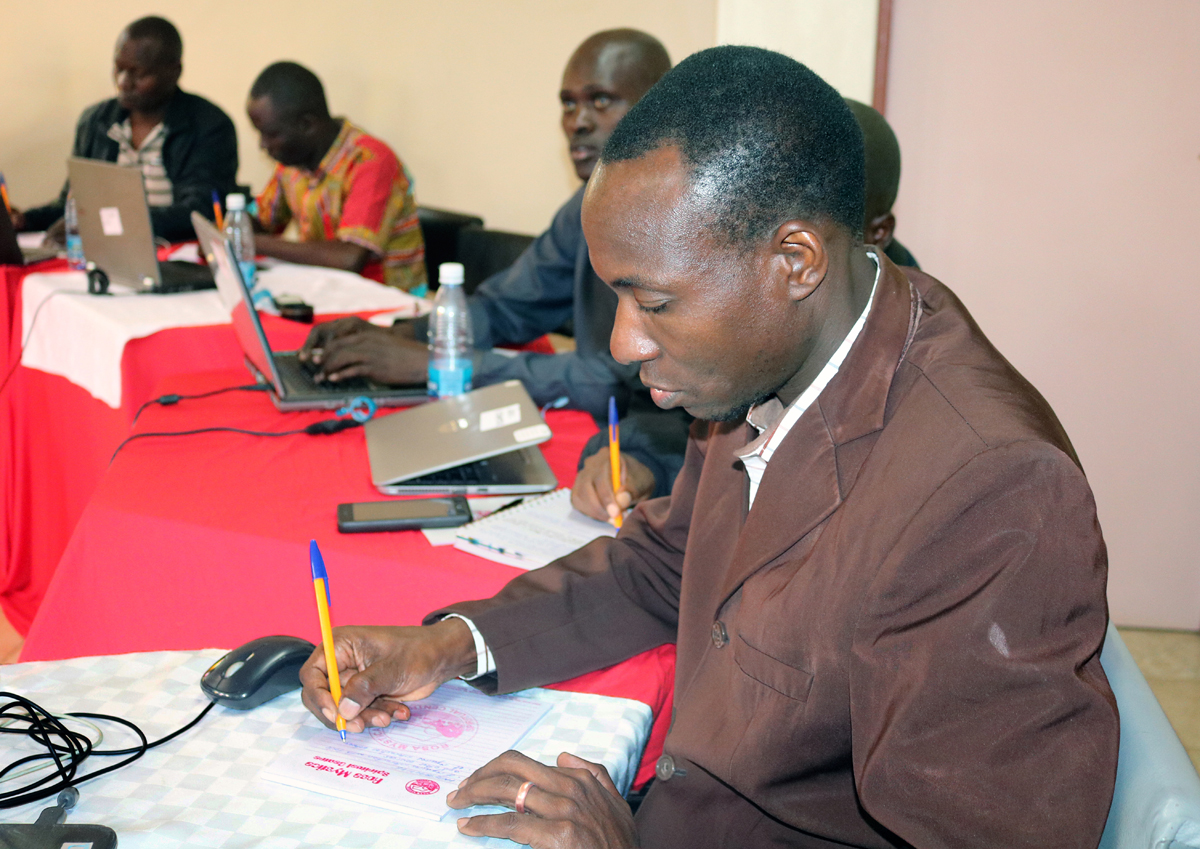
A new United Methodist e-Academy launched in December in Kenya after a weeklong training for leaders of four United Methodist East African theological colleges.
The goal of the program, which was funded by Cliff College in Sheffield, England, and the Endowment Fund for Theological Education in the Central Conferences, is to equip people for ordained and lay leadership in rural communities.
The Rev. Boniface Ghero, lecturer at Wesley College in Tanzania, said the program is a blended version of e-learning that is enabling a fully electronic relationship between lecturers and students.
“It’s a game changer for theological education in East Africa,” said Ghero, an alumnus of Africa University.
“What distance education has done is to certify lay people for congregational leadership in vast rural areas in East Africa that have suffered severe shortages of ordained clergy,” he said.
The official name of the academy is “Pamoja, a Methodist Network — East Africa e-Academy.” It allows students to follow lectures online, interact with teachers, submit assignments and check grades, while lecturers can upload course materials, post assignments and generate discussions using online blogs. Cliff College’s TheologyX online learning platform will host the Pamoja network.
The Rev. Wilton T. Odongo, conference secretary to the East Africa Episcopal Area and Nairobi District superintendent, said access to theological education through e-learning will transform Methodism in East Africa.
“Open-distance learning focuses on removing barriers to access learning… with the expectation that students can succeed,” he said.
Odongo, coordinator of Pamoja and dean of Wesleyan United Methodist Bible College in Nairobi, said the academy is an attractive option in delivering continuing education and academic and spiritual uplifting for clergy and laity.
The program has great potential to expand participation and increase enrollment at United Methodist theological schools, he said.
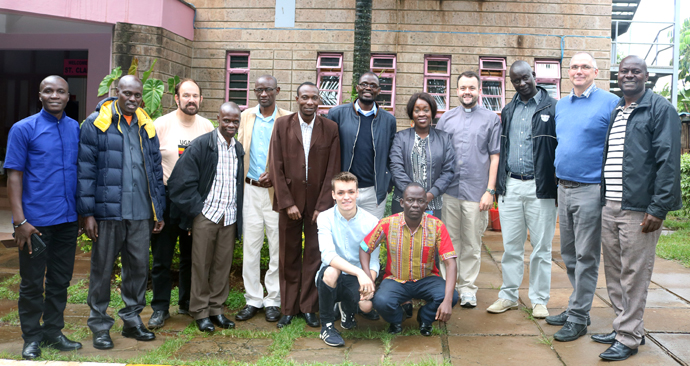
The United Methodist training was held Nov. 25-Dec. 1 at Rosa Mystica Spiritual Center in Nairobi. Robert Hunt and Jennifer Culver of Southern Methodist University in Dallas delivered online presentations on resources available for e-learning.
The participating colleges received web cameras with built-in microphones and books on Wesleyan theology from Cliff College.
The Rev. Gene Ramsey, a retired pastor from the Illinois Great Rivers Conference living in Uganda, said that the e-learning program has significantly resourced the leadership of the conference’s theological college to offer classes to those who aren’t able to study on campus.
“We can design courses specifically targeting the needs of our pastors — or even the lay leadership who works alongside them and often become our next generation of pastors — and offer them courses in Bible, liturgy, a United Methodist understanding of the sacraments or Wesleyan theology as needed. The latter is especially important as many of our rural pastors have only their neighboring Pentecostal pastors as models.
“Now, even from a distance, we can mentor them in the Wesleyan model for faith and practice. And we can bring to them not only our own local voices, but also the best teachers that Africa or anywhere else in the church has to offer,” he said.
Ramsey is a lecturer at the United Methodist Theological College of Uganda.
He said local church pastors are tentmakers who, in addition to caring for congregations, have to work outside the church to support their families. They have neither the financial resources nor the time to pursue a theological degree at a distant campus.
However, he said, they crave more training and education to better serve their people.
“Now, we have been given the means to take the campus to them,” he said. “I predict a radical new approach to the development of church leaders breaking forth on the continent as we learn to apply what we have learned here. And with that will come a stronger, richer United Methodist clergy even more effective at making disciples for Christ than ever, and nurturing them in the best aspects of our Wesleyan heritage.”
Those who attended the seminar impressed David N. Field, coordinator for the Methodist e-Academy and lay member of The United Methodist Church in Switzerland.
“They were a highly motivated group with a passion to bring quality theological education to (The United Methodist Church) in East Africa. More than that, they have the gifts and abilities that are required to do this,” he said.
Mercy Rehema, lecturer at Wesleyan United Methodist Bible College and an alumna of Africa University, said the online teaching environment has changed the social dynamics of the class.
“It is now possible to design online learning to leverage the differences that exist between students, by intentionally creating diverse working groups within a course,” she said.
She singled out the e-learning program as an opportunity for voices that are seldom heard in the classroom — because of disability, temperament or perceived marginalization — to be present online.
Rehema noted the need for scholarships for distance learners in East Africa and Africa as a whole. She holds a master of education and master of philosophy in intercultural communication and sociology from the University of Oslo and the Norwegian School of Theology, respectively.
“Together, we can contribute toward theological education advancement for the church in East Africa.”
Maiga is a communicator for the Kenya-Ethiopia Conference.
News media contact: Vicki Brown at (615) 742-5470 or [email protected]. To read more United Methodist news, subscribe to the free Daily or Weekly Digests.
Like what you're reading? Support the ministry of UM News! Your support ensures the latest denominational news, dynamic stories and informative articles will continue to connect our global community. Make a tax-deductible donation at ResourceUMC.org/GiveUMCom.


