
The Nigeria Episcopal Area has been strategizing ways to pay its nearly $75,000 in 2020 apportionments, including training for clergy and church members and a special Apportionment Giving Sunday.
Apportionments are the share each conference or local church pays to support international, national and regional ministries. General church apportionments go to seven funds that support bishops, ministerial education, most general agencies, general administration, and denomination-wide efforts such as the Black College Fund, ecumenical work and Africa University in Zimbabwe.
At the 2016 General Conference, delegates approved a formula for central conferences — church regions in Africa, Europe and the Philippines — to contribute to two of the seven general church funds.
Under the formula, the requested giving would go up to $5.1 million and support both bishops and the General Administration Fund, which supports General Conference, Judicial Council, the United Methodist Commission on Archives and History, and the General Council on Finance and Administration. Previously, central conferences had supported general church ministries without any set formula.
Due to lack of awareness and payments of apportionments in Nigeria, the church has come up with a strategy to help the episcopal area meet its financial responsibilities.
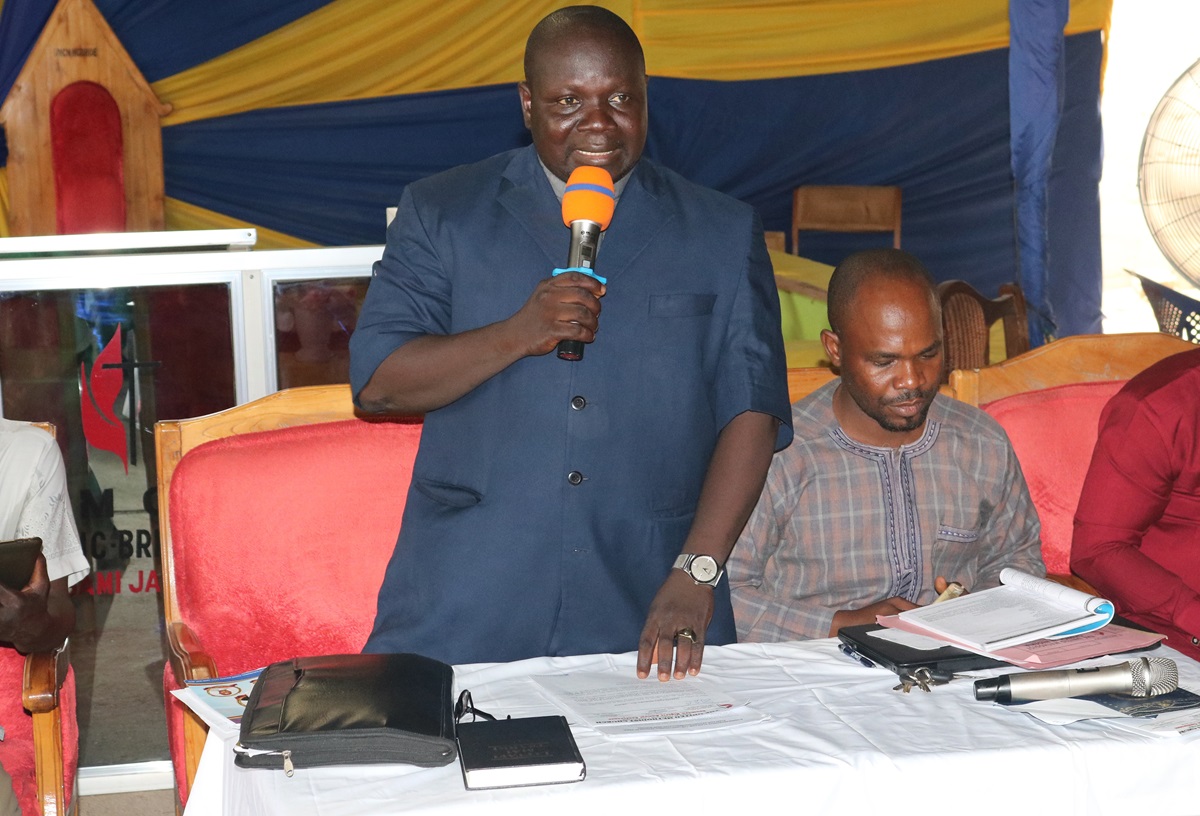
A special called session for Bishop John Wesley Yohanna’s episcopal area was held July 27 at McBride United Methodist Church in Jalingo. Delegates unanimously agreed to observe Apportionment Giving Sunday on Dec. 1. The day will be observed throughout the episcopal area and offerings will be dedicated toward apportionment giving.
During the special session, Yohanna encouraged delegates to educate their members to pay apportioned funds.
“The church cannot move without money, so we donate for the growth of the church,” he said. “Nigeria is lagging behind in terms of paying apportionment and lack of awareness is the major problem.”
The Rev. Yuyuba B. Yoila, Southern Nigeria Conference administrative assistant to the bishop, said clergy should lead by example on Apportionment Giving Sunday so that laity follow suit. He urged members to do their part to help achieve the mission and vision of the church.
The Rev. John Wesley Batu, pastor in-charge of the United Methodist Garin Dogo charge, said it’s time for Nigerian church members to step up.
“We have been enjoying various support from the global church, for example the relief materials given to us by the United Methodist Committee on Relief during our crisis with herdsmen. It is time for us to contribute and support the global church in our own little way,” Batu said.
The church in Nigeria has conducted training in every district in the Nigeria Episcopal Area on the need for and the importance of apportionments. The workshops, led by conference leaders, encouraged giving through fundraising activities, the selling of produce grown on church farms, and soliciting for donations.
As part of the campaign, every United Methodist is being asked to pay the equivalent of at least $4 U.S. per year toward apportionments. Earlier this year, the Nigerian government agreed to increase the country’s minimum wage to 30,000 naira a month — about $83 U.S. Most people in Nigeria have lived on less than $2 a day.
Subscribe to our
e-newsletter
Aliyu Mbiko, assistant conference secretary of the Southern Nigeria Conference, was among eight Nigerian delegates who attended apportionment training in Abidjan, Côte d’Ivoire, in May.
He told those gathered at the special session why it’s important to pay apportionments.
Prior to the 2016 General Conference, he said, conferences outside the United States contributed only about 10% of the seven general church funds. He encouraged church members to give religiously so that annual conferences in the U.S. aren’t shouldering the financial needs of the church.
“For Nigeria to be able to pay apportionments, it is important to create awareness for its members, especially those living in the rural areas where information is not disseminated well to know why we are paying and where the money is going,” Mbiko said.
Bambuka is director of communications for the Southern Nigeria Conference. UM News multimedia reporter Heather Hahn contributed to this report.
News media contact: Vicki Brown, Nashville, Tennessee, (615) 742-5470 or [email protected]. To read more United Methodist news, subscribe to the free Daily or Weekly Digests.
Like what you're reading? Support the ministry of UM News! Your support ensures the latest denominational news, dynamic stories and informative articles will continue to connect our global community. Make a tax-deductible donation at ResourceUMC.org/GiveUMCom.


