
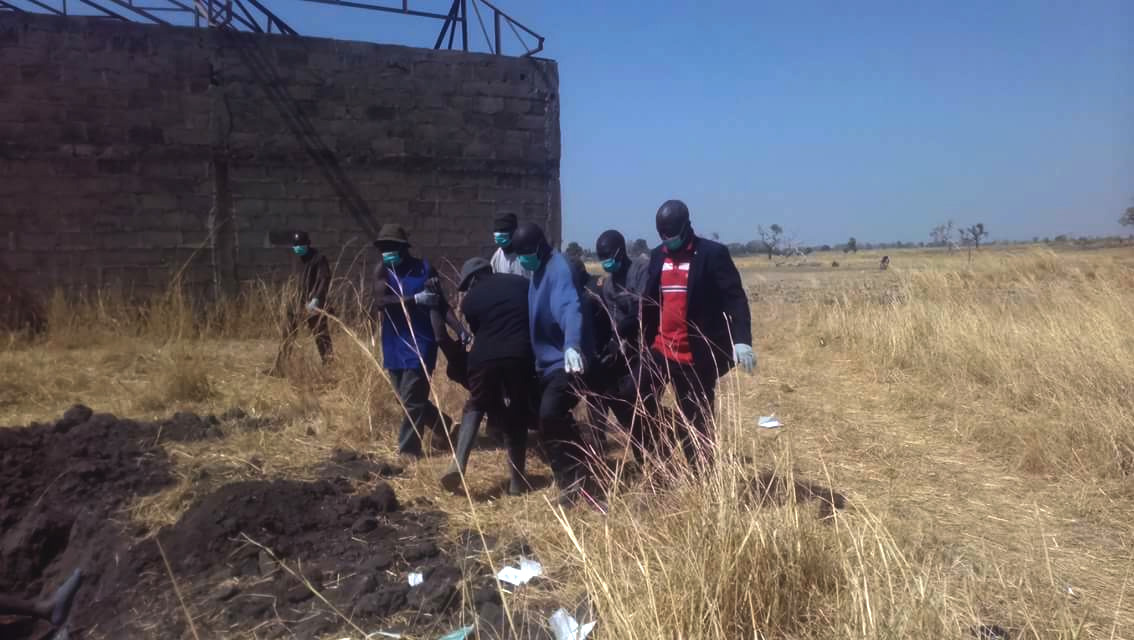
A recent attack by herdsmen in Lau has left more than 55 people dead, including 38 United Methodists, according to the Rev. Irmiya Bako, superintendent of the Yugorobi District, where the incident took place.
Bako described January as the saddest month in Taraba State, adding that six villages were consistently under siege by the suspected Fulani herdsmen.
"This sad event has left over 55 people dead and, at the point of talking to you now, 44 people are still missing from these villages. Corpses of people, the majority of whom are women and children, plus defenseless senior citizens, were littered everywhere. They are decomposing (so) we don't have a choice (other) than to bury them in a mass grave," Bako said.
Mostly Muslim herdsmen — mainly from the Fulani ethnic group — and Christian farmers have clashed over land in the region for years. According to the BBC, the Nigerian army deployed special forces to Benue, Nasarawa and Taraba states in recent weeks as attacks intensified.
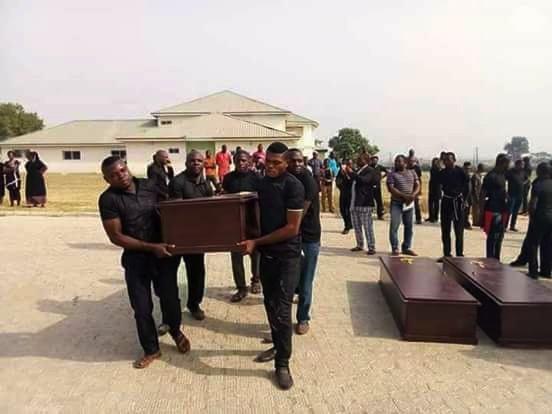
Victims of an early January attack in Benue State are prepared for mass burial at a morgue in Makurdi, Nigeria. Photo by the Rev. Ande I. Emmanuel, UMNS.
The top executive of United Methodist Board of Global Ministries said the agency is exploring how to assist those made homeless by the attacks.
“Our prayers and spirit of solidarity are with all those experiencing violence and persecution by extremist groups in Nigeria,” Thomas Kemper said. “We also call upon the Nigerian central government to protect all of the country's people.”
The director of Amnesty International Nigeria said the response of authorities to communal violence is totally inadequate, too slow and ineffective, and in some cases unlawful. “Hundreds of people lost their lives last year, and the government is still not doing enough to protect communities from these violent clashes. Worse, the killers are getting away with murder,” Osai Ojigho said.
The human rights organization said clashes between herdsmen and farmers in Adamawa, Benue, Taraba, Ondo and Kaduna have resulted in 168 deaths in January 2018 alone.
Often armed with AK-47 rifles, machetes and swords, the attackers consistently raid villages in the early morning hours when everyone is asleep. The most recent attack in Lau, a local government area in Taraba State in Nigeria, left the villages of Lavoro, Katibu, Mako, Nega, Bang and Lushi completely burned down.
“At 2 a.m., we started to hear gunshots in the neighboring villages … We saw houses (had) been set on fire and we heard women and children crying. We have no alternative than to run away," said Gabriel Zinas, who lives close to Katibu.
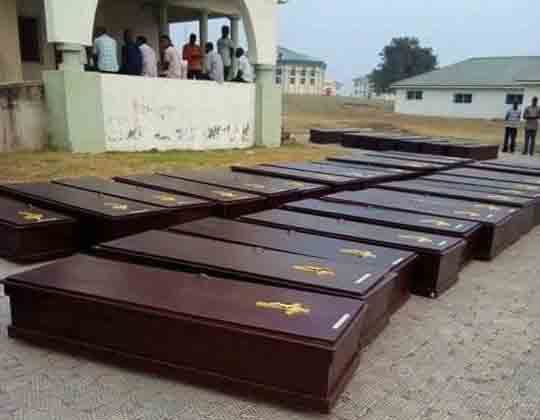
Coffins are lined up outside a morgue in Makurdi, Nigeria. More than 70 people were killed by suspected Fulani herdsmen in the Guma and Logo counties of Benue State in early January. Photo by the Rev. Ande I. Emmanuel, UMNS.
The Didango Bible School, a United Methodist school in Lau that trains local church evangelists, also was destroyed by fire, according to the Rev. Baziel Y. Yoila, Southern Nigeria Conference administrative assistant.
Additional attacks also took place in the Guma and Logo counties of Benue State earlier in January.
“Gunmen suspected to be Fulani herdsmen attacked these communities, killed about 73 people, destroyed completely their houses and food stuff, forcing more than 1,760 people to flee the villages to seek refuge in neighboring villages," said the Rev. Moses Yev of Reform Christian Church in Makurdi.
Elizabeth Yohanna, United Methodist Women president of the Southern Nigeria Annual Conference, called the situation tragic.
“I have never seen something like this in my entire life. As I stand to watch 73 people given a mass burial, I saw tears flowing in the eyes of people as they watched their beloved ones being buried in a mass grave. We ask God, in your mercy, to restore peace in our country," she said.
According to the district superintendent’s report, a total of 48 members of The United Methodist Church were killed and 14 villages were destroyed between Jan. 2 and 23 in Taraba State. More than 6,000 people, mostly women and children, have been displaced from their homes.
Among the internally displaced people are pregnant women and nursing mothers, Bako said, adding that the displaced people are living in open-air camps and exposed to many dangers.
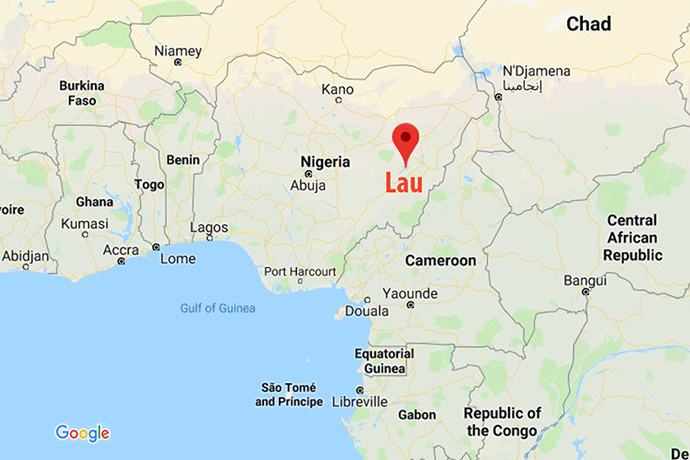
A map of Lau, Nigeria, courtesy of Google Maps.
The situation in Nigeria was discussed at a World Council of Churches presentation Jan. 30, titled “Changing the Narrative: Media, Migrants and Refugees.” Attendees included representatives of church groups, the United Nations and a Christian media organization.
Bako said about 3,700 United Methodists are currently displaced and need urgent help as people seek refuge at the United Methodist facilities in Jen, Jalingo, Kunini, Garin Dogo and Kufai.
“What has happened in these villages is so heartbreaking,” said Driver B. Jalo, connectional ministries director for the Southern Nigeria Conference. “You can see how innocent people are suffering of hunger and starvation at the (internally displaced person) camps. We need urgent relief materials like food, clothes, first-aid medication … to help in the recovery process."
The Rev. Ande I. Emmanuel is conference secretary of the Southern Nigeria Conference and United Methodist Board of Church and Society Minister for Congregational and Community Engagement for Nigeria.
News media contact: Vicki Brown, Nashville, Tenn., (615) 742-5470 or [email protected]. To read more United Methodist news, subscribe to the free Daily or Weekly Digests.
Like what you're reading? Support the ministry of UM News! Your support ensures the latest denominational news, dynamic stories and informative articles will continue to connect our global community. Make a tax-deductible donation at ResourceUMC.org/GiveUMCom.


