

Key points:
- An executive meeting of the Liberia Annual Conference was held for advocacy groups with differing views on The United Methodist Church’s future to discuss what the conference would do after the 2024 General Conference.
- Liberian Conference Bishop Samuel Quire said he “will remain a United Methodist until otherwise ordered.”
- The episcopal office said it doesn’t officially recognize either advocacy group, insisting “we only see them as United Methodists until after the 2024 General Conference.”
“I am a United Methodist and will remain a United Methodist until otherwise ordered,” was the closing remark of Bishop Samuel J. Quire Jr. of the Liberia Episcopal Area, when he hosted a July 13 executive meeting of the Liberia Annual Conference.
The bishop’s remarks followed debate on social media between members of the Liberian church at odds over whether to leave the United Methodist denomination.
Quire set up a special committee comprising proponents of Africa Initiative, who favor disaffiliation, and United Methodist Africa Forum (Stay UMC), who advocate for the unity of The United Methodist Church. Stay UMC is the Liberian version of the United Methodist Africa Forum.
The task of the committee is to design a new approach for how members of The United Methodist Church in Liberia at the local level will be informed about possible separation come 2024 General Conference.
The committee is chaired by Africa Initiative member Muriel V. Nelson, president of the conference’s women’s organization and a proponent for leaving The United Methodist Church, and the Rev. Caleb S. G. Domah, an executive of United Methodist Africa Forum and Stay UMC in Liberia.
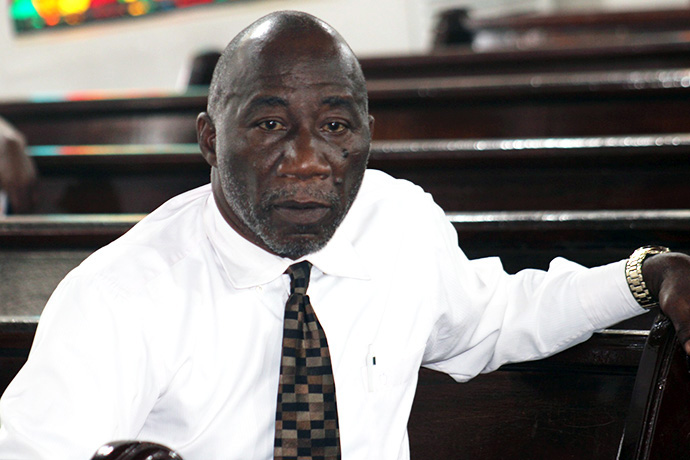
Earlier, Quire warned that the meeting was not intended to have members of both advocacy groups explain their positions, but for the church in Liberia to discuss what it would do after the 2024 General Conference.
“As of this date, we are not going to be discussing Global Methodist Church, Stay UMC and all other advocacy groups at any meeting of The United Methodist Church in Liberia,” he said.
When asked about the new steps taken by Quire to get every United Methodist’s view on the separation question, committee member the Rev. Isaac Chukpu-Padmore told UM News that the church in Liberia was behind in teaching its members about separation procedures based on human sexuality.
“Our people at the local church level do not know what all this noise is about,” he said.
Chukpu-Padmore said the church in Liberia and members who started the separation discussion failed to teach people what it takes to separate. He said he would encourage the church in Liberia to be intentional about teaching the people about the requirements for separation.
“I will not support any decision or group that would violate the 2016 United Methodist Book of Discipline,” he said.

Jefferson Knight, a United Methodist Africa Forum/Stay UMC member, said the church in Liberia should provide a platform for members of the advocacy groups to explain their positions on the separation issue.
“It will be better for local churches to make the decision of separation based on adequate information,” he said.
Knight has been a proponent of the Christmas Covenant. Introduced shortly before Christmas in 2019, the Christmas Covenant would create a U.S. regional conference and goes further to transform the existing central conferences into regional conferences with equal authority.
Developers of the Christmas Covenant have been working alongside the Connectional Table and the Standing Committee on Central Conference Matters on a regionalization proposal that would provide parity between the U.S. and the central conferences. That work is moving forward after two key meetings this month.
Subscribe to our
e-newsletter
Knight noted that The United Methodist Church could regionalize its operations and do mission and ministry together without allowing cultural differences and practices to get in the way.
“If same-sex marriages are permitted in their region, let them go ahead and practice without imposing it on us as Africans,” Knight said.
Domah said that if the church were to separate, it should be done with love for one another.
The Rev. J. Joel Gould, administrative assistant to the office of Bishop Quire, told UM News that the episcopal office does not officially recognize any advocacy groups that are operating within the conference.
“We will draw from their various opinions leading to the ongoing separation discussion as a church, but, as a church in Liberia, we only see them as United Methodists until after the 2024 General Conference,” Gould said.
Swen is editor and publisher of West African Writers, an online publication about United Methodist happenings in West Africa.
News media contact: Julie Dwyer at [email protected]. To read more United Methodist news, subscribe to the free Daily or Weekly Digests.


