
Key points:
- The United Methodist Africa Forum affirmed support for African bishops and pledges to engage with them.
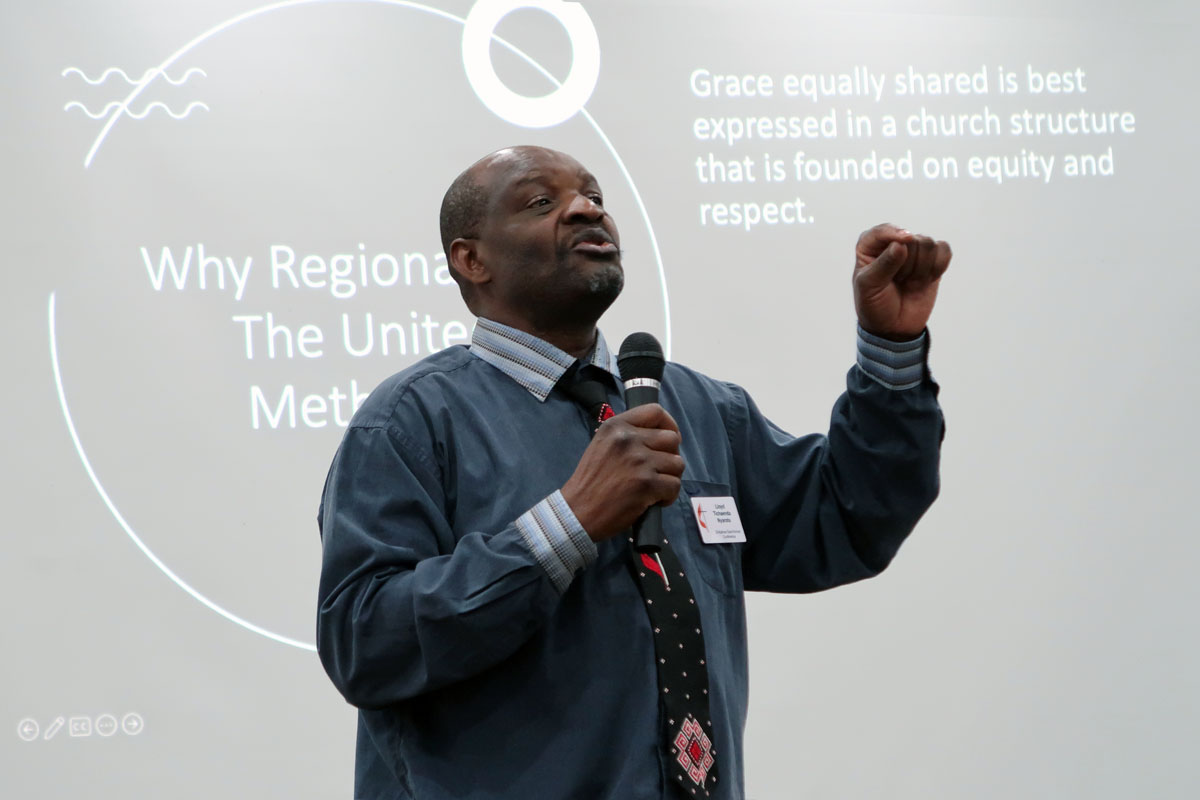
- The Rev. Lloyd T. Nyarota of Zimbabwe East Conference was unanimously elected general coordinator.
- The group agreed homosexuality is not compatible with Christian teaching and African cultural values.
- Keynote speaker Bishop Mande Muyombo says “mission should first be about building relationships with one another” in spite of differences.
A new caucus called United Methodist Africa Forum has expressed support for the African bishops’ statement of September 2022, restructuring of the church into regions and the unity of The United Methodist Church.
At an inaugural meeting April 21-22, forum delegates unanimously elected the Rev. Lloyd T. Nyarota of the Zimbabwe East Conference as the caucus’ general coordinator. Regional coordinators, secretaries and advisers were also elected.
In a statement, the group affirmed its support for episcopal leaders on the continent and recommended investing to promote the growth and sustainability of the church in Africa.
“‘UMAF is very clear that it will support the African bishops as leaders of the church in Africa. They are our leaders, so we will engage with them, reason with them, get their advice and support them in their ministry,” Nyarota told UM News at the close of the meeting.
He added: “We had a detailed, intense, highly charged discussion on human sexuality. There was a long discussion, but at the end, the majority in Africa still stands on the position that homosexuality is incompatible with Christian teaching.”
Nyarota said the meeting’s conversations also focused on how to keep The United Methodist Church in Africa together and self-sustaining.
“We looked at financial stability. There was a robust discussion about livable pensions for our retired clergy. These are men and women who toil doing the work of the church, and when they retire, most of our African clergy do not get meaningful pensions,” he said.
The forum also discussed restructuring the church. The current structure, delegates said, has been U.S.-centered, causing a need to decolonize that influence and give the African region self-determination.
The participants explained how regionalization would work and adopted a slogan: “We were United Methodists, we are United Methodists and we will be United Methodists.”
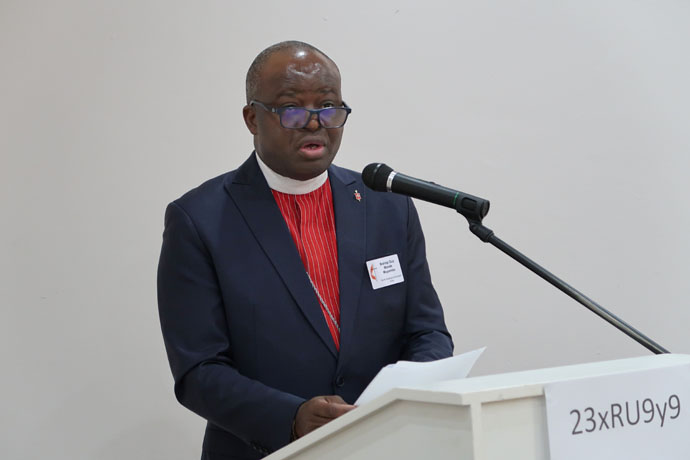
Keynote speaker Bishop Mande Muyombo of the North Katanga Area expressed the views of most African episcopal leaders by vowing that The United Methodist Church will continue on the continent even after next year’s top legislative assembly, General Conference, meets and by resolving not to support any proposed legislations that calls for dividing or dissolving the church.
He added that Africans do not support the practice of homosexuality because it is incompatible with most African cultural values and contextual realities. Still, he and most other African bishops do not favor any plan that calls for the dissolution of the church and, by default, the closure of general agencies.
“Even if the UMC splits, Africa will continue to be a United Methodist Church and we will continue to be an evangelical, missional and Bible-focused church that is both global and connectional,” Muyombo said.
The bishop added: “African United Methodists must resist being used as proxies of U.S. groups. I am inviting you to exercise your self-determination and speak for yourselves based on your own experience and that of your church community.”
Muyombo said that despite the shared Wesleyan identity, there are still major differences as far as Christian ethics related to human sexuality. Therefore, he said, it is critical to focus on building relationships.
“Our Christian life should not only be about our vertical relationship with God, but also our horizontal relationships with other people, especially those who do not think like us or look like us,” he concluded, citing how Jesus Christ interacted with the Samaritan woman at the well and Zacchaeus the tax collector who was not appreciated in the community. “Mission should first be about building relationships with one another.”
Muyombo urged delegates to engage in decolonizing or deconstructing those dynamics and structures of the church that have damaged relationships and fellowship, such that members have not been fully living the experience of the Lord’s supper as John Wesley understood it.
“I want the African United Methodist church to take the lead in stimulating our worldwide church by sharing about the wonderful things that are happening in our respective communities around evangelism and church growth, health, food security, leadership development, baptism, worship… We do not need other wars in our church. Rather, the church community must be a place of peace, healing, recovery and encouragement,” he said.
The Rev. Caleb SG Dormah of Liberia, elected as the United Methodist Africa Forum regional coordinator for West Africa, said the inaugural meeting focused on “our uniqueness as Africans, our self-determination for the future of the church and the unity of the church.”
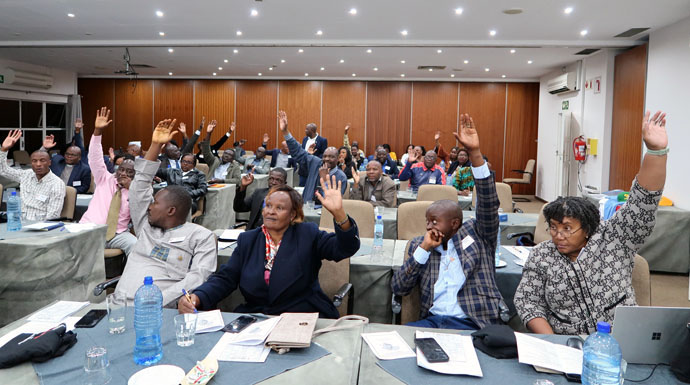
He said the participants agreed that regionalization would bring them to the place of self-determination. “We come from different regions, with different ideas, and we brought together our diversities and put them in one melting pot and we gelled together. Everyone shouted the slogan ‘We were United Methodists, we are United Methodists and we will continue to be United Methodists!’”
“Regionalization will not separate us. It will strengthen our core doctrine in The United Methodist Church. There is a need to unite with the global church. We come to this connectional table with a lot of gifts and graces,” said Dormah.
“UMAF is here to stay,” he added. “It is a grassroots lobbying organization that will teach Africans the African way. The way we worship, the way we see things, the vibrancy we bring to worship services, need to be brought to the connectional table so that other people can know we are here.”
The inaugural meeting was attended by more than 70 delegates from all conferences in Africa, as well as representatives from general agencies and racial ethnic caucuses.
Chikwanah is a communicator of the Zimbabwe East Conference.
News media contact: Julie Dwyer at (615) 742-5470 or [email protected]. To read more United Methodist news, subscribe to the free Daily or Weekly Digests.


