
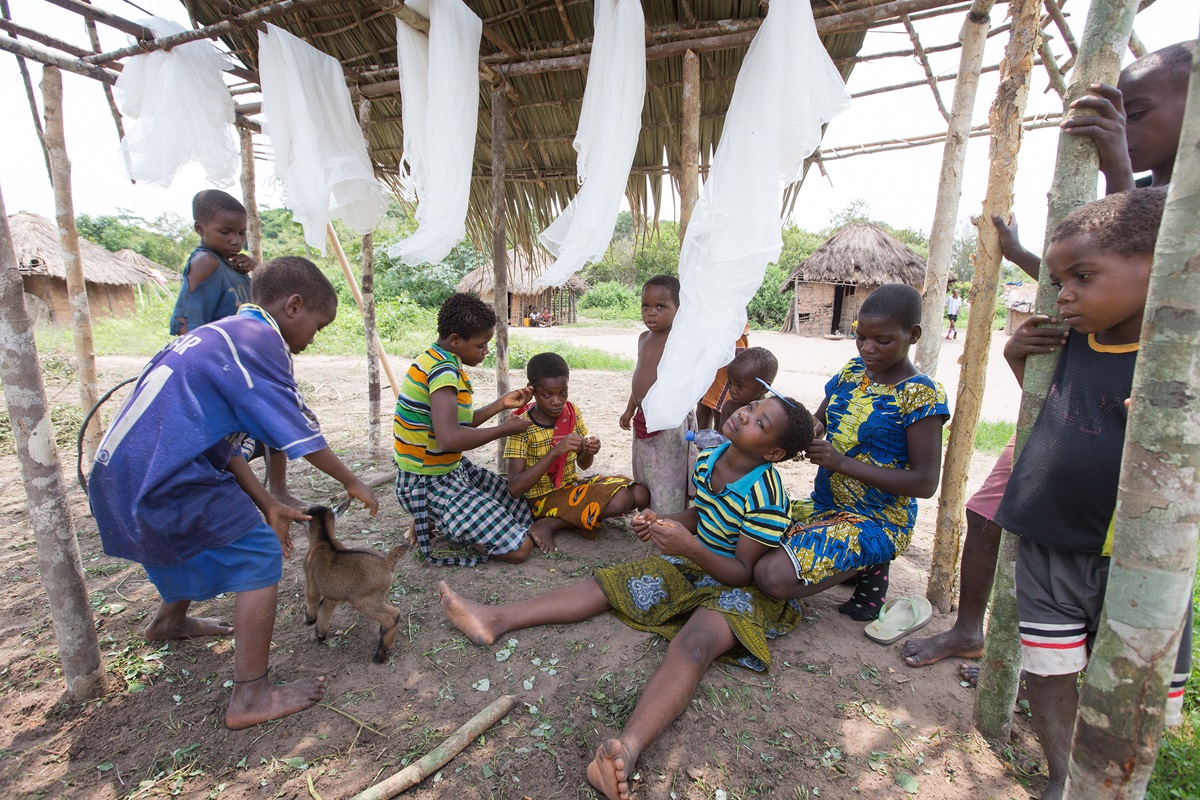
Reconciliation between indigenous pygmy tribes and another ethnic group is part of a larger goal for a new United Methodist bishop in the Democratic Republic of Congo.
As Bishop Mande Muyombo wrote in an Easter letter to church members in the North Katanga area, the resurrection of Christ offers hope and the renewal of life, including “bringing back peace in the Tanganyika Area and the reconciliation between the (Bantus) and pygmies. All of us were created in God’s image.”
His call for “spiritual renewal through sanctification, prayers and forgiveness with one another” extends to a hope for peace and stability across the African nation, manifested in a “move towards free and fair elections.”
This desire is not new. The United Methodist Church has been at the forefront of peace, reconciliation and development work in the Democratic Republic of Congo, Muyombo said during an interview last month in Atlanta, where he was honored by staff and directors of the United Methodist Board of Global Ministries.
Before being elected to the episcopacy in March, Muyombo had served as a staff executive for the mission agency since 2012. Also elected as bishops were the Rev. Daniel Onashuyaka Lunge, assigned to Central Congo, and the Rev. Kasap Owan, South Congo. Bishop Gabriel Yemba Unda was re-elected and will continue to serve in East Congo.
The Bashimibi — indigenous tribes also known as pygmies — live in Central Congo, East Congo and North Katanga, where United Methodists have acted as a bridge between the pygmies and the Bantu majority. The current conflict, dating from June 2016, has resulted in death and displacement.
A grant from the United Methodist Committee on Relief has helped those displaced by the conflict with some basic needs, Muyombo said. He also gave credit to the Wings of the Morning aviation program and its missionary pilot, Gaston Nkulu Ntambo, for providing a medical-relief program.
“He has done an outstanding job in helping some of these seriously injured individuals to be airlifted to hospital facilities in the city,” Muyombo said.
Muyombo said he is appreciative of the prayers and programs to boost peace initiatives, including a $10,000 grant from Global Ministries to support an ecumenical peace and reconciliation conference a few months ago. Another peace conference held by government officials and local authorities also had a significant impact on the situation, he added.
Citing this “positive progress,” Muyombo believes the situation between the pygmies and Bantu is at a “post-conflict stage.”
Now, a peacebuilding program is needed. “The goal is to seek forgiveness, peace, reconciliation and healing,” he explained.
“The healing aspect is probably the most difficult,” Muyombo said, and will require intentional programs “that help recognize the humanity in each person.”
Ongoing peace efforts also continue in other parts of the Democratic Republic of Congo. Among the 67 grants awarded recently by the Commission on Central Conference Theological Education was a $21,285 grant for “Pastoral Training in the Fight Against Tribalism: An Approach to a Theology of Living Together in South Congo.”
One of the challenges in the pygmy conflict is that indigenous pygmy tribes had no “accompaniment measures” to help them become part of the larger community, Muyombo noted.
“We are thinking about boosting some program of co-existence between the two communities,” the bishop said, which would include assistance with education, health care and other needs.
The Rev. Betty Kazadi Musau, secretary of the Central Congo Conference and health board chair of the North Katanga Conference, has helped bring together United Methodist women and indigenous people in the Tanganyika area to work on peacebuilding.
Muyombo said he appreciated that the United Methodist Board of Church and Society invited Musau to participate in events in Norway in February that highlighted church ties to indigenous cultures.
In an email to United Methodist News Service after the Norway meetings, Musau said her involvement in a United Methodist working group on indigenous people is bringing an international church focus on partnerships with indigenous groups in the Congo, in other parts of Africa and elsewhere around the connection.
“With actionable recommendations, thanks to the field report funded by United Methodist Women-New York, I have to scale up North Katanga Episcopal Area engagement in the area of peacebuilding, advocacy, rights for indigenous people and protection,” she wrote.
Offering vocational training skills between Bantus and pygmies, such as knitting, is “a good sign for living in harmony and peace in Tanganyika,” Musau noted.
“There has been peacebuilding training going in Kalemie (Tanganyika) for the case of Congo on how to create harmony for the two ethnic peoples to live together,” she wrote. “It has been (too) long that only one voice from the Bantu is heard. Now, indigenous people claim their rights for land, power and intercommunity marriage.”
Another longstanding concern is violence against women in the Democratic Republic of Congo. Muyombo cited “significant progress” in efforts by government, civil society and church leaders to address that problem with a goal of “zero tolerance.” A recent report of the U.N. mission in Congo “recognized that violence against women in the DRC has decreased significantly,” he added.
The United Methodist Tennessee, Memphis and California-Pacific Conferences are collaborating with the East Congo United Methodist Church through Congo Women Arise, an initiative to address the needs of rape survivors.
The progress is partly due to an awareness campaign by all parts of society, including church leaders, he said, “but also because the president of the country has appointed a special advisor in charge of sexual violence against women.” In addition, a special court has been established to quickly prosecute any case of violence against women.
The United Methodist Church must continue to address the issue, the bishop said, recognizing that Congo is a “very patriarchal society” and that more women need to be in leadership. United Methodist Women has supported women-empowerment programs in North Katanga, and Muyombo said he plans to connect with the denomination’s Commission on the Status and Role of Women.
Bloom is the assistant news editor for United Methodist News Service and is based in New York. Kathy Gilbert of UMNS contributed to this report. Follow Bloom at https://twitter.com/umcscribe or contact her at 615-742-5470 or [email protected]. To read more United Methodist news, subscribe to the free Daily or Weekly Digests.
Like what you're reading? Support the ministry of UM News! Your support ensures the latest denominational news, dynamic stories and informative articles will continue to connect our global community. Make a tax-deductible donation at ResourceUMC.org/GiveUMCom.


