
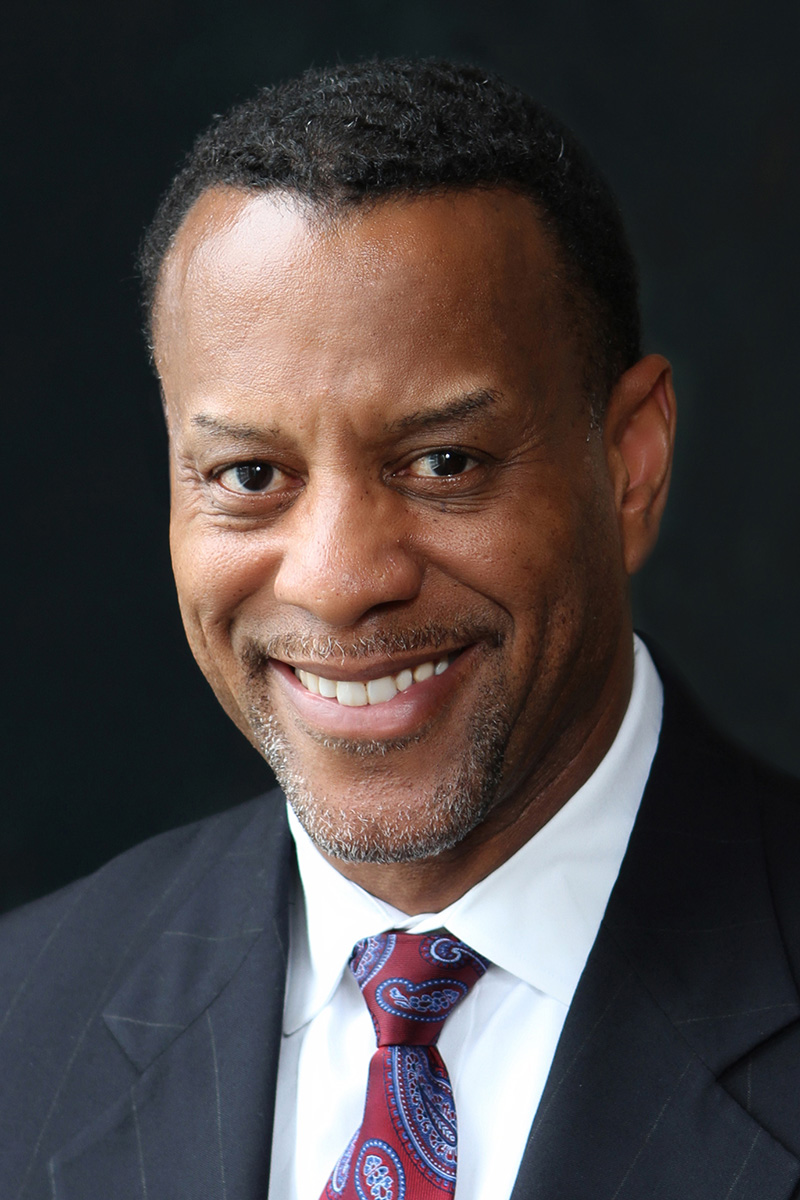
The Rev. Byron Thomas
Photo courtesy of Ben Hill United Methodist Church.
Photo courtesy of Ben Hill United Methodist Church.
(I Corinthians 16:13)
“I have no positivity to give you in this moment. I’m cleaned out. I ran out of positivity after seeing me in the office for months co-workers still clutched their bags in the hall whenever they saw me. I am out of positivity getting suspended every year of my elementary school for defending myself against these kids who wanted to start shit but found out that my fists hit harder. I am out of positivity when my father, a pastor who wears suits on the daily, has his face pushed into the asphalt because he fits the description of a suspect, causing irreversible damage, only to be set free with a “my bad.” Meanwhile, I have to sit up in college and keep face as my father is laid up in a hospital on the other side of the country.
“What I have for you instead is a level of acidic acrimony the likes of which words have not been created to describe. The fullest extent of the law does not sate my desire for a just end. What I desire is for them to play tetherball with Derick Chauvin’s body as he dangles for 8 minutes and 46 seconds. What I desire is for them to fear ever inflicting pain on us again.
What I desire is to not have a reason to know George Floyd’s name,
Or Breonna Taylor’s
Or Botham Jean’s
Michael Brown’s
Sandra Bland’s
Atatiana Jefferson’s
Alton Sterling’s
Eric Gardner’s
Ahmaud Arbery’s and too many others.
“This is not a new world you’re experiencing, just one that’s optional for some.”
These words are the sentiments of a 6-foot-5 inch, 26-year-old well-educated, bilingual, sensitive, compassionate, highly skilled, artistic, thoughtful young Black man who is deeply devoted to his family, loyal to his friends, and possesses a keen sense of what is “just.”
These words were written by my youngest son, who dares to live as a fully expressed Black man in a nation steeped in a legacy of racial injustice — a legacy that is baked into every social structure in American society and continues to fester in the hinterland referred to as “unconscious bias.”
Commentaries
UM News publishes various commentaries about issues in the denomination. The opinion pieces reflect a variety of viewpoints and are the opinions of the writers, not the UM News staff.
This is something with which fathers of white children do not have to concern themselves. For the very structures of society, of which racial injustice is part and parcel, provide special protection for white children at the expense of and to the detriment of Black children.
Therefore, just as Scripture (Proverbs) provides examples of fathers giving instruction to their sons to assist them in navigating life, in like manner Black fathers must provide their children lessons on how to stay alive in a nation where racial injustice permeates every sector of society. This has required Black fathers to instruct our children how to, to use the words of the Apostle Paul, “be on guard.” I have had to talk to my son about what to do if (and most likely when) he is stopped by police; how his appearance as a Black man immediately alarms many white people; being followed around in stores by security just because he is Black; and more.
As a father, I cannot begin to convey that while I understand their necessity, these conversations are also heart-wrenching. In light of this, my question to my white brothers who are fathers is, “When reflecting on the conversations you have had with your children, did they ever sound like the conversations I (and most Black fathers) have had to had with my Black children?”
The Apostle Paul does not however stop with the admonition to be on guard; rather his counsel is “to stand firm; be courageous; and be strong.” These words that Paul chooses convey a central tenet of the pedagogy of a Black father’s instruction and example to his children: firmness speaks to resilience in the midst of racial adversity, and courage acknowledges fear of the sheer magnitude of the challenge of daring to attempt to right the wrongs of an unjust society. And, while refusing to allow this to stifle hope, God’s strength is what will be needed in the press forward as we travail in the midst of our striving for racial injustice.
To my white brothers who are also fathers, will you be on guard to teach your children about racial injustice? Will you be resilient in facing the truth of racial injustice and the privilege that it affords your children? Will you have the courage, given the degree of difficulty, to press towards the creation of a society where your children will stand for justice over privilege? Are you willing to depend on God’s strength? For that strength will be needed.
If the future of the church and our nation is going to be better than the past, my earnest prayer is that you will.
Thomas is senior pastor of Ben Hill United Methodist Church in Atlanta and the father of two sons.
News media contact: Vicki Brown or Tim Tanton at (615) 742-5470 or [email protected]. To read more United Methodist news, subscribe to the free Daily or Weekly Digests.
Like what you're reading? Support the ministry of UM News! Your support ensures the latest denominational news, dynamic stories and informative articles will continue to connect our global community. Make a tax-deductible donation at ResourceUMC.org/GiveUMCom.


