
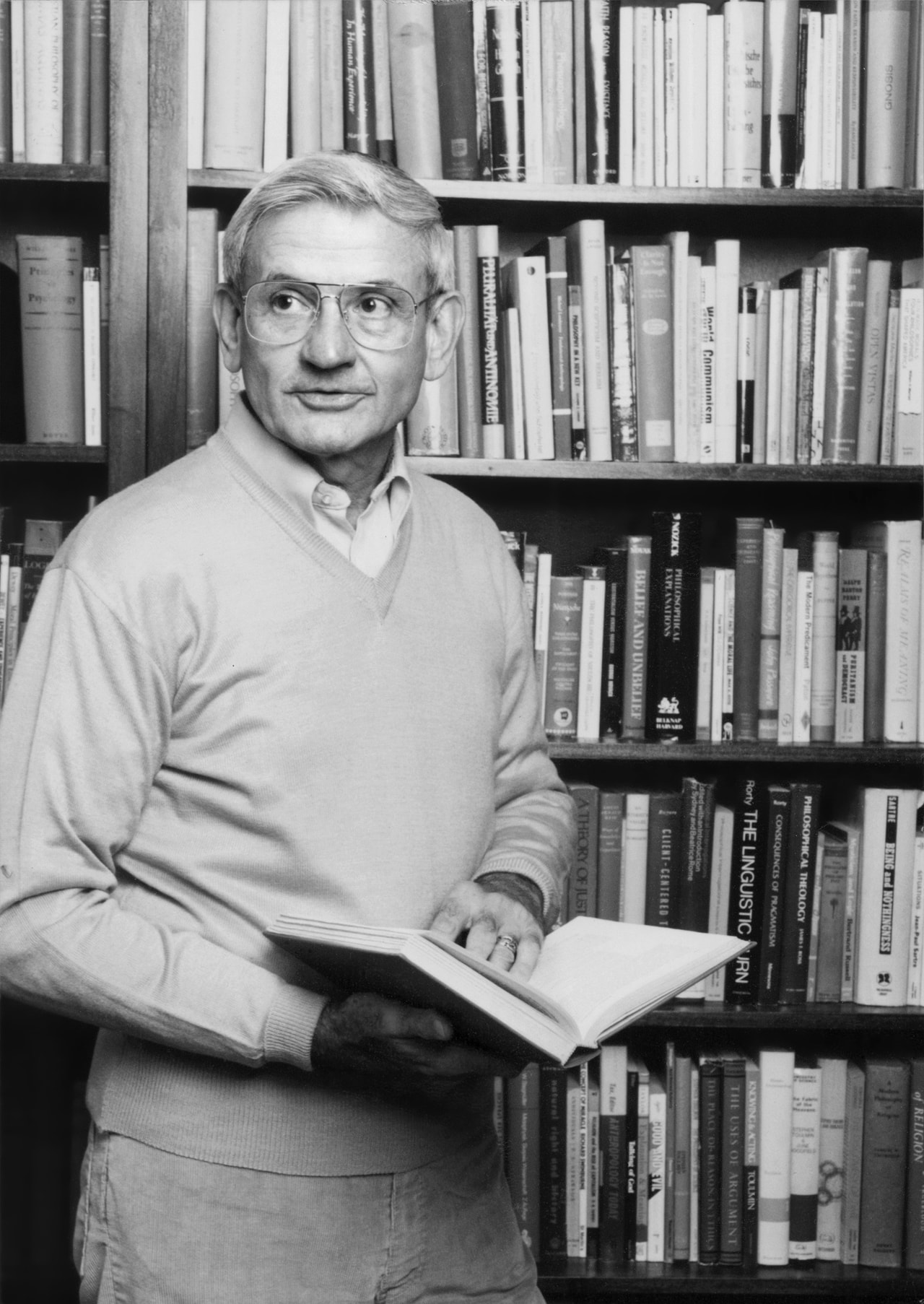
The Rev. Schubert Ogden earned broad renown as a United Methodist theologian — writing challenging books and articles, winning top honors and fellowships, and eventually becoming the subject of younger scholars’ analysis.
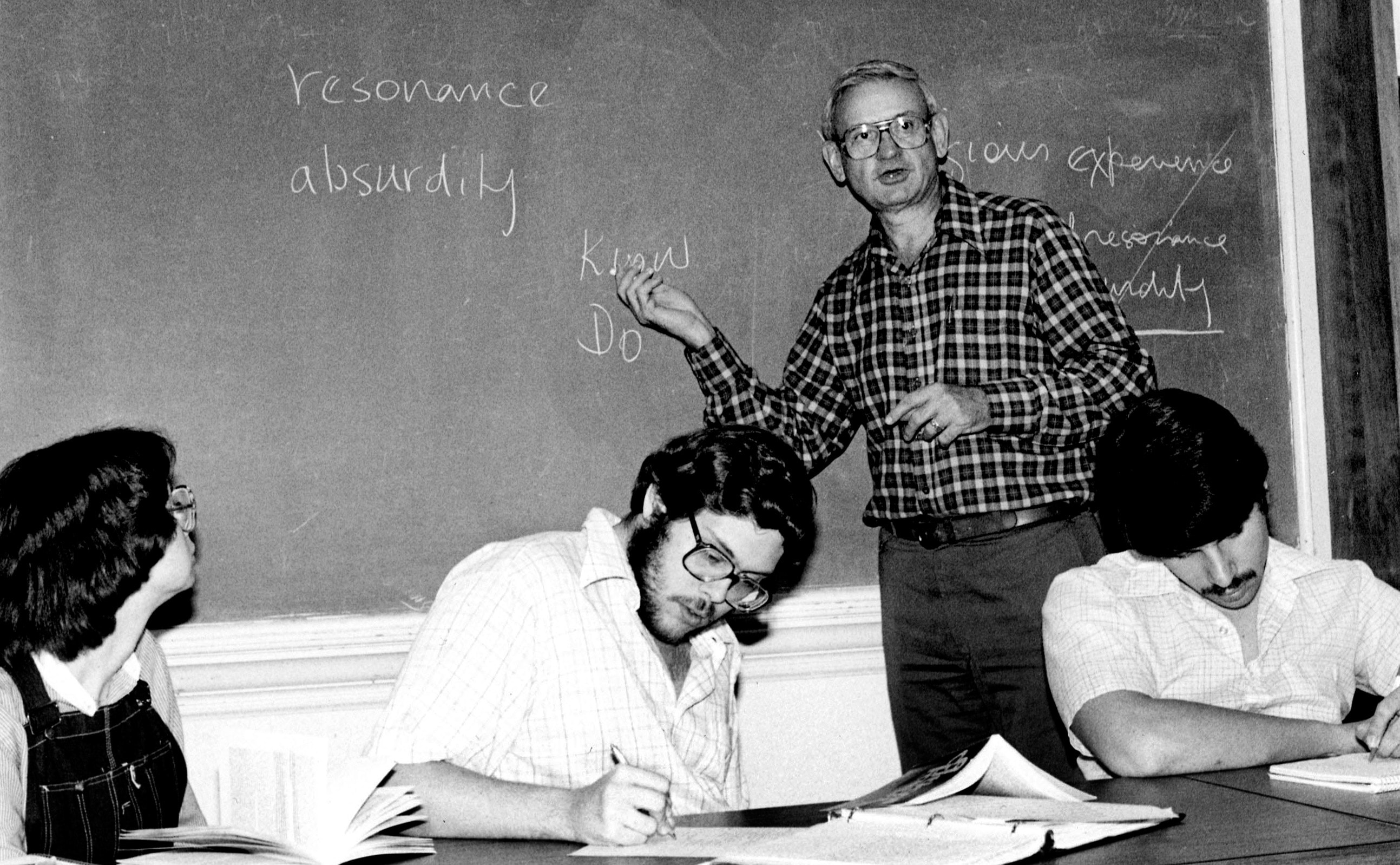
But at Perkins School of Theology, Ogden was known for the tough love he showed pastors-in-training and other seminarians. He demanded as much clarity and depth in their papers and classroom debates as they could muster.
“I’ve had generations of Perkins students tell me, ‘He taught me how to think,’” said the Rev. Charles Wood, a former colleague at Perkins.
The Rev. Lovett Weems was one of those students in the late 1970s.
“‘Intimidating’ is not too strong a word,” Weems said of Ogden. “But I don’t mean that in a negative sense. He had high expectations.”
Ogden died June 6 in Louisville, Colorado, near Boulder and Denver. He was 91.
Among those remembering him with gratitude is the Rev. Philip Devenish, one of his Perkins doctoral students in the 1970s. Devenish had been studying at Yale Divinity School when he read a scholarly article by Ogden and decided he’d found his theological mentor.
Devenish and his wife, Phoebe, had never lived outside the northeast but moved to Dallas so he could study with Ogden at Perkins, part of Southern Methodist University. His admiration only grew.
“You almost can’t overestimate his importance, and the significance of his work,” said Devenish.
Born in Cincinnati, Ogden would study at Ohio Wesleyan University, Johns Hopkins University and the University of Chicago Divinity School.
His doctoral dissertation at the University of Chicago won the school’s award for best dissertation in education, sociology or theology and was published by Harper and Brothers as “Christ Without Myth,” in 1961.
The book was Ogden’s response to the German theologian Rudolph Bultmann, with whom he would have a close association. Ogden also was influenced by Charles Hartshorne, a philosopher he studied with at The University of Chicago.
“(Ogden) is most noted among theologians for a kind of blend of the existential theology of Rudolph Bultmann and the neo-classical metaphysics that comes out of Charles Hartshorne,” Wood said.
Devenish took his own crack at explaining Ogden’s work:
“Among his important contributions to Christian theology is the recognition that what is Christian and what is true are independent of each other,” he said. “There’s a historical judgment about what is accurately Christian and then there is a philosophical judgment about what is true. Something being Christian does not make it true, and something being true does not make it Christian, and Christian theology is responsible for both judgments.”
Ogden’s other books would include “Faith and Freedom,” “The Point of Christology,” “Doing Theology Today” and “The Understanding of Christian Faith.” Devenish recommends for general audiences two Ogden books of later years – “To Preach the Truth: Selected Sermons and Homilies” and “To Teach the Truth: Selected Courses and Seminars.”
In 1956, Ogden — still working on his doctoral dissertation — joined the Perkins faculty. As his star rose, other seminaries tried to hire him. Ogden did leave in 1969 to become University Professor of Theology at the University of Chicago, but returned to Perkins and SMU in 1972. Two years later, he became director of the graduate program in religious studies. He retired from Perkins in 1993.
Along the way, he won a Guggenheim Fellowship, was elected to the American Academy of Arts and Sciences and served as president of the American Academy of Religion. The book “Witness and Existence,” published by The University of Chicago Press, collects scholarly essays written in Ogden’s honor.
At Perkins, Ogden team-taught courses with John Deschner, and later with Wood and others. The professors often saw things differently, and Perkins’ leaders liked that.
“The idea being, you can’t get through the course simply by agreeing with the instructor,” Wood said.
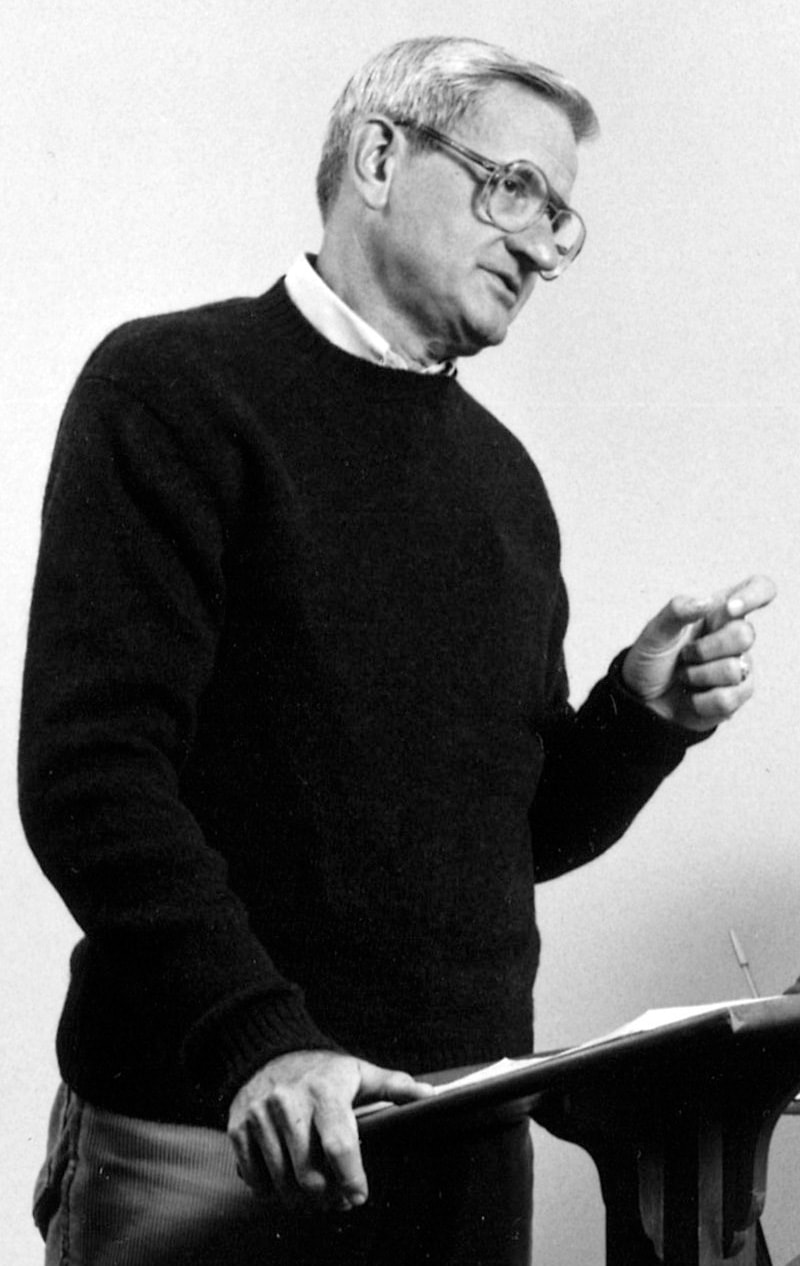
The Rev. Schubert Ogden won a Guggenheim Fellowship, was elected to the American Academy of Arts and Sciences and served as president of the American Academy of Religion. Undated file photo courtesy of Bridwell Library Special Collections.
He added that having Ogden as a colleague was “a great gift,” and that Ogden didn’t try to win him over, but rather tried to help him perfect his own thinking.
“If I showed him something I’d written either pre-publication or after it was out, I would always get a detailed, two-or-three page set of notes,” Wood said.
Though a scholar through and through, Ogden in the 1950s was ordained as a deacon and then as an elder in the Ohio Conference. He and his late wife, Joyce, were active at Northaven United Methodist Church in their Dallas years.
“Schubert was a church-going person, sang in the choir, and was committed to The United Methodist Church and the local church,” Devenish said.
Ogden remained intellectually engaged and writing until very late in life. “Notebooks,” a book derived from notebooks he kept over decades as he read and responded to other theologians and philosophers and revised his own thinking, was published just last year.
Drew Theological School has digitized and made available Ogden’s notebooks. Ogden also is well represented on YouTube, where he’s featured in a series of American Scholars of Religion interviews. They reveal the formidable intellect that caused fear and trembling among Perkins students.
“He was fundamentally kind and caring, but he saw his vocation primarily as caring about the way students thought, caring about their theological formation, and he wasn’t cutting any corners with that,” Wood said.
Ogden is survived by sons Andrew and Scott and three grandchildren. A service is still being planned.
Hodges is a Dallas-based writer for United Methodist News. Contact him at 615-742-5470 or [email protected]. To read more United Methodist news, subscribe to the free Daily or Weekly Digests.
Like what you're reading? Support the ministry of UM News! Your support ensures the latest denominational news, dynamic stories and informative articles will continue to connect our global community. Make a tax-deductible donation at ResourceUMC.org/GiveUMCom.


