
Editor's note: Third paragraph, starting with "The Sand Creek", corrected on March 20, 2012 to reflect that Col. John Chivington was a Methodist pastor.
Support for The United Methodist Church to contribute $50,000 to the development of a research and learning center at the Sand Creek Massacre National Historic Site was expressed April 28 in action by General Conference 2008.
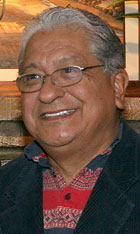
The Rev. Alvin Deer
The United Methodist Church's top legislative body authorized the contribution. However, the action will not be final until the conference adopts the denomination's 2009-2012 budget May 2.
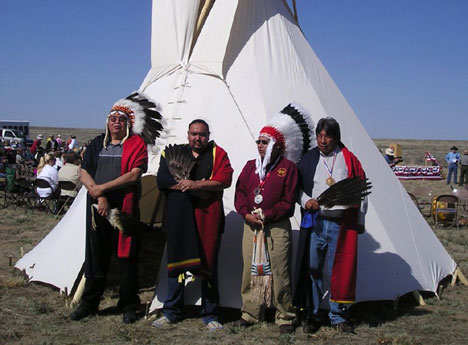
The Sand Creek Massacre National Historical Site is a memorial to more than 160 Native Americans mostly women and children who were massacred in 1864 by troops led by a Methodist pastor, Col. John Chivington. The historic site, 160 miles southeast of Denver, opened to the public in June 2007.
In 1996, the United Methodist General Conference expressed regret for the Sand Creek massacre and issued an apology for the "actions of a prominent Methodist."
The United Methodist Commission on Christian Unity and Interreligious Concerns will work with the United States National Park Service to develop the Sand Creek Massacre National Historic Site Research and Learning Center, according to the petition passed by a vote of 426 to 378.
"This is an act that the whole church needs to own," said Lonnie Brooks, a delegate from the Alaska Missionary Conference and board member of the United Methodist Commission on Christian Unity and Interreligious Concerns.
Related Articles
Commentary: Massacre site offers historical truth
Kiowa United Methodists share culture
Resources
Opposition to the legislation focused on finances because the $50,000 contribution is not part of the $642 million general church budget. "It should have been included in the budget," said Jeff Jernigan, a lay delegate from North Georgia.
"We really need to show that we're in support of healing the generations (of Cheyenne people) that have come out of that story. This is a good thing that the church is doing to fund this," said the Rev. Alvin Deer, former executive director of the Native American International Caucus.
Josh Davies, a lay delegate from the Rocky Mountain Conference, said, "I urge members to please do our part to wipe this smear off our history."
*White is associate editor of Interpreter magazine.
News media contact: Deborah White, e-mail: [email protected].
Phone calls can be made to the General Conference Newsroom in Fort Worth, Texas, at (817) 698-4405 until May 3. Afterward, call United Methodist News Service in Nashville, Tenn., at (615) 742-5470.
Like what you're reading? Support the ministry of UM News! Your support ensures the latest denominational news, dynamic stories and informative articles will continue to connect our global community. Make a tax-deductible donation at ResourceUMC.org/GiveUMCom.


