
Key Points:
- According to the World Health Organization, Cyclone Freddy has killed more than 600 people in Malawi, Mozambique and Madagascar.
- The record-breaking storm’s duration was at least 36 days. United Methodists are reaching out to survivors as recovery continues.
- With churches and schools serving as resettlement places, classes and worship services are on hold.
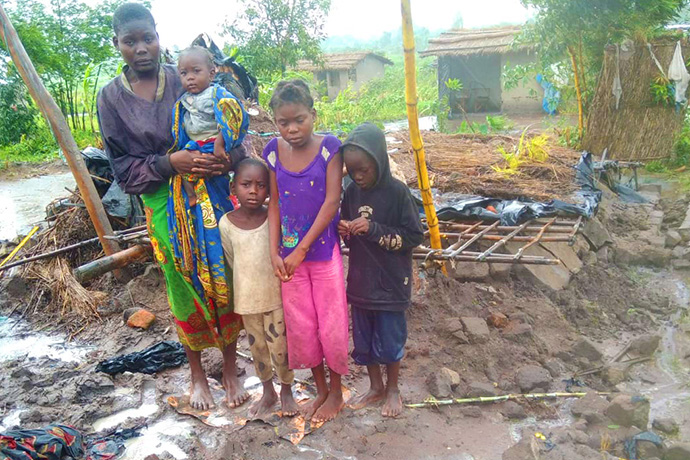
In mid-February, national and international media warned of a cyclone that was quickly moving toward southeastern Africa. However, no one knew that Cyclone Freddy would ping-pong along the coast, hitting Madagascar, Mozambique and Malawi and uprooting trees and houses, killing people and animals, and burying and destroying anything that stood in its way.
The Mozambique Channel, on the east coast of Africa, has become a preferred pathway for cyclones that furiously strike the continent, after first striking Madagascar.
Two stages of this natural phenomenon occurred in less than two weeks beginning in late February and affecting thousands of families in Mozambique’s South and Central provinces. In March, the tropical cyclone made a second landfall, devastating Malawi.
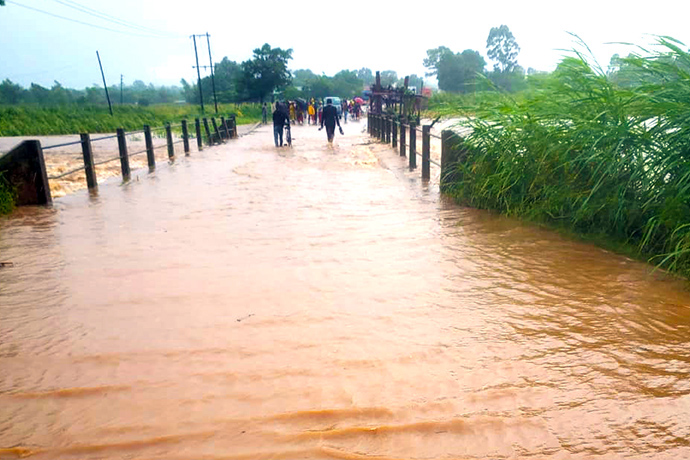
According to the World Health Organization, Cyclone Freddy has killed more than 600 people in the three countries.
Church and government officials are calling for an urgent response.
“We have never experienced so much rain and heavy winds in just a couple of days,” said the Rev. Maria Joao Budula, Zambezia North District superintendent in Mozambique. “Everywhere we look, we see water and destruction.”
Zambezia North District shares the border with Malawi, where the most deaths occurred. Three chapels and a parsonage in the district were destroyed in Mongue, Coxane and Chiriri.
“Our pastor and his family were rescued by a church member in their home,” Budula said. “Roads and pathways are (impassable). Schools turned into resettlement centers to accommodate families whose houses were destroyed.
“We thank God for sparing our lives. We believe the same God will help us surface from the rubbles of Cyclone Freddy,” said Budula, who has served the district for the past three years.
To donate
To help with recovery efforts after Cyclone Freddy, you can give to United Methodist Committee on Relief’s International Disaster Response and Recovery through Advance #982450.
Zenaido Castigo, a member of Milange United Methodist Church and a local schoolteacher for more than 15 years, said his house was shaking, and he feared it would fall. “Like my neighbor’s house, mine is full of cracks on the walls. I have to re-nail the corrugated sheets to reinforce the roofing.”
Castigo is concerned about the students who attend school in Milange.
“This is the second week with no classes,” he said. “Some schools have turned into resettlement centers for families who lost their homes.
“As I look at the landscape of Milange, I can imagine that bridges and roads were either submerged or washed away by the fury of waters. The government and communities will have difficulties ahead in terms of mobility.”
Castigo estimated that more than 50,000 people in that part of Zambezia Province are directly affected. The cyclone took out power lines, water system distribution channels, railroad tracks, roads and bridges.
The Rev. Antonio Fafetine, also a Zambezia district superintendent, noted, “Within Zambezia South, we have chapels partially or completely destroyed.” Seven provinces compose the Mozambique North Conference.
“In Nicoadala, the Betania Local Church had its roof completely destroyed,” said Fafetine. “In Fitimela, we were building a new infrastructure and in an advanced stage of construction. But Cyclone Freddy deconstructed it.
“Our chapel in Nicoadala serves now as a resettlement center. People who lost their homes, or their homes are flooded, have found in our church a safe haven for their families.”
As churches and schools serve as resettlement places, classes and worship services are on hold.
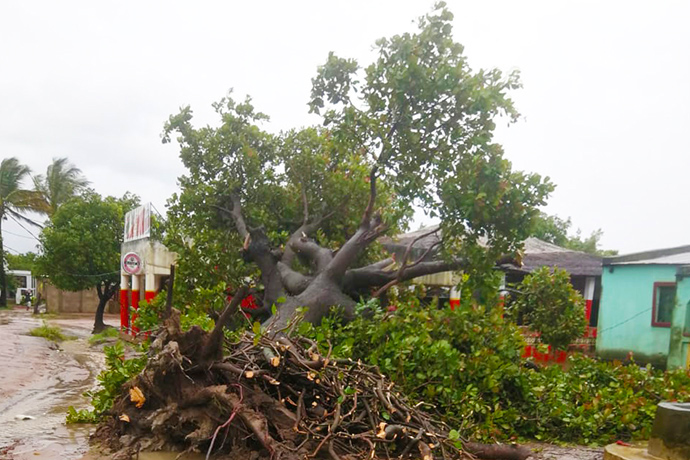
The situation is similar in parts of the South Conference.
“Our infrastructures in Chicuque and Cambine suffered considerably,” said the Rev. Hortencia Bacela, connectional ministries director.
The Center of Hope and residences around Chicuque Rural Hospital were damaged or destroyed. Church and community members, Bacela said, “still today cry and claim for assistance due to Cyclone Freddy.”
Church leaders in both the North and South conferences are working to gather data on the estimated number of those directly affected. Cyclone Freddy also wreaked havoc in Madagascar, a mission field of the Mozambique Episcopal Area.
Subscribe to our
e-newsletter
“Our relief intervention will include Madagascar,” said Respeito Chirrinze, the United Methodist Committee on Relief’s disaster management coordinator in Mozambique. He has been working with the agency to coordinate relief efforts.
UMCOR has provided two initial $10,000 grants to The United Methodist Church in Mozambique to provide emergency food rations and basic hygiene supplies for vulnerable people in Mananjara, Madagascar and the Zambezia Province of Mozambique. The agency also is working on larger-scale relief grants for Malawi and Mozambique.
“We look forward to partnering with UMCOR in support of those survivors,” Chirrinze said.
The Rev. Joao Damiao Elias, a United Methodist clergy and the Mozambique Christian Council secretary general, said he is concerned with what is happening in the country.
“Our immediate intervention was to sit before God in prayer,” Elias said. “We convened all Mozambique Christian Council church members for a solidarity worship service on March 11.”
The United Methodist Church sent donations of clothing and shoes, school supplies, funds and foodstuffs to the council.
“We are grateful for what we have received so far,” Elias said. “Not only United Methodists generously donated, but other denominations did as well.”
While statistics are not firm, more than 2 million people may be affected. Roads and bridges and private and public infrastructures were partially or completely destroyed.
“Our country and our conference in particular have suffered from these cyclones yearly,” said the Rev. Jacob Jenhuro, administrative assistant to the bishop in the North Conference. “Chapels, schools, parsonages and houses of our church members suffer every year from the effects of Mother Nature.”
Sambo is Africa Lusophone correspondent for UM News. News media contact: Julie Dwyer at [email protected]. To read more United Methodist news, subscribe to the free Daily or Weekly Digests.


