
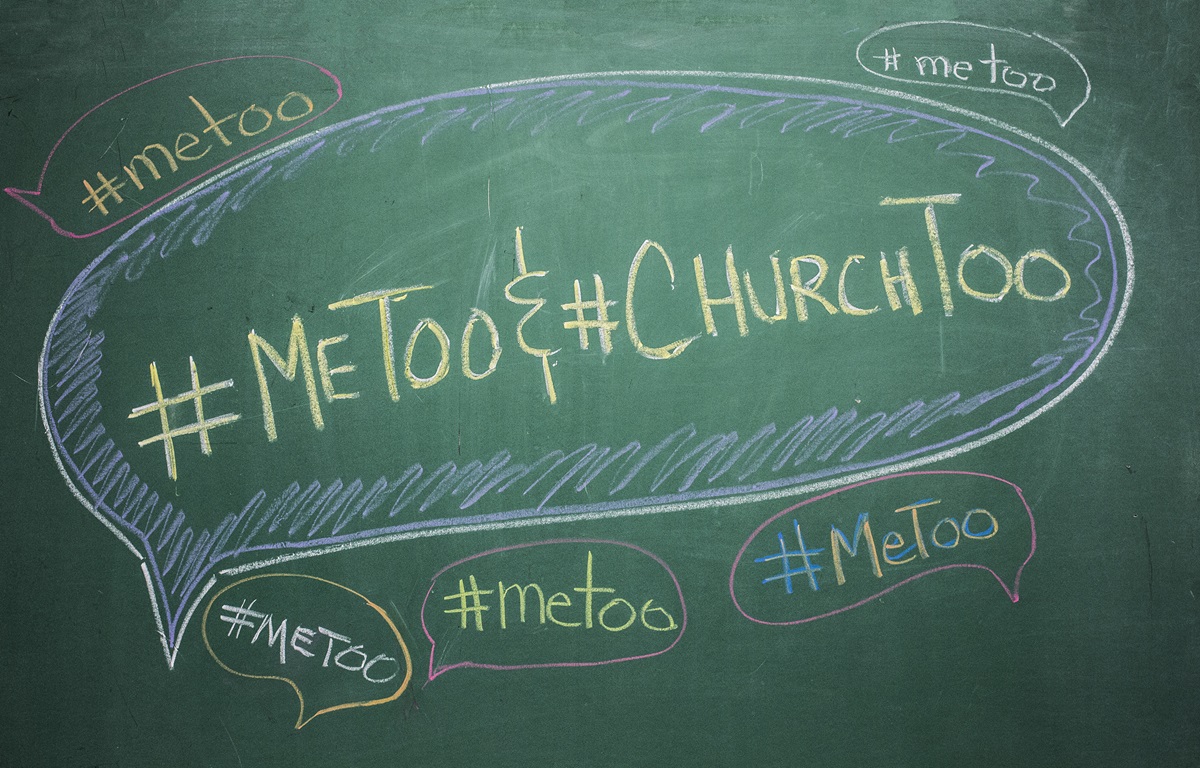
As allegations of sexual misconduct rock the U.S. from the sets of Hollywood to the halls of Washington, United Methodist leaders acknowledge that the church also has seen such abuses of power.
In a joint statement released Jan. 23, the Council of Bishops and the Commission on the Status and Role of Women “strongly encourage and support the reporting of sexual misconduct, including sexual harassment allegations within the church.”
To the extent of their ability, the bishops and agency staff, also pledge, “to do the right thing in every complaint received, including listening well to hear the story and developing a response which holds persons accountable and offers healing for all affected.”
The signers of the statement are Bishop Bruce R. Ough, Council of Bishops president; Bishop Tracy Malone, board president of the commission; and Dawn Wiggins Hare, the commission’s top executive.
Even before #MeToo began trending on social media, Hare said, United Methodist leaders — including bishops — have worked to address allegations of abuse and harassment. She also noted that the commitment to address sexual misconduct and harassment exists across the multinational denomination.
“The Council of Bishops is all in on supporting the full equality of women,” Hare told United Methodist News Service. “And you don’t get full equality of women until you can name sexual misconduct, sexual harassment and the sexual ethics violations that are out there — because those are tools that keep men and women from being treated equally.”
The United Methodist Social Principles explicitly condemn sexual abuse, harassment and assault. The principles also add that sexual harassment “must be understood as an exploitation of a power relationship rather than as an exclusively sexual issue.”
The denomination’s Book of Discipline also lists sexual abuse, sexual misconduct and harassment as chargeable offenses under church law. Clergy members found guilty of such behavior could lose their clergy credentials in addition to whatever other jeopardy they might face under civil laws. Lay employees could be fired.
Still, as the statement points out, alleged victims “are often reluctant to come forward fearing they will not be believed or they will experience retaliation and the decision to report will be held against them.”
The bishops and commission have a message for these churchgoers: You will be heard.
“We want to hold people accountable and also make sure that we provide the resources to help people be cared for throughout the process,” Malone told UMNS. “We want to make sure that in order for us to continue to prevent sexual misconduct that we will support the reporting of it.”
Bishops are frequently the first stop for any complaint accusing a pastor of committing a chargeable offense. They also can have a role in shaping how churches in their episcopal areas work to prevent sexual misconduct and respond when abuses do occur.
The commission, founded in 1972, also has a role to play.
The agency works to train church leaders in the prevention of, response to and healing from sexual misconduct and sexual harassment. At the bishops’ invitation, the commission led two training sessions at the most recent Council of Bishops meeting in November.
The commission also advocates for individual victims of sexual harassment and sexual misconduct. The commission offers support through the denomination’s website, umsexualethics.org, and a toll-free, confidential phone number 800-523-8390.
In the final quarter of 2017, the commission received 33 calls for support on issues around sexual misconduct concerns and/or complaints — 12 from laity and 22 from clergy.
Earlier in January, Greater Northwest Area Bishop Elaine Stanovsky offered her own reflection on the #MeToo movement. As a district superintendent and later as a bishop, she said she played a role in responding to more than 25 cases of sexual abuse.
She advised clergy and other church leaders not to confuse self-giving love with self-serving love.
“It is never OK for you to become sexually involved with people in your care,” she wrote. “It is always your responsibility to maintain healthy professional boundaries. Don’t put yourself in a situation where your intentions might be misunderstood.”
The bishops’ declaration is important but even more critical is the next step, said Hare of the Status and Role of Women commission.
“It’s bringing awareness so we take the next steps to educate, to put systems in place, to try to work on the systemic oppression of victims coming forward,” Hare said. “On all of those pieces, we’ve got to continue to work as best we can.”
Hahn is a multimedia news reporter for United Methodist News Service. Contact her at (615) 742-5470 or [email protected]. To read more United Methodist news, subscribe to the free Daily or Weekly Digests.
Like what you're reading? Support the ministry of UM News! Your support ensures the latest denominational news, dynamic stories and informative articles will continue to connect our global community. Make a tax-deductible donation at ResourceUMC.org/GiveUMCom.


