
Key points:
- United Methodist agencies issued a joint statement on May 1 denouncing a Supreme Court decision on the Voting Rights Act.
- While there is room for debate, it is perplexing that United Methodist leaders would say the Bible compels political action over this judicial decision, writes Cliff White, an attorney and longtime United Methodist.
- The denomination’s leaders should refrain from speaking out on every partisan political issue that comes along, he says.
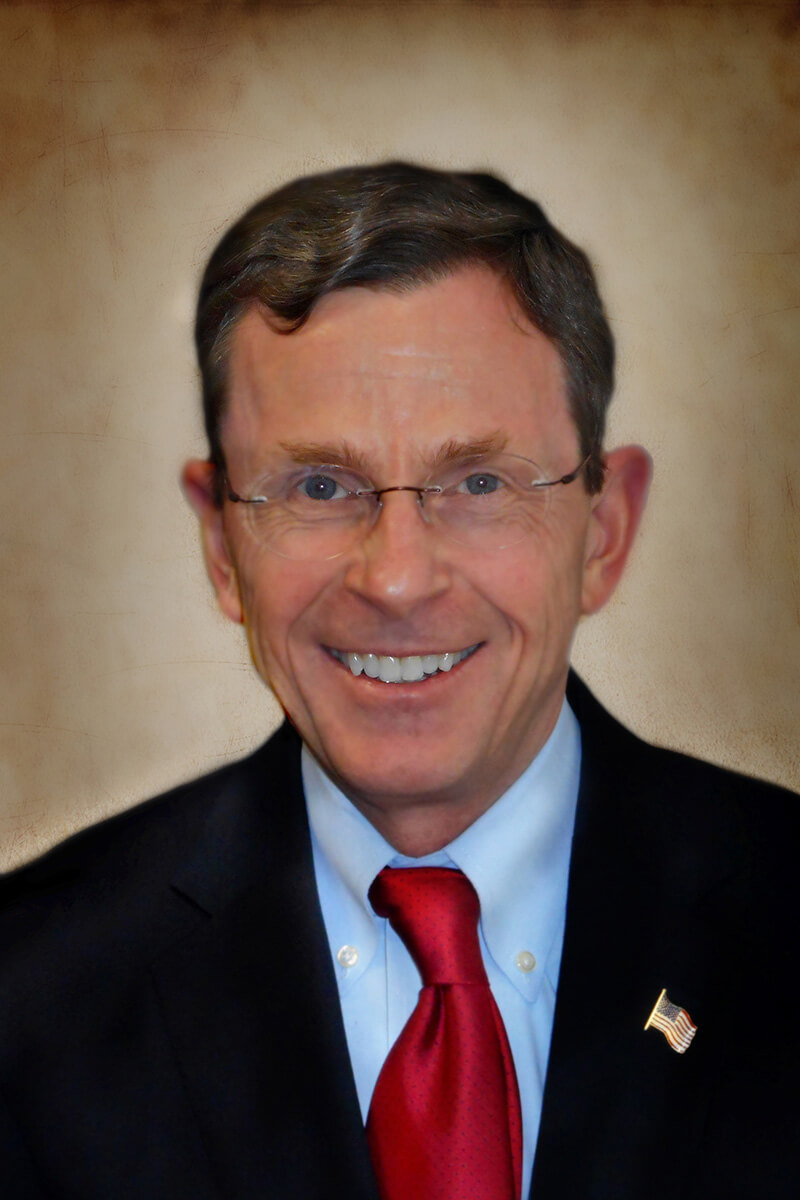
Photo courtesy of the author.
Commentaries
As President Reagan might have said, “There they go again.”
The United Methodist Commission on Religion and Race, along with the Board of Church and Society, issued a joint statement on May 1 decrying a Supreme Court decision in Louisiana v. Callais holding that the Constitution and Section 2 of the Voting Rights Act do not authorize the state’s racial gerrymandering. The Council of Bishops later joined in opposing race-neutrality in Congressional district mapmaking.
In keeping with long-standing tradition, the United Methodist hierarchy quoted the Social Principles as compelling all good United Methodists to take political action. In this case, we are urged to lobby Congress somehow to reverse the high court’s decision.
For sure, there is room for serious debate over the court’s interpretation and also public policy going forward. But it is perplexing why United Methodist Church leaders should preach to congregations that the Bible compels political action over this judicial decision.
There are legitimate reasons to agree with the Supreme Court and to oppose any efforts to draw congressional districts based on race. Here are just a few:
- As longtime conservative and Trump critic George Will wrote in The Washington Post, “the 1965 VRA neither affirmed nor even intimated a ‘right’ of particular groups to particular electoral outcomes.” Or as Wall Street Journal columnist Jason Riley surmised, “racial-gerrymandering advocates today assume that black voters are essentially fungible and share identical political preferences. That’s not only false but insulting ....” Well-known Black conservatives such as Mr. Riley, Justice Clarence Thomas and legendary economist Thomas Sowell should not be viewed simply as anomalies who can be disregarded.
- The congressional debate over the Voting Rights Act’s passage in 1965 centered on removing state-imposed obstacles to voting, such as notorious poll taxes and pernicious literacy tests. The Supreme Court decision in Thornburg v. Gingles in 1986 ruled that the dilution of the voting strength of racial minorities also violated Section 2 of the Voting Rights Act, as amended in 1982. The decision redefined redistricting law nationwide. The Louisiana V. Callais decision alters the Gingles test — the previous legal standard used to prove vote dilution.
- Both Republicans and Democrats have practiced gerrymandering depending on their own partisan interests of the moment. By corralling Black voters into the same district, Republicans have sometimes been able to create deep red districts packed with Republican voters to avoid bona fide competition. That does not expand the political influence of those who live in minority communities. A Politico poll found “a plurality of Democrats say the party should counter Republican gerrymandering, even if it means reducing the number of majority-minority districts.”
- Perversely, racial gerrymandering rejects the notion that congressional districts should be drawn on geographic and other more neutral criteria so that candidates would have to appeal to a cross-section of voters. Instead, it promotes balkanization of Congress because the more extreme base in each party often decides the local election. “Compromise” is a bad word in today’s political world, and gerrymandering exacerbates the problem.
Although it is unlikely to happen soon, the denomination’s hierarchy should dispense with superficial sloganeering on every political issue that comes down the pike. The frequent and predictable outcries by church leaders are hardly making a difference except in one way: Mainline Protestant denominations are in free fall. Most members who remain with The United Methodist Church primarily want to support the Christian ministries of the local churches.
The United Methodist Church political bureaucracy is funded by our tithes and offerings. It is highly doubtful that most congregations want church leaders to promote politically charged shibboleths emanating from either political party. The current organizational structure diverts local church resources from their intended purposes and does not reflect the views of most parishioners who faithfully populate the pews and loyally sustain our church.
Let churches be churches. Render unto Caesar what is Caesar’s, and let the glory of God shine through the Christ-like acts that rank-and-file Methodists perform every day.
Related commentary
White is an attorney and 46-year member of his local United Methodist congregation in northern Virginia.
News media contact: Julie Dwyer, news editor, [email protected]. To read more United Methodist news, subscribe to the free UM News Digest.


