

Key points:
- A young gay woman struggling with identity sought Christian compassion but found blame and shame.
- Forty years later, a ranting street preacher at the San Diego Pride Parade triggered a flashback.
- The traumatic memory, however, soon gave way to joy, thanks to an exuberant United Methodist pastor atop a float.
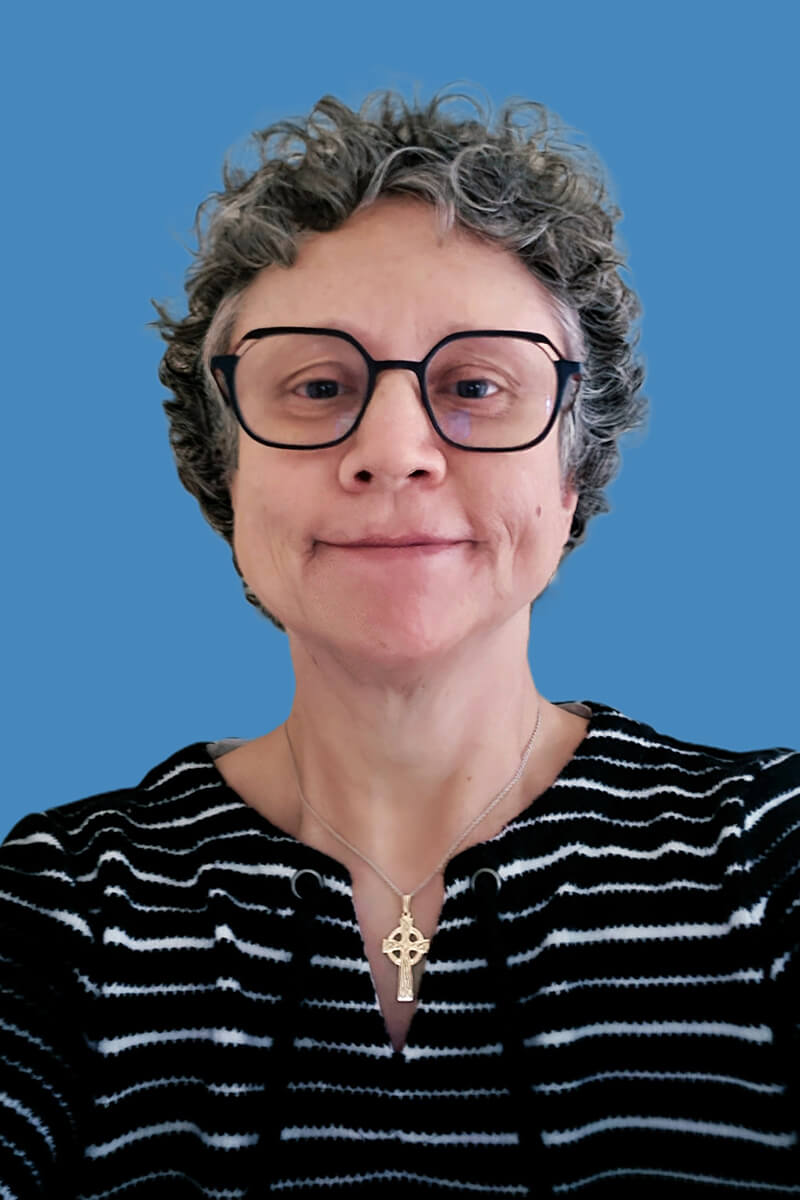
Photo courtesy of the author.
Commentaries
Weeds. So many weeds.
Back at the height of the AIDS epidemic, words of vilification by U.S. Christian clergy spread ablaze, rolling like a field of golden dandelions. We couldn’t run fast enough. We couldn’t escape. And they choked us, especially people afflicted with the disease.
I was a closeted teen, so steeped in my Roman Catholic heritage that the biting effect of those lion’s-teeth weeds seemed almost natural somehow, like God had ordained their seeding, their greening, and we deserved it.
I knew well the “abomination” of which Leviticus speaks. My pastor had reminded me, pointedly, during confession one day when, out of concern for the sick and dying, I sought the wisdom of Jesus’ mercy and compassion. I sought hope. Hope for me.
I had no actual “sin” to confess. Still, the priest’s words left me cold. I felt the blame, shame, disgust and disdain heaped callously upon those with AIDS, yet no worse and no better were we.
All brothers and sisters in Christ, Paul said.
I fared no better at college, though. The soapbox preachers on campus, it seemed, tried to shout us out of existence, all of us gay kids — “freaks,” I mean. I rushed past, but an anxious pang always seized me. The words landed like barbs, hitting and pricking my chest.
Likewise, nearly 40 years later, I encountered the same darts as I marched with my new United Methodist church in the San Diego Pride Parade. Our float rounded a corner, and there raved a street preacher, loud, raw and relentless. I didn’t know what to do. A moment of panic set in.
Instinctively, I pivoted, walking backward to observe our pastor. I would follow her example.
The Rev. Lori Leopold, lead pastor of Pacific Beach United Methodist Church, dressed in sunny yellow, waved to the crowd. Smiling, she shouted left and right: “Happy Pride! Happy Pride!”
Her exuberance — in spite of it all — swept me from the weeds into an upswell of joy, and I felt steadied, buoyed, even hoisted above. Through tears, I, too, exclaimed, “Happy Pride!” And I whooped. I cheered and celebrated. “God loves you!” I told the paradegoers.
It felt like an “Amen!” moment. A full-circle moment. Yes. Truly. Amen.
I believe in Providence. It’s Divine Providence that led me to Pacific Beach United Methodist Church in the first place. And the next day, the Sunday following the Pride Parade, during service, tears of release and gratitude again washed over me.
During her sermon, our pastor spoke of the weeds and the wheat (Matthew 13:24-30). She talked candidly about her own experience in the parade, riding atop our church’s Pride float as we turned that corner. She mentioned the recurring “protest group,” with their “homophobic signs and a megaphone, showering judgment and condemnation on all those gathered round and passing by.”
But she took a different approach this year. “In years past,” said our pastor, “I’ve attempted to demonstrate some loving gesture toward them: hand on my heart or some sort of sign that I’m praying for them. But what I know in my heart is that underneath my outwardly caring gesture is my true suspicion that those people are weeds in God’s world. I don’t like them. I wish they weren’t there. And truth be told, I’m sure they feel the same way about me.
Subscribe to our
e-newsletter
“So this year, instead of doing something disingenuous, I ignored them and tried to shout ‘Happy Pride’ louder than they shouted what I consider to be harm and hate. It is not ours to try to separate the wheat from the weeds,” she advised.
“We are called to holy restraint because we can’t see, we don’t see, as God sees. And we are called to holy restraint because in God’s realm, things grow. They grow and change, often in extraordinary ways.”
Our pastor offered scriptural examples. “There’s the mustard seed that grows to be a giant tree. There are handfuls of bread and fish that expand to feed thousands. In God’s realm, things grow and change, sometimes in shocking and unexpected ways. And people change, too,” she reminded us.
Indeed, on her watch at Pacific Beach United Methodist Church — historically, the first intentionally inclusive mainline church in San Diego and a reconciling community for 31 years — I have changed “in extraordinary ways.”
The Rev. Lori Leopold and our congregational family have transfigured some of the weeds. So many weeds. Out of the same soil, a vast, new meadow has grown, one where my co-disciples and I openly pluck wild wheat to sustain us, especially on the Sabbath, even amongst the dandelions of this world.
Sisters and brothers are we.
Evans is a member of Pacific Beach United Methodist Church in San Diego, California.
News media contact: Julie Dwyer at (615) 742-5470 or [email protected]. To read more United Methodist news, subscribe to the free UM News Digest.


