
Leaders of the United Methodist Commission on the Status and Role of Women took “time to grieve” before publically reacting to the failure of two constitutional amendments focused on equality in the church for women and girls.
However, those who voted against the amendments said there were many reasons for no votes, including concern about wording some viewed as a backdoor way to assert LGBTQ rights, while others worried about the unintended consequences of some wording.
By small margins, both amendments failed to receive the two-thirds majority needed to be added to the church constitution, although both received a majority. There will now be a revote on Amendment 1 because the wrong version of the amendment was sent to annual conference secretaries in late 2016 by the secretary of the General Conference.
Amendment 2 was submitted by the United Methodist Commission on the Status and Role of Women and was supported by United Methodist Women, Discipleship Ministries and the Disability Ministries Committee.
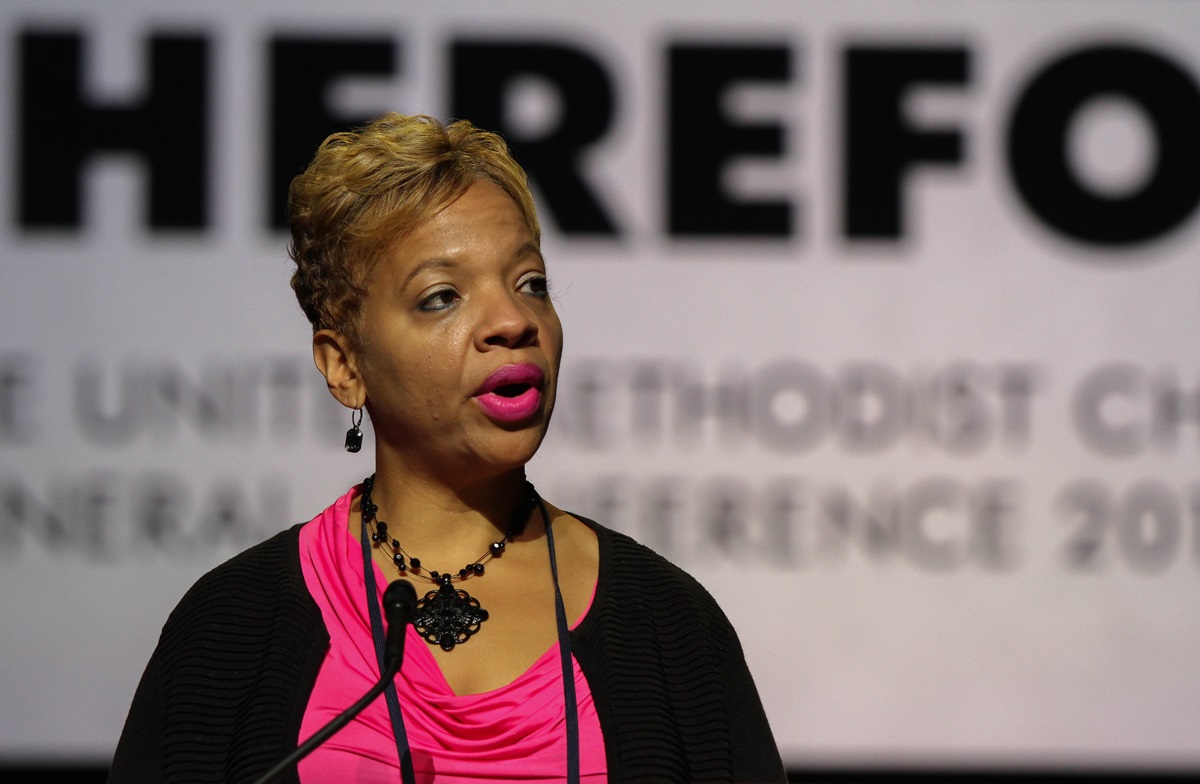
President Bishop Tracy Malone, president of COSROW, and Dawn Wiggins Hare, the agency’s top executive, asked that supporters of the amendents “not point fingers, but reflect and examine what the data of the votes shows for each annual conference. . .”
Ware said they have been working for 28 years to pass an amendment to The United Methodist Constitution protecting the rights of women to membership in the local church.
The amendment to Paragraph 4 barred the church from discriminating against members because of their gender, ability, age or marital status.
In a statement written by Hare and Malone, they gave thanks to board members, colleagues and allies who work hard every day for women and girls to teach them they are of sacred worth and encourage them to use their gifts in leadership positions.
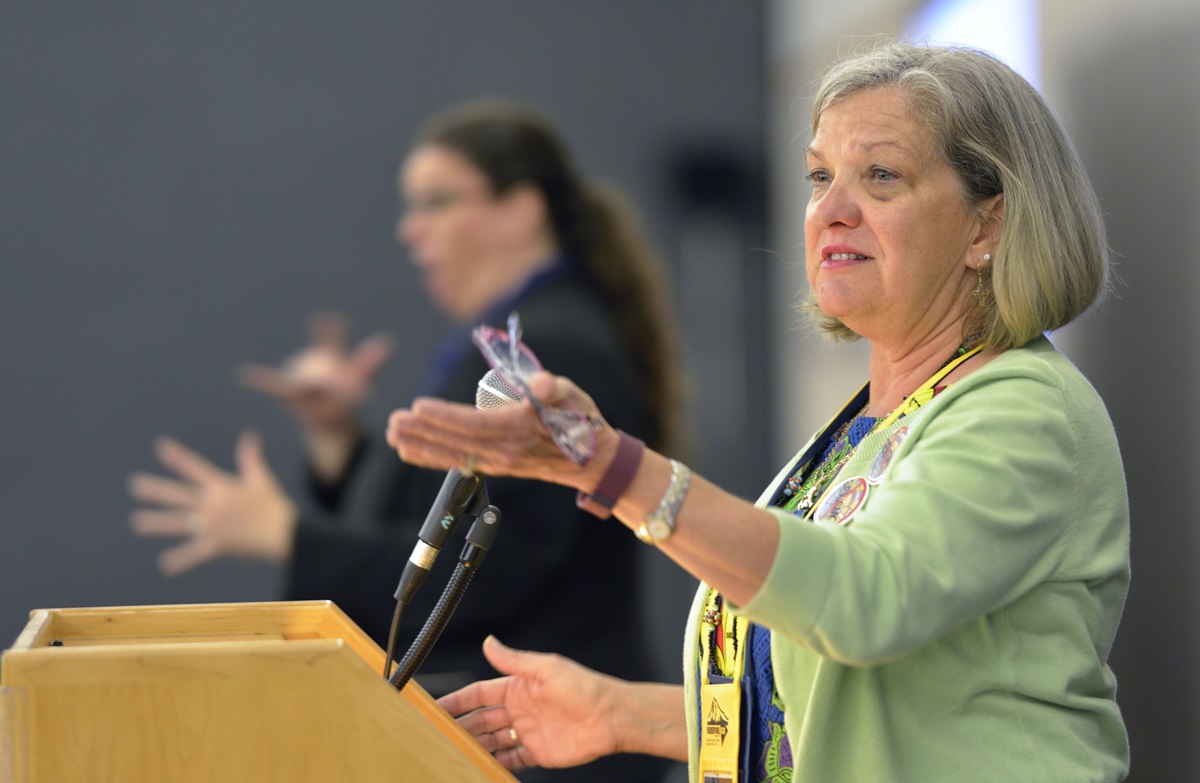
The Rev. Nancy J. Webb, a retired clergywoman who is a member of the DisAbility Ministries Committee, said the very close defeat was “heartbreaking.”
“I am so glad that being blind did not prevent me from lay as well as ordained leadership in The United Methodist Church,” Webb said.
Amendment 1, which lost by fewer than 100 votes, was submitted by Carol Napier, a Sunday school teacher at Glenn Memorial United Methodist Church in the North Georgia Conference during the 2016 United Methodist General Conference. There will now be a revote.
Some people who voted against the amendments said their decision was tied to the specific wording.
“For myself and many others, the wording of the two failed amendments used two terms, gender and marriage, that raised some serious flags,” said the Rev. Randy Burbank, pastor of First United Methodist Church, Sheffield, Alabama.
“On the surface, it seems innocuous, but without a traditional explanation of those terms it would have opened the door to acceptance of people’s sexual orientation as a means of identifying gender,” Burbank told United Methodist News Service.
The two amendments failed in most African and Eurasian episcopal areas as well as Northwest Texas (both amendments), Texas (both), Alabama West Florida (Amendment 1), Kentucky (Amendment 2) and South Georgia (Amendment 2).
One notable difference was in Mozambique North and South, as well as South Africa, where Bishop Joaquina Filipe Nhanala presides as the only female African bishop.
“In Mozambique Episcopal Area, we are intentional in educating the church on the inclusion of women as well as the need to bring them to the decision-making table. I believe this contributed to the massive yes to the two constitutional amendments,” she said.
The Rev. Leo Yates Jr. said not passing the two amendments “is a subtle form of harming.”
“We as a church are still moving toward perfection. I still believe in the power of Wesley’s Three Simple Rules, one being do no harm. Not passing these amendments is a subtle form of harming, which really goes back to power and control. I hold onto my hope of social equality for all people, the way Christ modeled for us,” said Yates, who also is a member of the DisAbility Ministries Committee as well as a consultant of the Committee on Deaf and Hard of Hearing Ministries for United Methodist Global Ministries. He is chairperson of the Commission on Disability Concerns of the Baltimore-Washington Conference as well as a licensed therapist.
“The failure of passing these amendments is around privilege,” Yates said. “Those with more privilege often do not consider or give less consideration to those with lesser or no status, when equal status should be the status quo.”
United Methodist Women and United Methodist Men also expressed disappointment at the failure of the amendments.
“While the failure to ratify these amendments is hurtful, this action makes it even more apparent that United Methodist Women’s work for gender justice and to lift up the needs and abilities of women is not over,” said the statement from United Methodist Women.
Gil Hanke, top executive of United Methodist Men, and Mississippi Area Bishop James Swanson Sr., president of the Nashville-based agency, issued a statement expressing disappointment at the failure of the two amendments.
“Our church is at its best when women and men are welcomed at every table at every level of our connection,” they wrote.
The Rev. Taylor Walters Denyer, an ordained elder in the North Katanga Conference, said it is important to listen to those who voted “no” instead of jumping to conclusions about them.
“There are some reasonable objections to adding certain phrases to the constitution, and minor semantic changes could have swayed many to switch their vote. For example: The wording in Amendment 2 about age discrimination would have made it impossible to force an elderly bishop to retire — which is a major concern in some central conferences,” she said.
But she also agreed that some no votes came because people feared that they were a legal trick for opening a door to full LGBTQ inclusion.
“And some really do think that men are superior to women. But others agreed with the spirit of the amendments and voted no because of specific problems with the wording or thought such statements belonged in the Social Principles — not the Constitution.”
Malone said people should get the message from these reactions that the work of the Commission on the Status and Role of Women is critical.
“Now is not the time to point fingers, we need to look at our own conferences,” Malone said.
She is urging conferences to encourage the full inclusion of women in leadership. She said, local churches should ask, what are we doing to teach girls and boys, men and women, they are all created in the image of God, of sacred worth and have an equal place in the church?
The statement from the Commission on the Status and Role of Women ends with these directions: “Take time to grieve. Take time to give thanks. Take time to act!”
Gilbert is a multimedia reporter for United Methodist News Service. Contact her at 615-742-5470 or [email protected]. To read more United Methodist news, subscribe to the free Daily or Weekly Digests.
Like what you're reading? Support the ministry of UM News! Your support ensures the latest denominational news, dynamic stories and informative articles will continue to connect our global community. Make a tax-deductible donation at ResourceUMC.org/GiveUMCom.


