
Some 70% of Africans work in agriculture but nearly one-fourth of the continent’s population is undernourished.
That reality is something United Methodist women in local churches in Eastern Congo are working to change, and in a hands-on way.
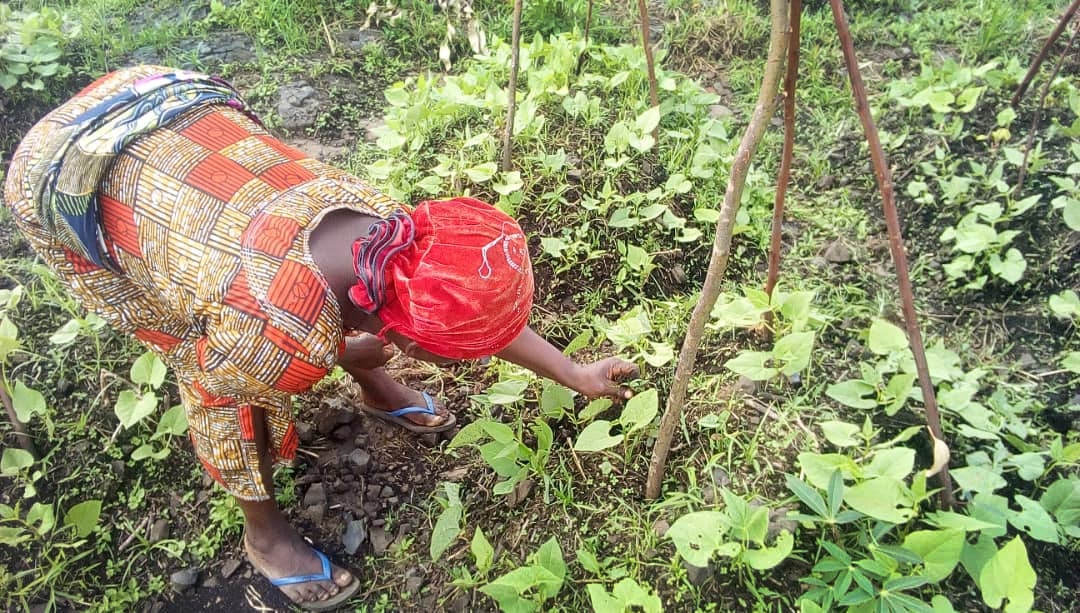
Recently, women of the denomination from Bukavu cultivated a big part of a United Methodist Church-owned tract in Katana, in the Kabare Territory of South Kivu.
“As a mother, I must take every precaution to block the road to famine,” said Mbilizi Bonane, president of United Methodist Women in Bukavu.
In February 2018, the women harvested bags of maize and peanuts from a field they had cultivated. That was a great benefit to the women and their families.
Beatrice Anunga, coordinator of United Methodist Women in the Kivu Conference, agreed that women need to be leaders in using church land to fight hunger.
Self-sufficiency is a theme among United Methodists in Eastern Congo these days.
“In each local church we encourage these projects, and this will have a positive impact,” Anunga said.
Bonane noted that there are three United Methodist sites of agriculture tended by women of the area, in Katana, Bunyakiri and Mwenga.
On Oct. 8, the president of Congo, Félix-Antoine Tshisekedi Tshilombo, dedicated an agricultural laboratory at the International Institute of Agricultural Technology. It’s in Kalambo, in the same general area where women of the denomination have been farming on church land.
The laboratory will provide digital mapping of the soil as well as projects to improve cultivation of certain crops, such as beans, bananas and cassava. That has the potential to be a big help to all who are farming in the area, including the United Methodist women.
Lending support to the women in his own way has been Bishop Gabriel Unda Yemba. He said he is ready to champion any local congregation willing to take up agriculture to fight hunger and malnutrition.
Dr. Marie Claire Unda, wife of Bishop Unda, is encouraging women to till the soil or in some other way support agriculture projects by local churches.
“If we are poor or if we have malnourished children … it is because we neglect agriculture,” she said.
Kituka Lolonga is a communicator in the Kivu Conference.
News media contact: Vicki Brown, news editor, [email protected] or 615-742-5469. To read more United Methodist news, subscribe to the free Daily or Weekly Digests.
Like what you're reading? Support the ministry of UM News! Your support ensures the latest denominational news, dynamic stories and informative articles will continue to connect our global community. Make a tax-deductible donation at ResourceUMC.org/GiveUMCom.


