
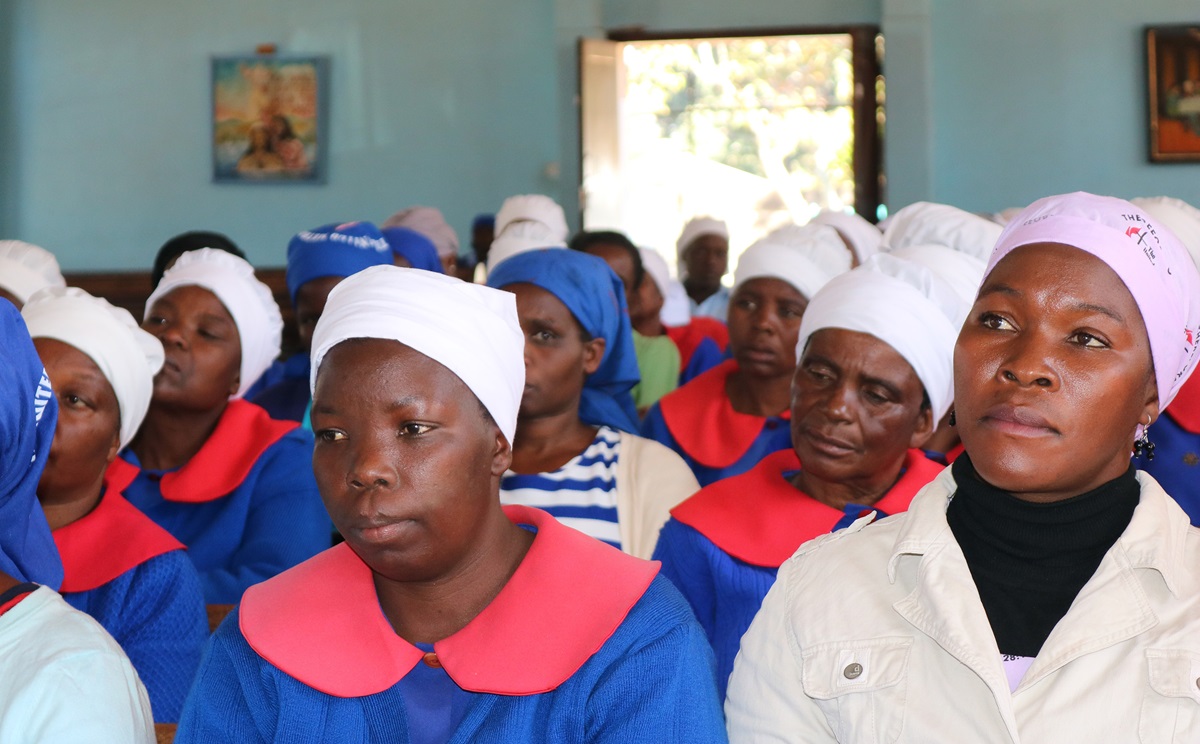
When Maria’s husband died, his family – her in-laws – evicted her from the home the couple had shared for years and claimed her property. Maria was left with no roof over her head, no means of income and no emotional support. In Zimbabwe, her story is far too common.
In response, The United Methodist Church is working to help widows get justice. Through awareness programs and engagement of legal experts, members are equipped with information that protects them against the greedy.
“The church takes this subject seriously,” said the Rev John Makaniko, Board of Church and Society grassroots organizer for social justice ministry for Zimbabwe East Conference. “Information is power, and with this power, one is able to protect herself or himself. Inheritance issues divide families and cause enmity. The major causes of inheritance conflicts are greed and laziness on the part of those who want to benefit where they haven't invested.”
During Church and Society Week, observed every year by churches in the conference, volunteers from congregations teach topics such as will writing and inheritance. “These topics empower (people) to know their rights,” said Makaniko.
Babra Munaiwa, coordinator of the singles and widows ministry at St. Paul United Methodist Church in Harare said women are evicted from their homes and, “at times, violently stripped of possessions, pushing them to extreme poverty."
Fighting back takes courage and costs money that many widows lack. Sometimes, relatives move in when the woman is grieving and vulnerable.
“In some cases, before the burial of the husband, in-laws request all bank cards, access to bank accounts and cars on pretense that all this is to be used for the funeral arrangements, only to discover that these items are never returned,” said Munaiwa. “Others face persistent harassment from in-laws who accuse them of being responsible for the death of their husbands.
“Widows are threatened, physically intimidated and insulted by in-laws so that they leave their homes. In some cases, older children force their mothers out of their homes, claiming that they are the heirs of the property.”
In Zimbabwe, men traditionally own all family property; few women formally own the property held in their marriage. As a result, their ability to keep the property they shared with their husband depends on proving their marriage.
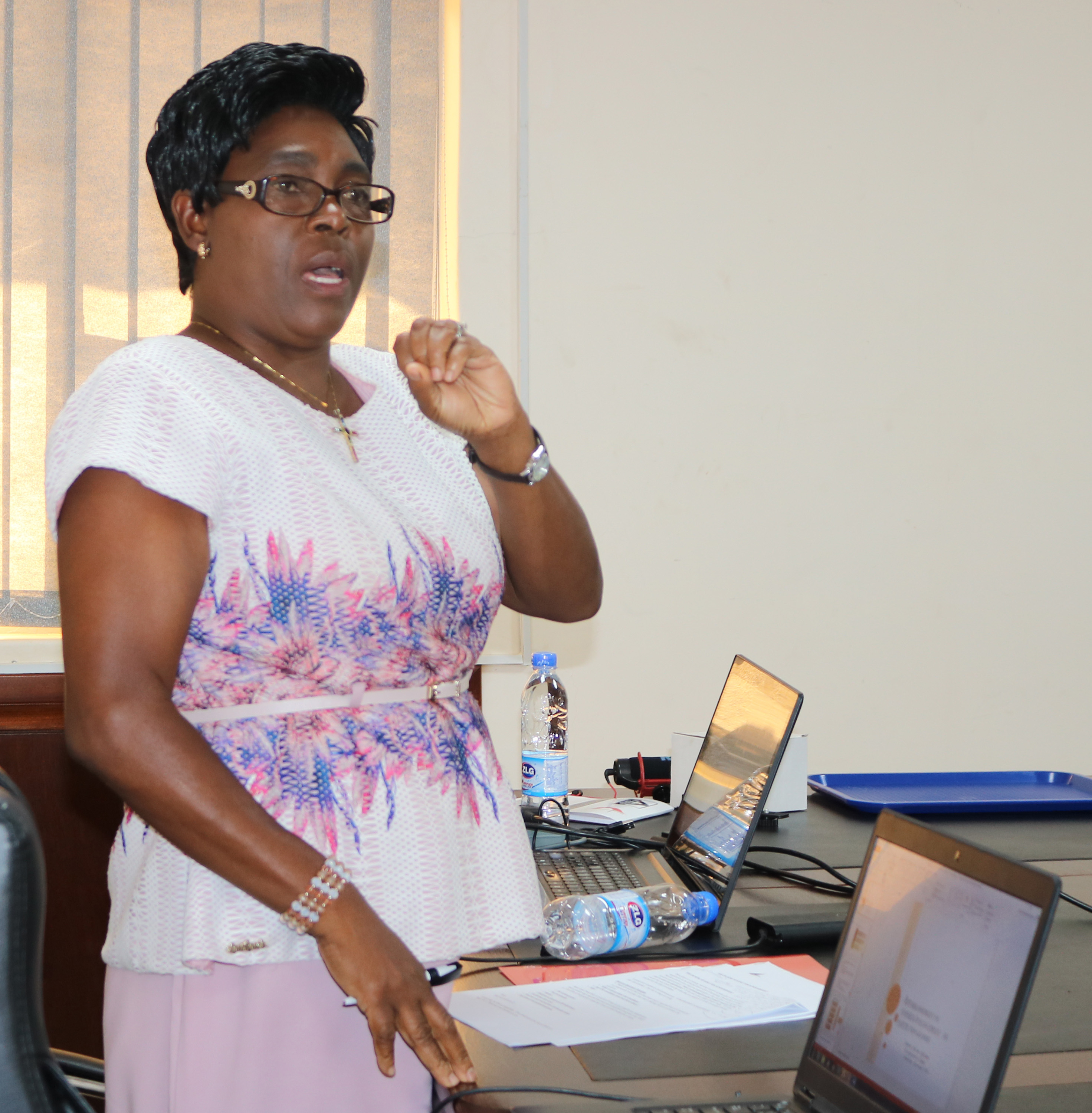
Zimbabwean law provides for equal property and inheritance rights for men and women. However, many women struggle to claim those rights. Many marriages in Zimbabwe are conducted under customary law and are not registered. Without any official record of the marriage, it is difficult for a widow to claim property that was held in the marriage but formally owned by her late husband.
“Courts will require confirmation from the widow’s in-laws, who are the very people who stand to benefit if the marriage is not confirmed,” said Munaiwa. “In most cases, in-laws are not willing to provide such confirmation.”
Women are treated as second-class citizen because of payment of the “bride price” that empowers some men to treat women as property. However, because of gender-awareness programs and Christian values, women are gaining freedom to speak for themselves.
In the African culture, when a man dies, his wife and children are inherited by one of his relatives, ostensibly to keep family unity and give support, guidance and security. However, some male relatives have gone further to inherit the widow as their new wife. The church discourages the tradition of spouse inheritance and has drawn a line between African cultural practices and Christian religion.
“The spouse-inheritance custom is now more symbolic than practical,” said Makaniko, “because of Christian values, civil marriage act which does not allow for polygamous marriages and health grounds with the fear of the spread of HIV.”
He added, “Many women do not know that they have a right to the property they hold with their husband. Some fear jeopardizing relationships with in-laws with whom they had shared their lives for many years and whom they hope would support them and their children.”
The church has created small groups to address specific issues and challenges.
“Small groups are vital,” Makaniko said, “because they give people with same or common experiences to share and collectively come up with solutions. … Members find solace in similarities of the lived experiences.”
Tendai Gurupira, who coordinates ministry with women, children and youth for the Zimbabwe Episcopal Area, encourages families to register their assets into a family trust that constitutionally binds all assets. If one family member wants to sell anything from the trust, the others must agree.
Families also are urged to write wills and to seek legal expertise when doing so. A will, Gurupira explained, “is for the surviving spouse and children to remain in peace.
“A will is the last testament of the deceased; hence, it should be written when the person is in a sober mind. … It should include the way properties are shared among the beneficiaries after the owner is deceased.”
When the husband is the sole breadwinner of the family, many women struggle to support themselves when they become widows. The ministry with women, children and youth offers workshops on self-help projects and women’s empowerment. The church also educates men on the need to plan their inheritance before death.
“Men are encouraged to share their wealth while they are still alive,” said Makaniko. “They are also telling their relatives how they want their wealth distributed when they are dead.”
The role of the church, Makaniko continued, is to teach, assist and engage both victims and perpetrators of inheritance conflicts. “Remembering that, poverty, laziness and greed are identical evils which must be conquered by hard work and love.
“Our core values as a church must be a lived reality in our everyday life,” said Makaniko, quoting John Wesley, “Do good, do no harm and stay in love with God.”
Muzerengwa is a communicator for the Zimbabwe East Conference.
News media contact: Vicki Brown, news editor, [email protected] or 615-742-5469. To read more United Methodist news, subscribe to the free Daily or Weekly Digests.
Like what you're reading? Support the ministry of UM News! Your support ensures the latest denominational news, dynamic stories and informative articles will continue to connect our global community. Make a tax-deductible donation at ResourceUMC.org/GiveUMCom.


