
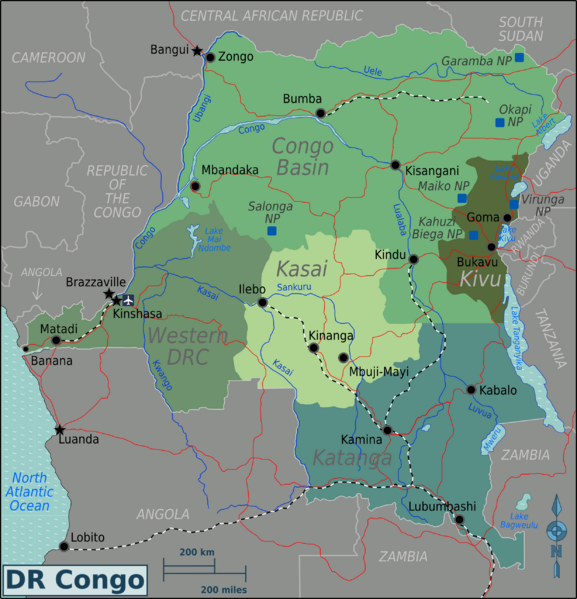
Tampa, Florida, May 3, 2012—The United Methodist Church decided to increase its number of bishops in the Democratic Republic of Congo (DRC) from three to four.
The action, taken by the denomination’s 2012 legislating General Conference, recognizes the significant growth of the church in the DRC, where the territories for which a bishop is responsible cover vast areas. The church’s bishops serve “areas” that can consist of one or more annual (regional) conferences.
The delegates in Tampa also decided to recognize the church in Burundi as a separate annual conference, apart from the current five-country East Africa Annual Conference. Burundi remains in the same episcopal area, within the Africa Central Conference. Outside the United States, United Methodist annual conferences are grouped into “central conferences,” comparable to “jurisdictions” in the US.
In another action, the General Conference approved the creation of a Central Conference Theological Education Fund to assist with clergy training in central conferences. Central conferences are located in several areas of Africa, the Philippines, and continental Europe and Eurasia.
The increase by one of episcopal areas in the DRC was brought to the General Conference by its Standing Committee on Central Conference Matters. Another proposal to add a second new bishop was referred to the standing committee for evaluation.
The three current episcopal areas in the DRC are North Katanga (office in Kamina), Central Congo (office in Kinshasa) and South Congo (office in Lubumbashi). The new area will be determined and a new bishop elected by the Congo Central Conference.
Thirteen annual conferences within the Congo Central Conference have a current aggregate membership of 2.3 million and growing, but membership is not the only criteria for determining where new bishops are needed in central conferences.
The Standing Committee on Central Conference Matters has developed criteria to assist in considering the frequent proposals for new episcopal areas. Factors to weigh in addition to membership include the number of congregations and active clergy, geography, and church structure in the region.
A review of localities seeking new bishops found that Congo Central Conference met the criteria.
In other actions concerning central conferences, the General Conference approved a measure to allow two of its general agencies to locate funds to help bear the costs of the meetings where bishops are elected and other business conducted.
Requests for funding of the meetings will in the future be referred to the General Council on Finance and Administration and the General Board of Global Ministries, which will “seek sources of funding.”
Global Ministries does the staff work for the sustained Standing Committee on Central Conference Matters.
Like what you're reading? Support the ministry of UM News! Your support ensures the latest denominational news, dynamic stories and informative articles will continue to connect our global community. Make a tax-deductible donation at ResourceUMC.org/GiveUMCom.


