
The Ebola virus has claimed the lives of at least 47 people, including a United Methodist lay leader, since a new outbreak was declared in the Democratic Republic of Congo’s Beni District on Aug 1.
The virus also is the likely cause of another 28 deaths in the region, according to the World Health Organization.
“We have just lost a leader in our district following this Ebola outbreak that has been living in Beni for more than three weeks,” said the Rev. Ezekiel Mathe, district superintendent.
Muhindo Mumbere Kazimiri was a lay leader and evangelist at Mangango United Methodist Church, Mathe said. He leaves behind a wife and five children.
Bishop Gabriel Yemba Unda expressed his deepest condolences to the family and to all the faithful of the Beni District, which is about 300 kilometers (186 miles) from Goma, the capital of the North Kivu Province.
In July, the Congolese government declared the end of an outbreak of Ebola in the Democratic Republic of Congo. One month later, the virus reappeared in Mangina in the North Kivu Province.
According to the WHO, there have been 111 cases of hemorrhagic fever reported in the region, with 83 confirmed and 28 probable cases of Ebola as of Aug. 27.
Confirmed cases have been reported in North Kivu and Ituri, which are among the most populated provinces in the Congo. The region has been experiencing conflict and insecurity, with over one million internally displaced people, according to the WHO, many of whom continue to flee to neighboring countries, including Uganda, Burundi and Tanzania.
The medical director of the Irambo Health Center, a United Methodist facility, reported widespread concern in Kivu. “With the movement of the population,” Dr. Damas Lushima said, “everyone fears the spread of the virus.”
The health center is urging local communities to contact mobile teams already in place to transport urgent cases to the treatment center, where patients are quarantined.
Bishop Unda said he is concerned about raising awareness among the population of the critical need to stop contamination in the epicenter of Mangina and its surroundings.
Two United Methodist churches — Biakato and Mambau — are in the region heavily impacted by Ebola.
The United Methodist Church, which championed efforts to fight Ebola during the West African Ebola epidemic (2014-16), is again battling the disease in the affected areas. Numerous initiatives have been implemented to prevent the epidemic in areas not yet affected.
With funding from the United Methodist Board of Global Ministries, the health coordination office for the Eastern Congo Episcopal Area is launching awareness-raising efforts. Local initiatives also are in progress.
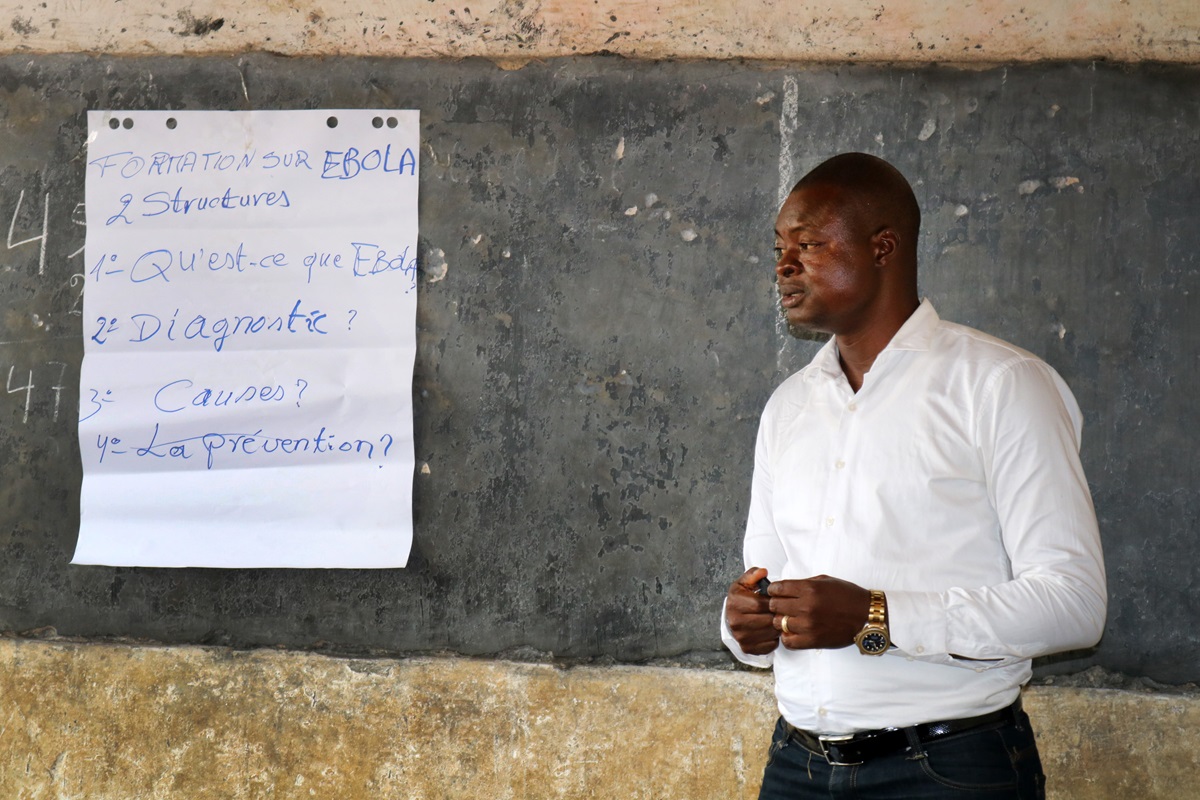
In the three United Methodists conferences — East Congo, Oriental and Equator, and Kivu — religious and community leaders joined medical staff to raise awareness.
“They are going into churches, markets and public places to talk about strategies that can help local communities not to get Ebola,” said Dr. Frédéric Yemba, chief of health coordination.
“Handwashing kits to encourage this culture have been distributed to local communities,” he continued. Radio programs and text-message campaigns are underway.
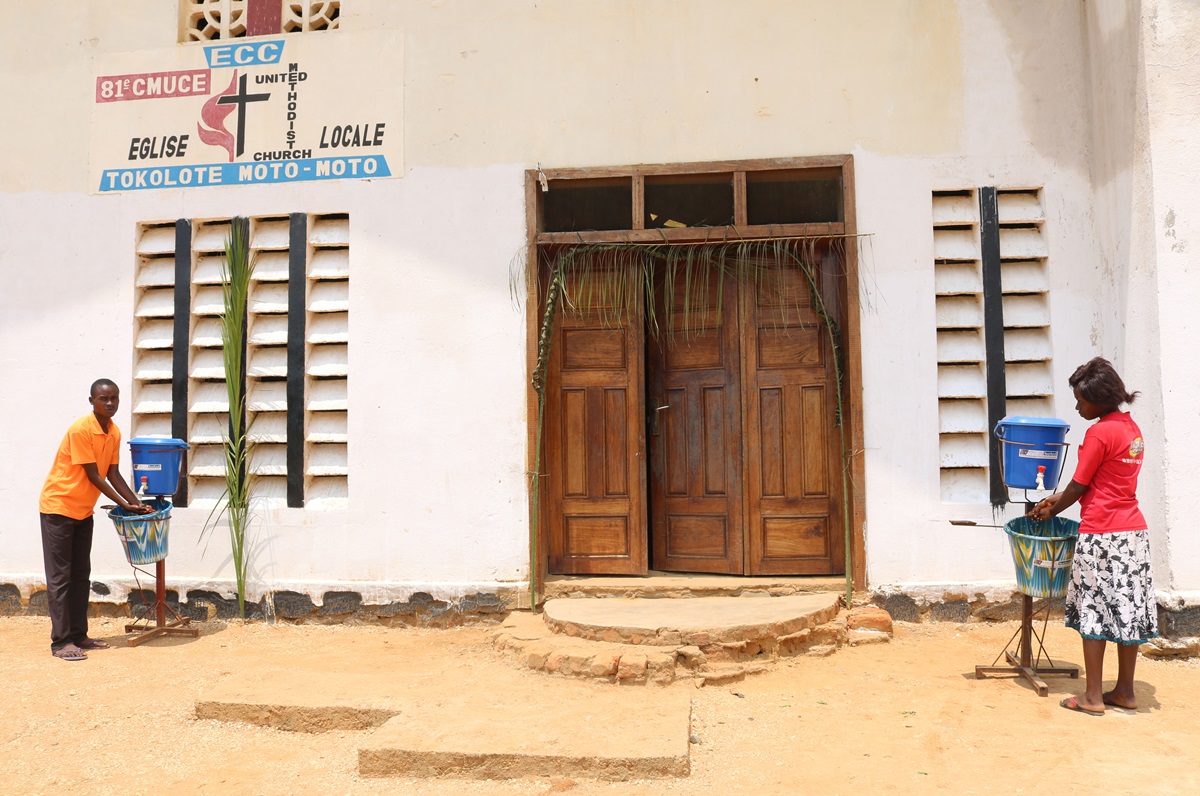
In Beni, where the epidemic is raging, several churches are teaching ways to prevent the spread of Ebola. Mathe said religious leaders are encouraging people to use handwashing devices installed in front of each local church.
“We also urge the local community to avoid the consumption of bushmeat (meat of African wild animals), but also not to consume the animals found dead,” he added.
Mathe said that to prevent spreading the virus, the church asks worshippers to observe basic hygiene rules and to know what to do when Ebola is suspected in the community.
In the East Congo Conference, Dr. Marie-Claire Diandja of the Mama Lynn Center in Kindu said washing hands with clean water, soap or ashes is one of the most effective ways to protect against Ebola and other diseases.
United Methodist pastors also are doing their part to raise awareness. The Rev. Hélène Kombe Atumishi, Bethlehem Francophone Church, said she has asked more than 200 members of her congregation to have handwashing kits in their homes.
She noted that the epidemic comes at a time when hunting of bush animals is prohibited.
“This decision,” she said, “is good because it discourages hunting that can allow people to consume bushmeat, one of the channels of transmission.”
Handwashing kits also have been stationed at the entrances of health facilities and United Methodist churches in Kivu. The launch of this campaign was chaired by Diandja in the presence of Ibanda's chief medical officer of the health zone.
Harper Hill Global, an American organization founded by the Rev. Neelley Hicks, a United Methodist pastor, is partnering with the episcopal area in an awareness campaign on handwashing as an effective way to deal with Ebola and other diseases.
A song was produced and commercials are being broadcast on local radio stations.
“This song and these educational spots have allowed many United Methodists and others to get an idea of the importance of handwashing as an effective way to fight Ebola,” Diandja said. “Beyond preventing Ebola, washing your hands also helps prevent other diseases such as cholera, dysentery and even typhoid fever.”
Londe is a communicator for the East Congo Annual Conference. Philippe Kituka Lolonga contributed to this report.
News media contact: Vicki Brown at (615) 742-5470 or [email protected]. To read more United Methodist news, subscribe to the free Daily or Weekly Digests.
Like what you're reading? Support the ministry of UM News! Your support ensures the latest denominational news, dynamic stories and informative articles will continue to connect our global community. Make a tax-deductible donation at ResourceUMC.org/GiveUMCom.


