
Located in the North Kivu Province of the eastern Democratic Republic of Congo, the Rutshuru Territory faces many challenges: tribal conflicts between Hutu, Nande and Hunde in the Bwisha chieftaincy and Bwito; land disputes; inheritance rights disagreements; armed groups, and kidnappings.
The United Methodist Church has more than five local churches in this territory with over 2,500 worshippers in the circuit of Goma District.
“With all these problems,” said Rutshuru Circuit lay leader Emery Unyumbe, “the church has been much affected, and many faithful have fled Rutshuru to the urban environment.”
Since February 2018, peace has been observed after several efforts by the Congolese government to put an end to rebellions.
In response, displaced people, including United Methodists, are starting to return to their homes. However, many have found their homes and their land occupied. Resulting outbreaks of violence have brought more injury and death.
With the support of Connexio, a United Methodist global mission and service network, Eastern Congo Episcopal Area Bishop Gabriel Yemba Unda led a mediation effort between various factions. “As a church,” he explained, “we have the mission to pacify our community while listening to the conflicting parties.”
Michel Lizibisha, project manager in the Kivu Annual Conference, said, “The task was not easy, but with the help of the Lord, we managed to put the parties in conflict together so that peace reigns in this part.”
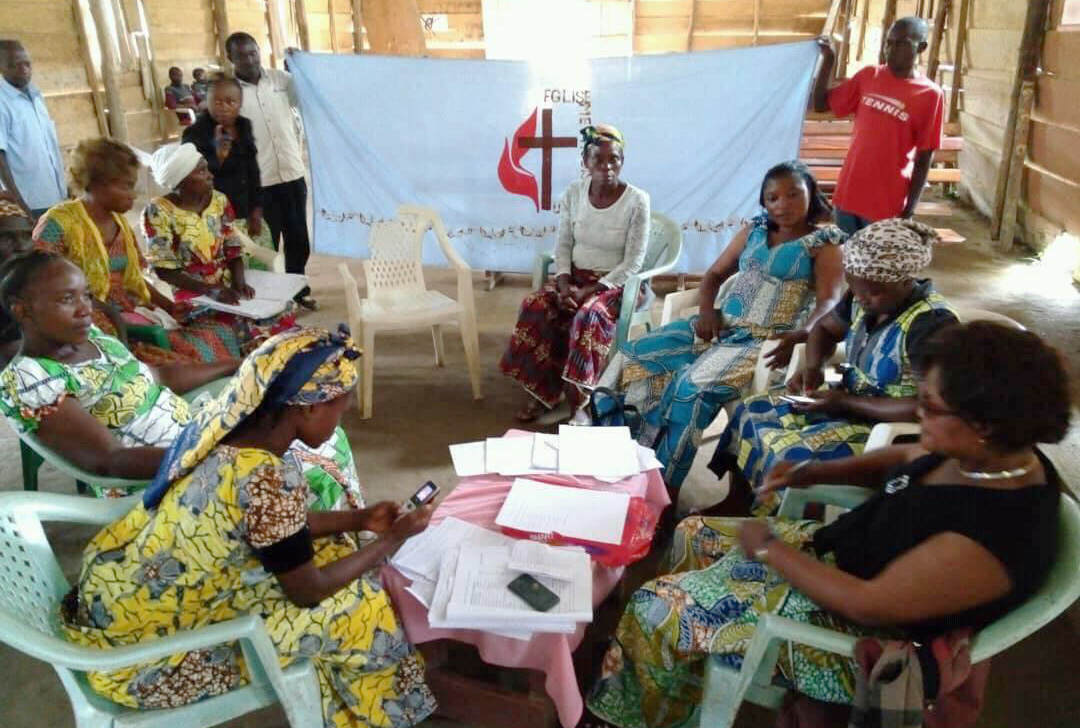
A workshop on peace mediation was held in Rutshuru in May. Participants drafted several resolutions for a peaceful outcome. Their recommendations included the following:
- Continue with sensitization of all conflicting parties in each village;
- Engage in dialogue with those who continue to resist; and
- Sensitize the population not to act in revenge.
Kaduru Jean, a notable Hunde in Rutshuru, expressed appreciation to The United Methodist Church for its work in mediating tribal, land and inheritance conflicts. He urged other religious communities to follow the United Methodist model.
Kituka Lolonga is a communicator in the Kivu Conference.
News media contact: Vicki Brown at (615) 742-5470 or [email protected]. To read more United Methodist news, subscribe to the free Daily or Weekly Digests
Like what you're reading? Support the ministry of UM News! Your support ensures the latest denominational news, dynamic stories and informative articles will continue to connect our global community. Make a tax-deductible donation at ResourceUMC.org/GiveUMCom.


