

The preaching series for August 2016 at Live Oak United Methodist Church was “Rebuilding Your Broken World.”
Which seems appropriate for a part of the state that had 90 percent of its residents affected by massive flooding, but remarkable when you know the series was selected long before the unexpected rain turned the church into an island.
“The river came up and we had no place to go but here,” said the Rev. Mark Crosby. “We couldn’t wait on the cavalry.”
The church on the hill became a sanctuary for more than 400 frightened people for three days. “We were never prepared for any of this,” Crosby said.
People came in with their pets, because Crosby said, “some of them would have rather drowned than leave their pets behind.”
People poured in, some who were sick and had been bed-ridden, some on dialysis, on oxygen and one woman with a 5-day-old infant made their way to the church with the help of neighbors with boats and tractors.
“One lady had an allergic reaction and was in shock. We put her in a truck and drove through four feet of water to get her to the nearest medical facility,” Crosby said. “The doctor said she would have died if she hadn’t made it there. She came back a week later to thank us for saving her life.”
Joseph Project
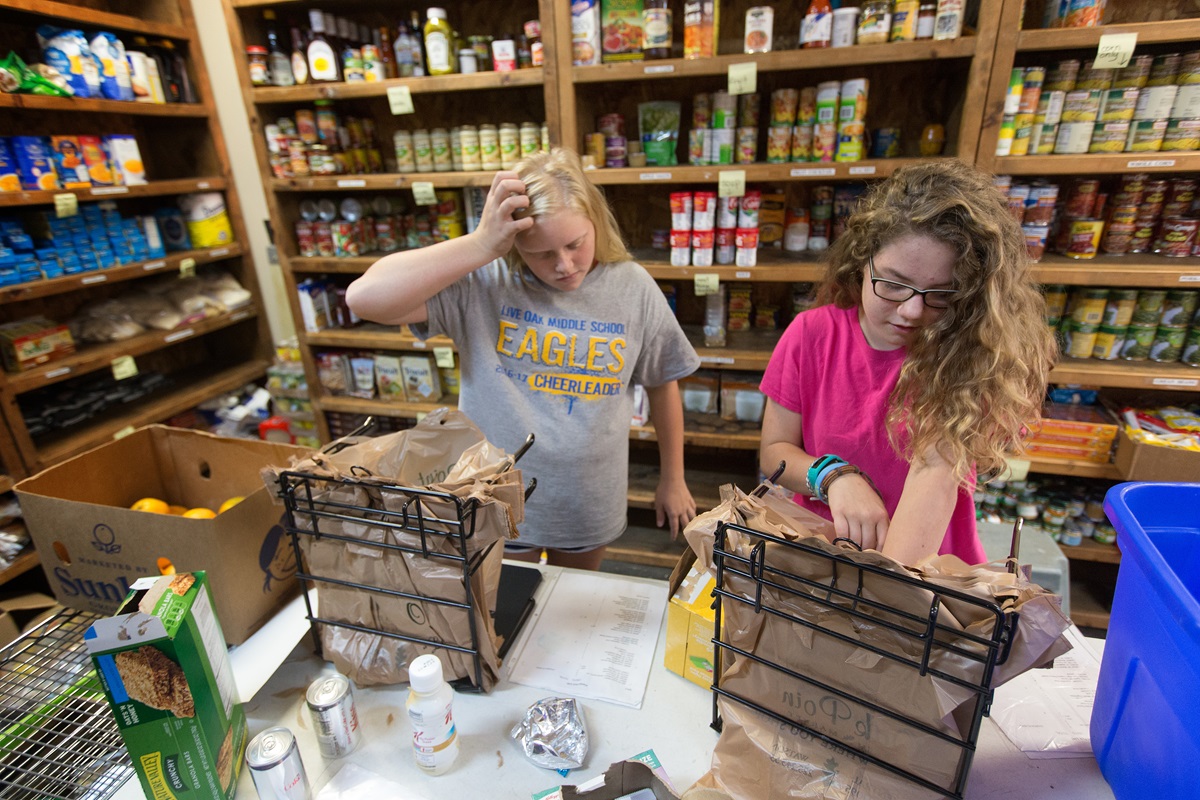
In another prophetic twist, in August 2015, Live Oak began “The Joseph Project” — based on the story of Joseph, who warned that famine was coming and convinced people to prepare.
“Last year we felt led to do something beyond our usual stockpiling of food and supplies. We believed a day would come when it would not be a usual year. And here we are,” Crosby said.
“I am so grateful and pleased with what our church has done. We were building the plane while we were flying it,” he said.
Every morning a disaster-relief group of about 18 staff and volunteers gather to debrief on what worked, what didn’t work and what needs doing next. A group of young people, ages 15-17, have become the “R (restoration) Squad.”
The flood was never supposed to happen. There was an historic flood in 1983 and it was the benchmark; no flood could ever be worse. For that reason, most people didn’t have flood insurance, Crosby said.
“No one ever believed these areas would flood. We went to bed Friday night thinking we were still good and then Saturday morning around 4 a.m. the river came up and shot past flood stage,” Crosby said.
Crosby wrote these words in the August church newsletter: In the month of August we will be preaching/teaching on "Rebuilding Your Broken World." How does a person rebuild, start over and reinvent themselves after heartache, tragedy and being broken? How does one go through grief, depression and disappointment? In the month of August we will be focusing on the hope that Messiah offers to those who ask, seek and knock for His guidance, comfort and direction. I hope you will join us as we together “Rebuild Our Broken World.”
After the shock of the flood, people are going to start realizing they don’t have jobs to go back to, they need to take out second mortgages on their homes — their lives will not be like they were.
Crosby said he thanks God every day for sparing the church and his home and family.
“With blessings come responsibilities. That has been our mission for the last three weeks.”
Gilbert is a multimedia news reporter for United Methodist News Service. The Rev. Todd Rossnagel, director of communications strategies for the Louisiana Conference, contributed to this report. Contact Gilbert at (615) 742-5470 or [email protected].
Like what you're reading? Support the ministry of UM News! Your support ensures the latest denominational news, dynamic stories and informative articles will continue to connect our global community. Make a tax-deductible donation at ResourceUMC.org/GiveUMCom.


