
Key points:
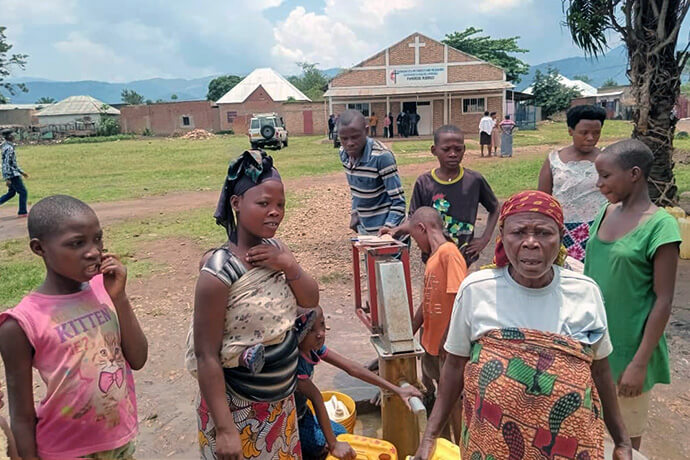
- To combat water-borne diseases common in the region, The United Methodist Church drilled a well in the Burundi Annual Conference.
- The borehole is the result of a project funded by the United Methodist Committee on Relief.
- Five thousand people living in the area now have access to drinking water.
In the heart of Burundi, water has found its way back to the town of Ruburizi.
A borehole installed by The United Methodist Church has transformed the daily lives of thousands of people. Access to drinking water, once a daily challenge, is now a reality, synonymous with renewed life and hope.
Subscribe to our
e-newsletter
Funding from the United Methodist Committee on Relief enabled The United Methodist Church of Burundi to install a drilling system in the parish of Ruburizi. The initiative was launched to meet urgent needs following natural disasters in 2022.
The borehole is the result of the project “Relief and Recovery Assistance to Flood Survivors at Nyabunyegeri, Rubirizi and Kirekura,” said Patrick Abro, missionary for the United Methodist Board of Global Ministries in the Burundi Conference.
Ruburizi faced a drinking water shortage due to flooding and landslides that damaged existing infrastructure. The Rev. Cimpaye Valentine, Bujumbura District superintendent, emphasized that the project aimed to improve access to drinking water, thereby helping to alleviate water shortages in the cyclone-affected area, reduce diseases linked to poor hygiene, and protect women and girls from sexual violence often encountered during long treks to fetch water.
“To eradicate the disease of dirty hands and protect women from sexual violence,” Valentine said, “we have requested financial support to help the surrounding population exposed to various social scourges linked to the lack of drinking water.”
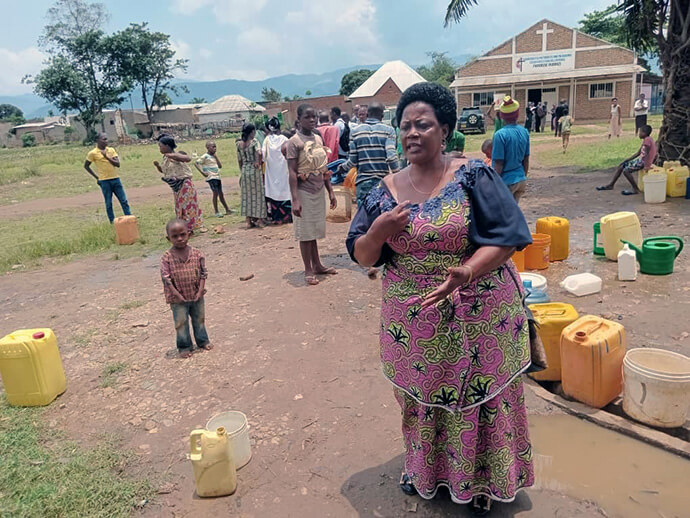
The borehole, which serves around 5,000 people, has reduced the time spent by women and girls collecting water. Previously, they had to walk five miles, or almost two hours, to reach water. Today, the farthest water point is only one-third mile away. The borehole has a capacity of more than 160 gallons per hour, or 3,840 gallons per day.
“This drilling is the symbol of the hope that God gives to this community,” Abro said, “and reminds me of the verse … about Jesus being the source of water that gives eternal life.”
Ruburizi residents welcomed the initiative. “I'm happy to have drinking water closer to home,” said Christine Ntamubano, a 70-year-old widow. “Before, we used to draw water from rivers, which often caused illness.”
The Rev. Buratangaje Japhet, assistant pastor of Ruburizi parish, noted an increase in the number of worshippers and new members since the borehole installation, a sign of the project’s positive impact on community life.
“These new members,” he said, “testify to the compassion of The United Methodist Church toward a population in difficulty.”
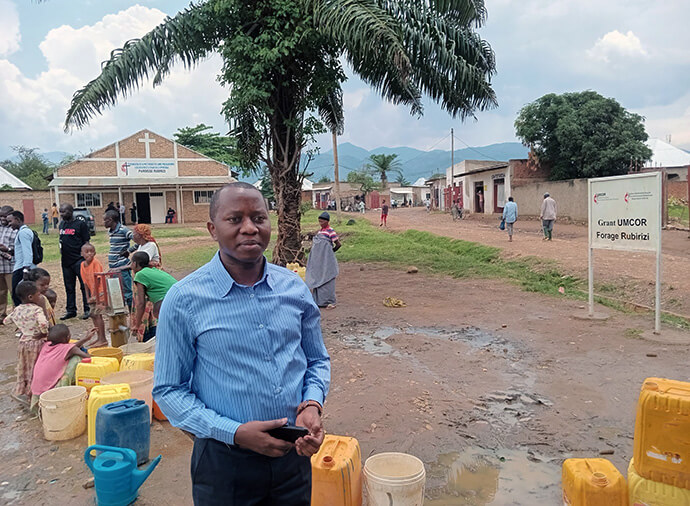
The project has also contributed to local economic development. It has enabled children to devote more time to other household and agricultural activities. Beneficiary Manirakiza Geneviève commented, “Watering the green vegetable fields has become easier, which improves the health of our families.”
Sector manager Nshimirimana Japhet thanked The United Methodist Church for its constant support and stressed that the local administration is committed to ensuring the protection of the borehole. He also called for extending the drinking-water network to other localities.
The success of this borehole, he said, lies in its crucial role in reducing diseases linked to poor hygiene, thereby helping improve local health.
“This water borehole,” Valentine said, “is more than just a project. It’s a tangible response to the urgent needs of a community.”
Ndayisenga is a communicator for the Burundi Conference.
News media contact: Julie Dwyer at (615) 742-5470 or [email protected]. To read more United Methodist news, subscribe to the free UM News Digests.


