

“This is the time to listen. The time to build partnerships, to build confidence. To be more united for the sake of humanity regardless of our faith.”
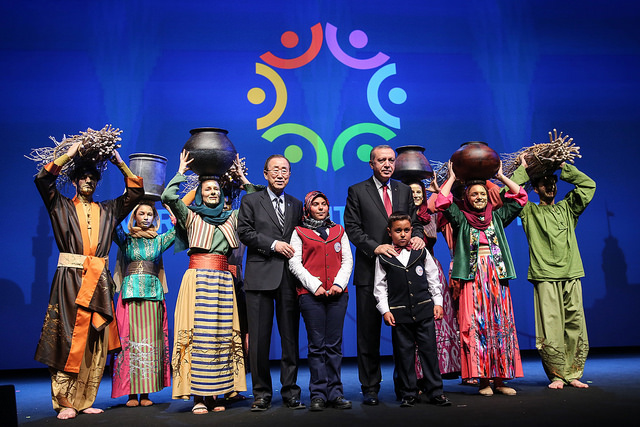
Such was the conclusion reached by Bishop Nkulu Ntanda Ntambo of the North Katanga Episcopal Area following his experience at the World Humanitarian Summit in Istanbul, Turkey, May 23-24.
The first-ever World Humanitarian Summit brought together 9,000 participants from 173 different countries, including 55 heads of state, hundreds of private sector representatives, and thousands of people from civil and non-governmental organizations. In its 70-year history, the United Nations had never before brought humanity together on such a large scale.
The summit was convened by United Nations Secretary-General Ban Ki-moon “to generate commitments to reduce suffering and deliver better for people around the globe.” The event challenged attendees with five core responsibilities: prevent and end conflict, respect the rules of war, leave no one behind, work differently to end need and invest in humanity.
Ntambo said he was impressed by a session on religious engagement, where he had a chance to interact with high-ranking Muslims, Hindus, Catholics and Anglicans.
“At first, I thought only Christians and UMCOR were doing good things, but I discovered that all religions – and secular organizations – are concerned with how to solve these problems when humans are in danger,” he said.
“When a catastrophe happens, it cannot be solved by one church, one nation, or one NGO. When we hear of countries invading others, we should not just leave it to a few big countries to raise their voices. The faith community should also raise its voice. Most times we keep quiet and give evil the opportunity to act in our place.”
Ntambo has served in ministry for 40 years through The United Methodist Church in the Democratic Republic of Congo as a pastor, district superintendent, missionary, General Board of Global Ministries director and chancellor of Africa University. He will retire this year after 20 years as the bishop of the North Katanga Episcopal Area. He is also an elected senator for the Congo.
Ntambo said he had only one regret from the summit: the absence of The United Methodist Church.
“This church cares and is very generous, so how were we missed? We are involved in most of these areas already, and we could have contributed greatly to the summit. My challenge to The United Methodist Church would be to learn how we can become one of the decision-makers in these kinds of summits.”
Grace is a church and community worker with the West Ohio Conference.
Like what you're reading? Support the ministry of UM News! Your support ensures the latest denominational news, dynamic stories and informative articles will continue to connect our global community. Make a tax-deductible donation at ResourceUMC.org/GiveUMCom.


