

Key points:
- Four United Methodist mission farms saw bumper harvests after receiving support from the Board of Global Ministries’ Yambasu Agriculture Initiative.
- The money provided seeds and fertilizer, along with equipment and technical support.
- Morgan Jeranyama, Yambasu Agriculture Initiative national project consultant in Zimbabwe, said the funding also provided support to farmers in the rural communities.
Four United Methodist mission farms in Zimbabwe got a major boost from the Yambasu Agriculture Initiative, with some seeing a bumper harvest for the first time in a decade.
The farms at Nyadire, Hanwa, Old Mutare and Mutambara missions had mostly been lying idle or were being partially utilized. Through a Yambasu Agriculture Initiative grant during the 2022-23 production season in Zimbabwe, the farms received seeds and fertilizer, along with equipment and technical support.
An initiative of the United Methodist Board of Global Ministries named in honor of late United Methodist Bishop John K. Yambasu, the program offers funding to episcopal areas in Africa developing new agricultural projects that utilize United Methodist land holdings.
How to help
Donations can be made to the Yambasu Agriculture Initiative through the United Methodist Board of Global Ministries Advance #982188.
Morgan Jeranyama, Yambasu Agriculture Initiative national project consultant in Zimbabwe, said the funding was received in two folds.
“The (mission) farms rceived crop inputs nd support to repair most of the implements, while technical support was provided to farmers in the rural communities,” he said.
Denford Mutwiwa, agriculture board chairperson for the church in Zimbabwe, said major funding was needed to realize the full potential of the farms.
“The grant came at the right time when we were embarking on resuscitation of our farms.”
The Rev. Lancelot Mukundu, Nyadire Mission station chair, said there hasn’t been maize production on the farm since 2018.
“Today, we are proud to announce that 18.5 hectares is under maize production while 2 hectares is under sugar beans,” Mukundu said. One hectare contains about 2.47 acres.
“The produced crop will be sold to recapacitate the farm. Furthermore, the excess produce will be distributed to other units of the mission farm through an interdepartmental trade,” Mukundu said. He said through the initiative, the farm created employment for five people and provided for interns from agriculture colleges.
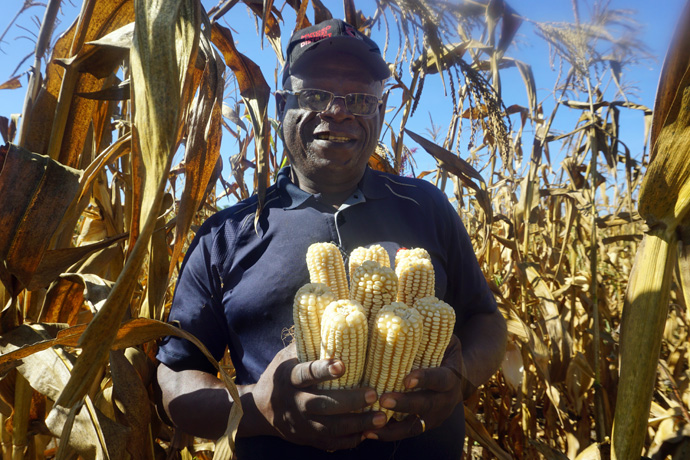
In addition to crop production, the mission is planning to engage in poultry farming.
“The fowl-run units that will accommodate 10,000 broiler chickens per cycle is now 90% complete,” he said.
Norman Machingura, 27, an intern and second-year student at Tabudirira College, said he has learned a lot from the farming system at Nyadire.
“The performance of the maize crop had been very good because the selected variety matched the climatic conditions and the soil type,” Machingura said. “The management was excellent and being attached here has exposed me to a lot of activities that molded me such that I will be an asset ready to be productive in the society.”
Farm worker Tedias Salad said the equipment support has made a huge difference. He drives the farm’s tractor. “This tractor was not working for years, but through the funding from GBGM, it is now functional,” he said.
So far, all the land preparation and marking of lines has been done by one tractor, Salad said, adding that more equipment is needed to increase production if funding permits.
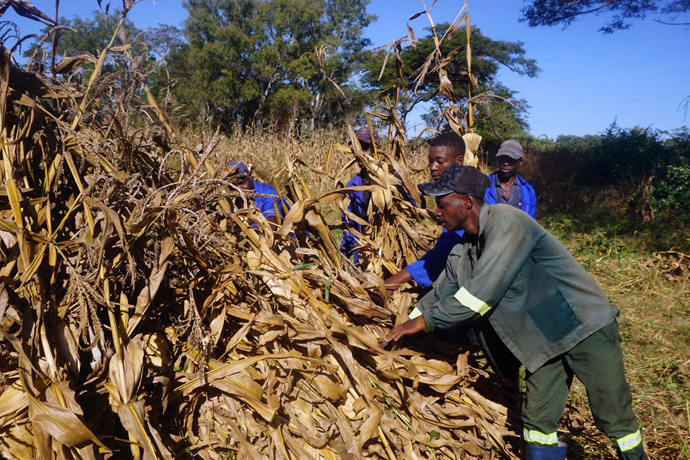
Farm hand Gadzai Kafeso is pleased with the progress on the farm.
“Of the more than 10 years I have been at Nyadire, this year we have worked extremely hard, and it was worth it. The harvest is very good.”
Esnath Arichara, the farm manager, agreed but noted some challenges facing the farms.
“The crops performed very well, but weed control was the main challenge due to incessant rains. Many times, heavy rains that fell after applying herbicides diluted the chemical and rendered them ineffective.”
Arichara said the farm is expecting to double the hectares under cropping in the next season.
“My wish is to have all-year crop production through the use of irrigation. The farm is endowed with a perennial water source from Nyadire River and has been granted water rights,” Arichara said.
“We plan to gradually increase the hectarage under crop production since the farm sits on 1,700 hectares of which 860 are arable and currently greatly underutilized,” she added.
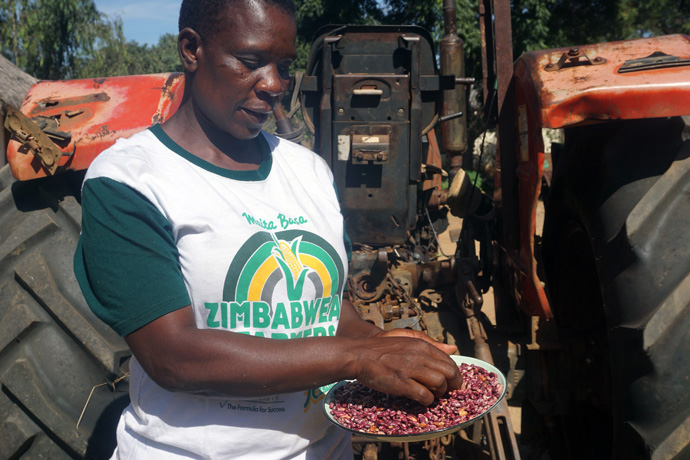
At Hanwa Mission farm, the season started well with a combined 8 hectares of maize and 1 hectare of sunflower planted, said the Rev Future Sibanda, the station chair.
He said farmers followed a careful analysis of rainfall patterns and drought tolerance of the different maize seed varieties, but a three-week dry spell in March slightly affected some of the maize crop.
“The sunflower crop has performed well and a good harvest was made. These lessons proved vital for our drought resilience focus,” Sibanda said.
Jeranyama said Old Mutare Mission is having success with raising poultry.
Grant money from the Yambasu Agriculture Initiative is helping The United Methodist Church in Zimbabwe support local farmers.
Morgan Jeranyama, Yambasu Agriculture Initiative national project consultant in Zimbabwe, said in rural areas, field days are being held as an agricultural extension service tool.
“A field day is a tour-and-learn event where the best farmers showcase how they managed to excel. Many service providers will market their products and technical support will be shared.”
Three batches of 500 broiler chickens were raised in a small fowl area leased from the high school during the year.
“The program provided vital production training to the project team and mortality was extremely low. And they realized a profit of USD $3,500,” he said.
This encouraged the high school to start its own chicken project. Jeranyama said it is doing fairly well and demonstrates the impact of capacity building of the different units at the mission farm.
Nyakunu Zimunya Justice Chakanaka with the church’s Mutambara Mission farm said he is grateful for the money given to the mission. “The grant has been very helpful in upgrading our food chain,” he said. “We managed to farm 10 hectares of maize crop and the yield has improved fairly.
“Currently we have started to engage in piggery and poultry production,” he said.
Mutambara Mission has a hospital, nursing training department and primary and high schools.
“All of these are potential markets for our products,” Nyakunu said. “So far, we have managed to sell our produce to these departments and we are grateful for that.
“To GBGM through the Yambasu Agriculture Initiative, keep up the good work. Your support will not go in vain. We promise to work hard.”
Chingwe is a communicator for the Zimbabwe East Conference.
News media contact: Julie Dwyer at [email protected]. To read more United Methodist news, subscribe to the free Daily or Weekly Digests.


