
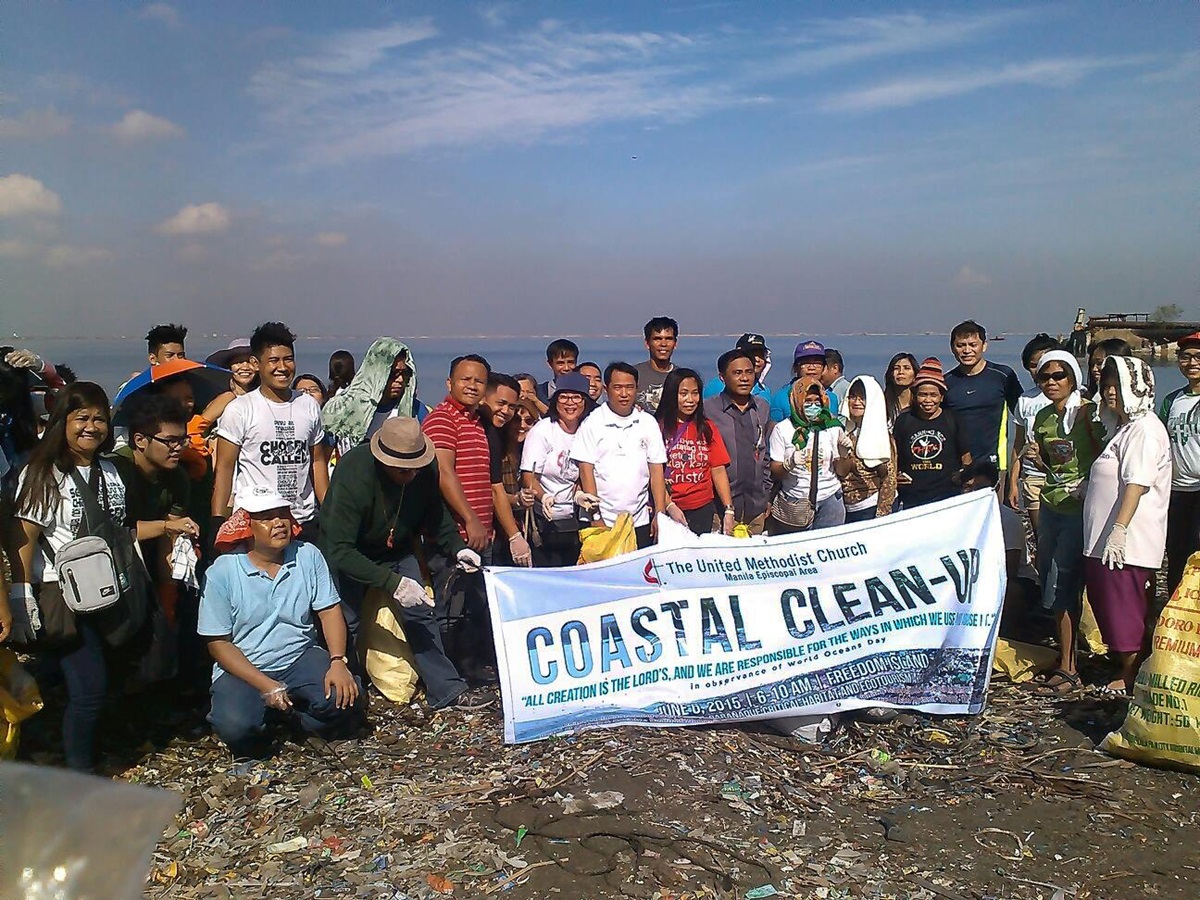
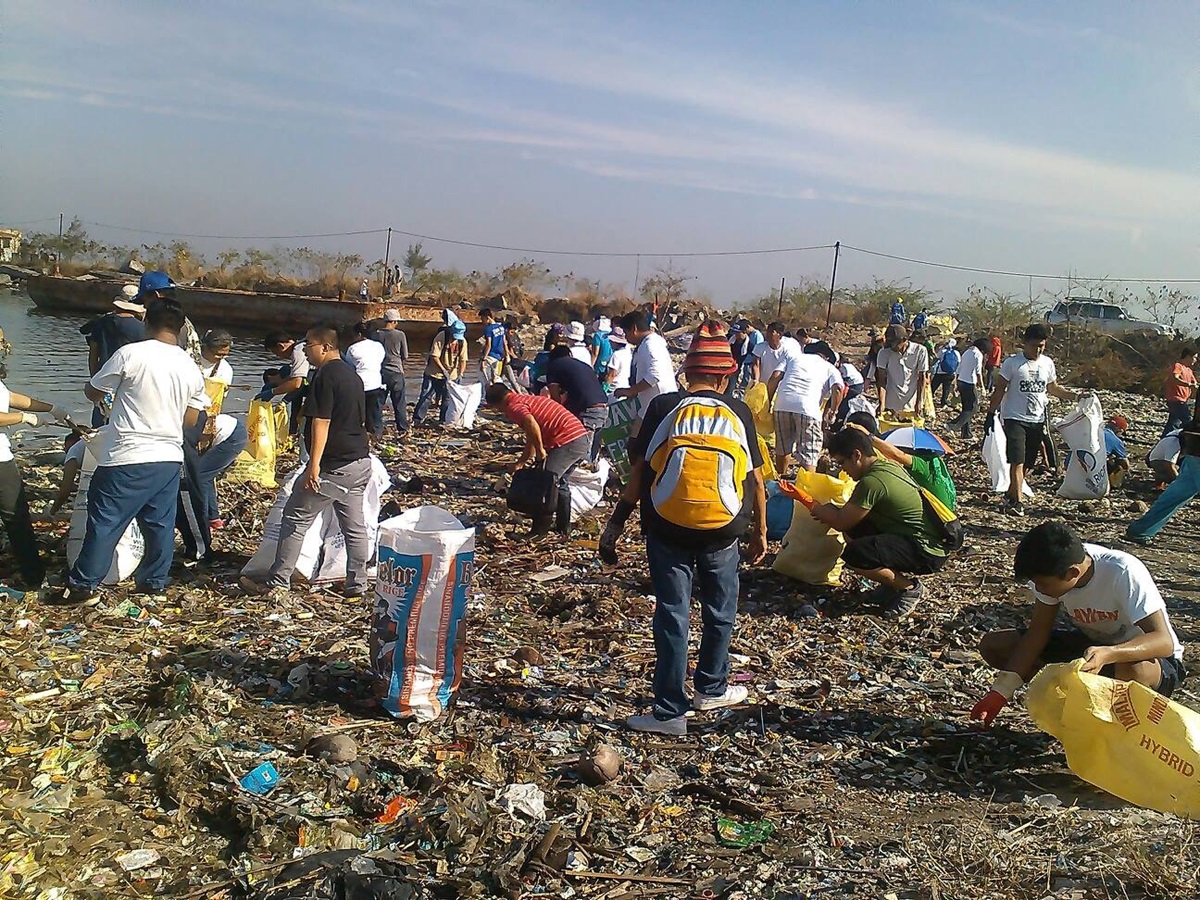
In observance of the World Oceans Day, United Methodists led a coastal cleanup at Freedom Island, a critical habitat and eco-tourism area.
The Freedom Island — also known as the Las Piñas-Parañaque Critical Habitat and Eco-Tourism Area — is a 175-hectare (432-acre) critical habitat with 36 hectares (89 acres) of mangroves that is the nesting ground of fishes in Manila Bay. The island also serves as a bird sanctuary for both migratory and endemic birds and is the only remaining forest of mangroves on the coast.
The Philippines Annual Conference of the United Methodist Church and the Northwest and Southwest Manila Districts all took part in the cleanup on June 6.
Noel Vincent P. Miguel, president of the United Methodist Young Adult Fellowship of the Southwest Metro Manila district, coordinated the event, which drew about 200 volunteers.
“It is responding to the call of the UMC Social Principles to be responsible stewards of creation in time of desecration of God's image," Miguel said.
The cleanup also is a response to Manila Area Bishop Rodolfo Juan's challenge that everyone be concerned about the environment by planting more trees, cleaning up the coast and properly disposing of waste.
“Climate change is a very serious phenomena which we need to address head on,” Juan said. “Let us be faithful Stewards of God's creation. Remember that that ‘the earth is the Lord's and the fullness thereof,’ hence we must be responsible in the use of all of God-given resources.”
Cleanup volunteers
The event was supported by Senator Cynthia A. Villar, Congressman Eric L. Olivarez and other volunteers from non-government organizations.
Groups that took part in the cleanup included the Philippines Area Church and Society, lay organizations, the Philippines Central Conference Board of Women’s Work, the Save Freedom Island Movement, the Department of Environment and Natural Resources, the Villar Social Institute for Poverty Alleviation and Governance Foundation and Stewards of Creation.
Miguel explained that reclamation government project in Manila Bay would destroy habitat and increase the risk of flooding in metro Manila and its neighboring provinces.
The project aims to reclaim 635 hectares (1,570 acres) of the shoreline in front of the Freedom Island sanctuary and build a highway linking the future business centers of Las Pinas and Paranaque with the rest of Metro Manila. The project would cut through the mangroves and about 15 percent of the island would be removed to pave the way for a drainage system.
Miguel said one goal of the coastal cleanup is to educate church members and community people about the impact of improperly disposed garbage.
The young adult fellowship group is now actively participating in social justice concerns including tree planting, the cleanup and “calling on leaders for righteous governance and accountability," he noted.
"By providing more learning experiences, by giving more exposure to the community, by giving more resources and materials down to the local churches, we can give more opportunities to everyone to become stewards of creation," Miguel said.
Mangiduyos is a correspondent for United Methodist News Service.
News media contact: Vicki Brown, news editor, [email protected] or 615-742-5470.
Like what you're reading? Support the ministry of UM News! Your support ensures the latest denominational news, dynamic stories and informative articles will continue to connect our global community. Make a tax-deductible donation at ResourceUMC.org/GiveUMCom.


