
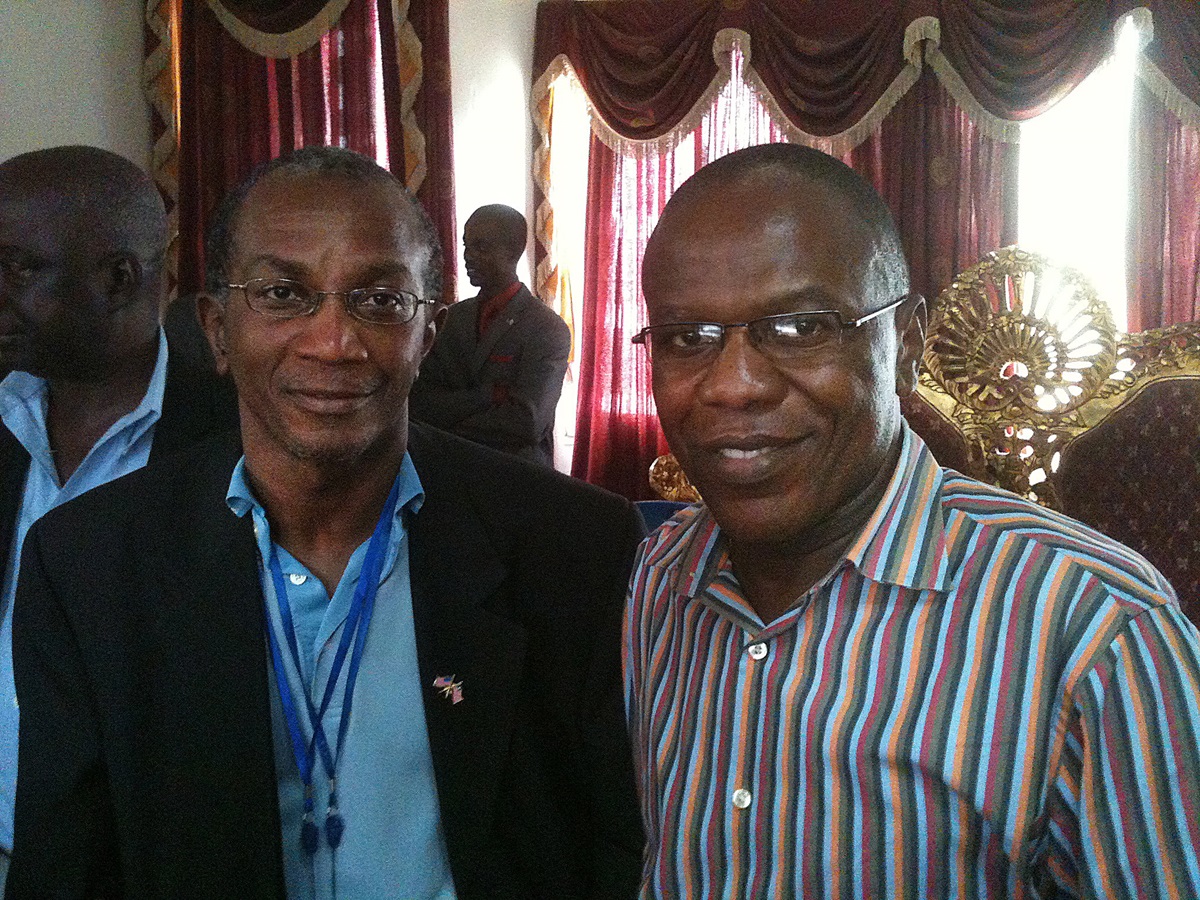
A United Methodist doctor took the trial Ebola vaccine because he wanted to encourage others to volunteer.
Dr. Francis Kateh, a former administrator of the Ganta United Methodist Hospital, was among 12 volunteers who took the vaccine as the first large-scale trials of two experimental vaccines against the deadly virus began in Liberia.
“I had to come forward to take it since it is my duty to encourage people to volunteer their services in participating in this Ebola trial vaccine process,” said Kateh, who is now chief medical officer of the Jackson F. Doe Memorial Hospital in Tappita, Nimba County.
Kateh said he was simply fulfilling his Christian duty of leading the way in all things.
Ebola cases have steadily declined in Liberia, although last week new cases in West Africa inched up for the first time this year, so there is still danger of resurgence, according to the World Health Organization. There were five new cases in Liberia last week, where more than 9,000 people have been infected since the epidemic began and 3,746 have died.
Kateh said The United Methodist Church has worked for the greater good of Liberia since the civil war, when the church was the first to reach to places that others did not want to go, and he hopes that leadership will continue.
“It will be good if The United Methodist Church offer their medical facilities for the Ebola trial vaccine when the request is made by the government of Liberia,” Kateh said.
Goal is 30,000 immunizations
Scientists hope to immunize 30,000 volunteers.
Kateh got the vaccine at the Redemption Hospital in New Kru Town, a suburb of Monrovia. The Redemption Hospital trial is expected to vaccinate 600 Liberians who volunteer.
Kateh said he weighed the dangers of taking a trial vaccine, but decided to go ahead. He said so far he had experienced some momentary muscle pain and an elevation in his temperature, but was feeling much better.
Kateh also accompanied officials of the Ministry of Health and Social Welfare who were subpoenaed to appear before the Senate Committee on Health to answer questions about the vaccine trial. He testified that the vaccine was in the best interests of the Liberian people and the rest of the world.
“There must be Liberians who will be in the frontline of this clinical trial process no matter what the outcome will be,” he said.
The National Legislature, Liberia’s equivalent of the U.S. Congress, questioned the health ministry officials for what they referred to as the failure of the officials to inform them before starting the vaccination program in Liberia.
Dr. Stephen N. Kennedy, coordinator of Ebola research and co-investigator of the trial vaccine study, apologized on behalf of Health Ministry officials and promised to improve the dissemination of information about the vaccine. “All the safety measures from phase one to where we are in this vaccination process have been checked and certified for the good of the Liberian people,” he said.
*Swen is editor and publisher of West African Writers, an online publication about United Methodist happenings in West Africa and assists the denomination in Liberia with coverage for United Methodist Communications.
News media contact: Vicki Brown, [email protected] or 615-742-5469.
Like what you're reading? Support the ministry of UM News! Your support ensures the latest denominational news, dynamic stories and informative articles will continue to connect our global community. Make a tax-deductible donation at ResourceUMC.org/GiveUMCom.


