
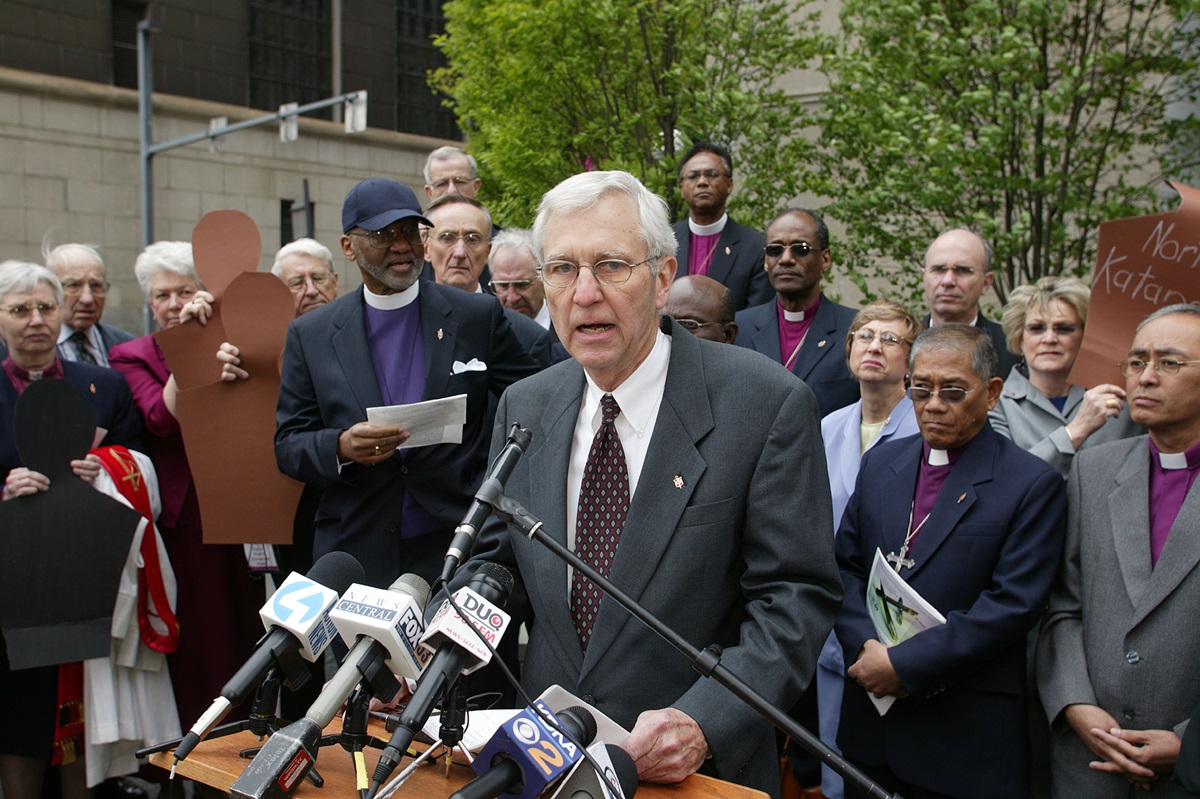
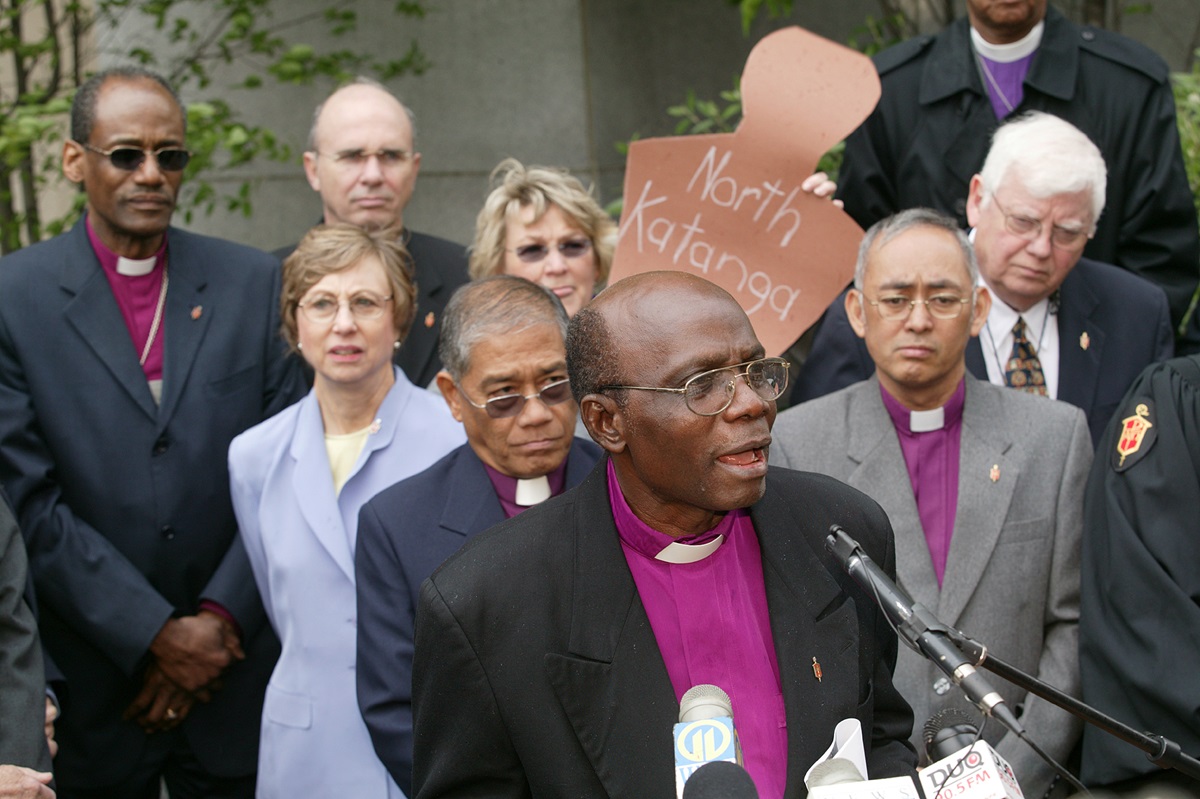
The U.S. government’s denial of visas for some United Methodists from Africa and the Philippines is both racist and unjust, according to the denomination’s Council of Bishops.
During an April 27 press conference here, the bishops expressed concern about factors that prohibited international delegates from attending the 2004 United Methodist General Conference because of visa problems.
Speaking on a windswept plaza of the city’s federal building, Bishop Marshall L. (Jack) Meadors, currently teaching at Candler School of Theology in Atlanta, noted the council’s outrage over the perceived mistreatment of international delegates because of their race or economic status.
Eleven delegates from the Democratic Republic of Congo, five from Central Congo and six from the North Katanga Conference have been denied visas. Two delegates each from Nigeria and Sierra Leone were denied visas, as was one from Zimbabwe. Two of three delegates from the East Africa Conference who had been denied visas reapplied and were approved. A Liberian delegate also reapplied and was approved. In the Philippines, 22 delegates initially were denied visas, but 14 reapplied and were approved.
In all, 42 of the 189 international delegates were initially denied entry into the United States. On the opening day of conference, 25 delegates still had no visas and could not attend the legislative meeting.
Three days earlier the bishops passed a resolution “expressing our deep concern and outrage regarding the lack of hospitality extended to these delegates, whose only intention is to fulfill their role as a delegate to the United Methodist General Conference…”
The council applauded efforts by U.S. Senator Richard Lugar (R-Indiana), and other legislators in addressing the visa problems and pledged to work with other church agencies to prevent such a situation in the future.
Bishop Felton E. May of Washington said the bishops also appreciated the assistance of the Office of Religious Liberty in the U.S. State Department regarding the visa problem but felt the loss of those still barred from entry. “This is their family reunion, and they are not among us,” he added.
Pointing to the fact that white European delegates did not encounter the same problem with visas, May declared that “racism is no small part of this matter.”
To Bishop Joseph Humper of Sierra Leone, the denial of visas “is the denial of justice and sacrifice for peace, love and unity.” The denials rob these delegates of the privilege of serving the church and “diminishes the integrity of the people of Africa,” he said.
Bishop Solito Taquero of the Philippines complained that some delegates who reapplied were still denied an entry visa. “I hope the U.S. government will do something about it,” he said.
The Council of Bishops also wants the U.S. government to make sure such visa problems do not occur when the 2008 General Conference meets in Fort Worth, Texas. “We want the message to get to Washington,” Meadors said.
*Bloom is the director of the New York office of United Methodist News Service
Related
Like what you're reading? Support the ministry of UM News! Your support ensures the latest denominational news, dynamic stories and informative articles will continue to connect our global community. Make a tax-deductible donation at ResourceUMC.org/GiveUMCom.


