
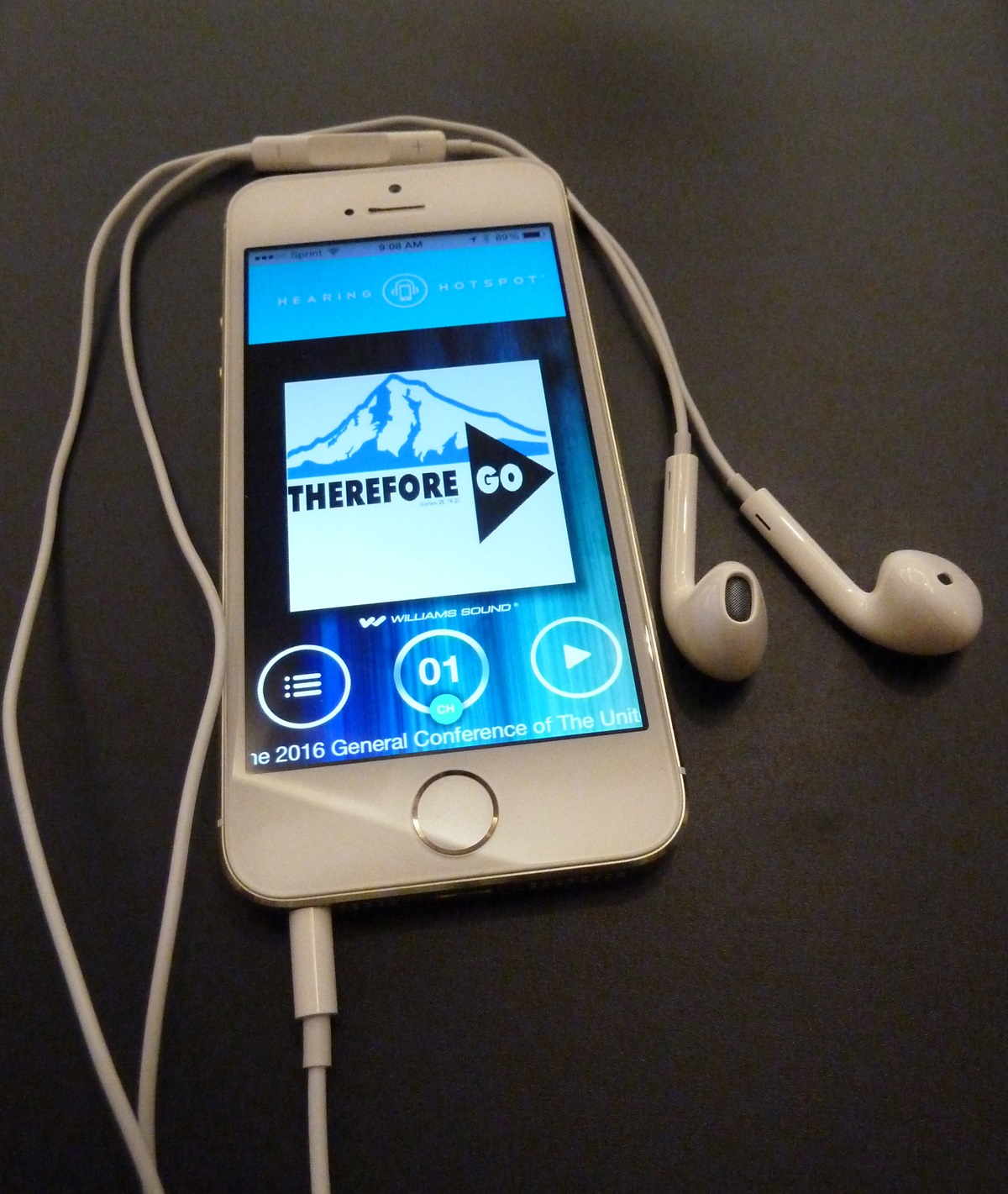
When the United Methodist General Conference meets in Portland, Oregon, in 2016, the planning committee wants to ensure that language differences are dealt with as fairly as possible.
That means providing simultaneous translation in eight languages for the delegates, bishops, staff, official observers, reserve delegates and guests to the plenary sessions at the church’s top lawmaking assembly. In past conferences, English-speaking delegates have not used headsets for translations. Also, translations done over the public-address system slowed the sessions.
Providing infrared headsets for the 1,200 delegates, bishops and official participants won’t be too much of a change for staff from the United Methodist Board of Global Ministries and translations systems contractor Frank Ferrer. But providing interpretation for as many as 3,000 guests presents a larger challenge.
Ferrer went searching for a solution when he realized that renting equipment would be prohibitively expensive – not to mention the high risk of loss from unreturned receivers and headsets. The option he found uses smart device technology.
Ferrer demonstrated to the Commission on General Conference a “Bring Your Own Device” system that allows the use of a smart-phone app in connection with a dedicated wireless network to stream audio. Originally designed to allow patrons in sports bars to hear their favorite television channel, it can be used to access any of the eight translation languages provided at General Conference.
Testing technology
The commission then tested the technology during their meeting in Portland. It will be tested again during the Council of Bishops meeting in Berlin, May 1-7, and a final decision about using this, or other emerging technology, will be made by interpretation staff and the General Conference business manager, Sara Hotchkiss.
Initial testing shows the system will work with most portable smart devices. Those that use the Apple iOS have worked well in initial testing. Android OS devices can also access the app, but not all versions are compatible. Ferrer reports that Microsoft phones and Surface tablets do not support the app at this time.
Battery life may be the other challenge. When smart phones are accessing Wi-Fi, Bluetooth and cellular networks simultaneously, battery life can be compromised. Ferrer reports times as low as three hours for an iPhone, but iPads and iPod touch can run for 10 hours.
“Our hope is that people will download this application before coming to the conference, and then when they need the service, it will be right there on the device they have with them,” he says. “It won’t be the perfect solution for everyone, so we will still need a few receivers to loan out, but this will provide a high-quality audio solution for most of the people attending.”
He’s also planning to have low-cost ear phones to sell on-site for those who need them.
Editor's note: Nelson is the director of communications in the Oregon-Idaho Conference.
This article was first published on April 24, 2015.
News media contact: Heather Hahn, [email protected] or 615-742-5470.
Like what you're reading? Support the ministry of UM News! Your support ensures the latest denominational news, dynamic stories and informative articles will continue to connect our global community. Make a tax-deductible donation at ResourceUMC.org/GiveUMCom.


