
Key points:
- The West Virginia Supreme Court halted a lawsuit by 33 United Methodist congregations over property.
- In its decision, the high court said that the dispute would require courts to interpret church rules — in violation of both the U.S. First Amendment and the West Virginia Constitution.
- The West Virginia Conference says it remains committed to supporting the churches.
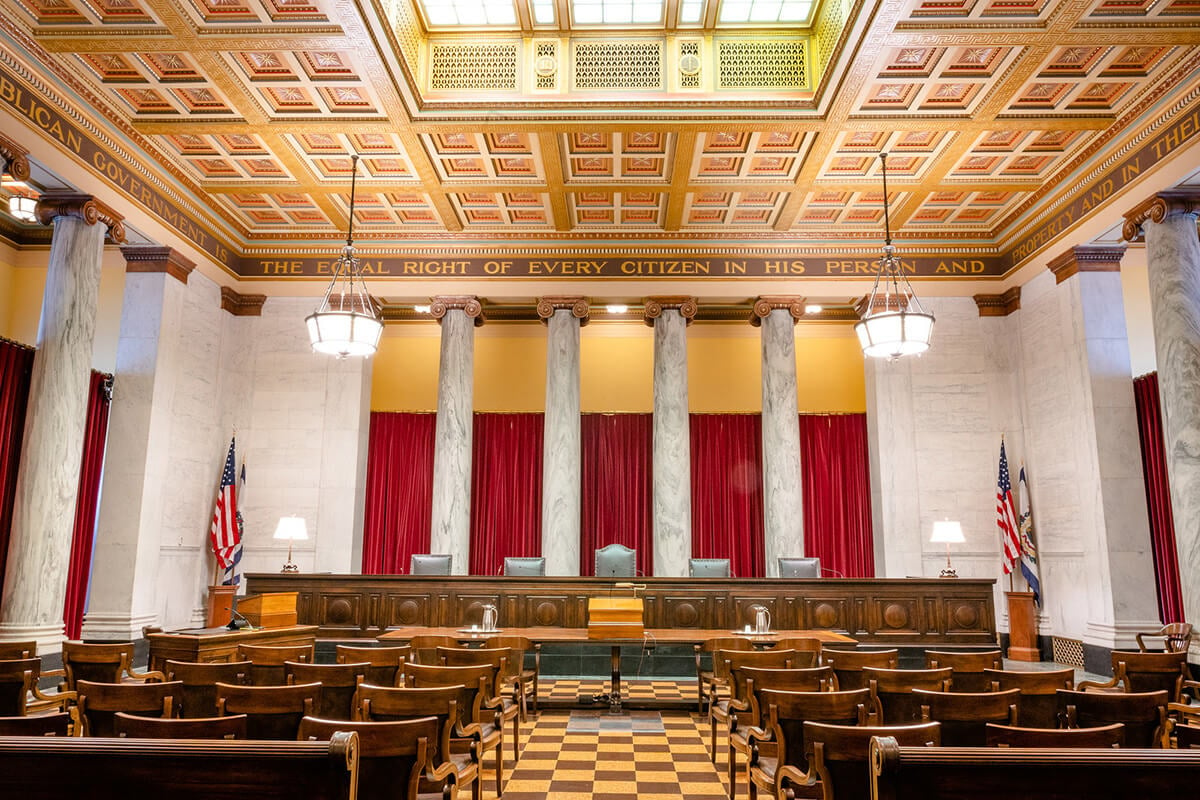
The West Virginia Supreme Court has blocked a lawsuit by 33 local churches that sought to leave The United Methodist Church with property.
The churches accused denominational officials of misleading them into missing a deadline to withdraw with property.
However, in a Nov. 4 decision, the high court ruled that adjudicating the congregations’ claims would require civil courts to interpret church law — a violation of U.S. and West Virginia constitutional protections of religious freedom.
The decision granted the request by the West Virginia Conference board of trustees and individual trustees for what courts call “a writ of prohibition.” The ruling essentially bars the Mercer County Circuit Court from carrying out a March 13 order that reopened the congregations’ lawsuit after previously dismissing it for lack of subject-matter jurisdiction.
“We conclude that the circuit court correctly determined in the first instance that the constitutional limitations on civil-court review of ecclesiastical decisions prohibited it from adjudicating this dispute,” wrote Justice Charles S. Trump IV on behalf of the court.
The local churches filed the lawsuit in 2024 after seeking to leave the denomination because they objected to changes that the General Conference, The United Methodist Church’s top lawmaking assembly, made to the denomination’s Book of Discipline eliminating bans on gay clergy and same-sex marriage.
The United Methodist Church and its predecessors, since 1797, have maintained that all church property is held in trust for the benefit of the entire denomination.
However, amid intensifying debate around how inclusive to be of LGBTQ people, General Conference added Paragraph 2553 to the Discipline. The policy allowed a temporary release from the trust clause for reasons of conscience related to homosexuality if churches met certain procedural and financial obligations.
According to the complaint, conference leaders told the churches that they did not qualify to disaffiliate under Paragraph 2553 and that they need not make a disaffiliation decision before the 2024 General Conference.
In the meantime, the West Virginia Conference allowed churches that wanted to leave the denomination to do so using the church-closure process.
In 2023, the West Virginia Conference approved 24 congregations separating from the denomination under that process. All told, more than 7,600 churches — about a quarter of the denomination’s U.S. churches — left the denomination between 2019 and the end of 2023.
Paragraph 2553 expired on Dec. 31, 2023, and the 2024 General Conference took the additional step of removing it entirely from the Discipline. Later that year, the Judicial Council — the denomination’s top court — ruled that the church-closure process could not be used as a way for congregations to withdraw with property, and that with Paragraph 2553 gone, the Discipline offered no path for disaffiliation.
Subscribe to our
e-newsletter
The congregations alleged that they relied on the conference’s assurances that they could still leave after the 2024 General Conference, but conference officials told them they would need to surrender church property to do so.
Their lawsuit alleged fraud, breach of fiduciary duty, breach of contract, conspiracy and other claims.
However, the state Supreme Court said resolving the congregations’ claims would require a judge to decide whether conference officials correctly interpreted church provisions.
“Characterizing a difference of opinion over the meaning of the Discipline’s provisions as a false statement does not confer jurisdiction upon a secular court to decide the underlying ecclesiastical question,” Trump wrote in the ruling.
The West Virginia court concluded that this is a matter best left to the highest church tribunal — namely, the Judicial Council.
The National Center for Life and Liberty, a non-Methodist legal nonprofit that represented the 33 churches, did not immediately respond to a request for comment. The center also represents other churches in the U.S. seeking to leave The United Methodist Church and recently faced a setback in the Appellate Court of Maryland.
The West Virginia Conference, for its part, said in a statement that it appreciated the West Virginia Supreme Court of Appeals’ careful consideration “and its reaffirmation of the constitutional principles” protecting the church’s authority over its own governance and ecclesial affairs.
According to data collected by the denomination’s General Council on Finance and Administration, the conference has more than 700 congregations with nearly 60,700 members.
“We remain committed to supporting our congregations, strengthening our connection,” the conference added, “and advancing our shared mission of making disciples of Jesus Christ for the transformation of the world.”
Hahn is assistant news editor for UM News. Contact her at (615) 742-5470 or [email protected]. To read more United Methodist news, subscribe to the free UM News Digest.


