
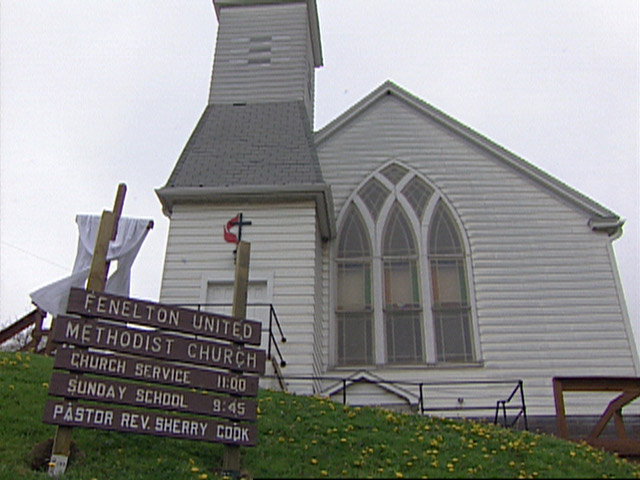
As they have for nearly 100 years, church bells in Fenelton, Pa., call the community to worship on Sunday mornings.
United Methodist Pastor Sherry Cook usually drives up at about 10:55, just as the congregation settles into the pews. The 11 a.m. Fenelton service is her third of three sermons, in three churches. Cook divides her duties among small, country congregations that can’t afford a full-time pastor.
As she hurries in and slips off her shoes, the atmosphere is casual and welcoming.
"Hospitality is a strong plus in a rural congregation," Cook says.
Like many other rural churches, Fenelton United Methodist is the community’s core. In addition to Sunday worship, it’s home to Cub Scout meetings, spaghetti feeds and rabies clinics for pets.
"We’re proud of our church," says Alice Morrow, a member for 45 years. "You just thank God every day it is here that you can come and worship."
As central as this church is to the community, membership is declining. That’s a problem shared by rural churches of all denominations across the United States. As small towns get smaller, churches lose members and resources. It becomes harder to reach out in ministry and mission.
"Do we just let this die, in favor of the suburbs which are growing and are more than 50 percent of our membership, or do we remember that in every community, we need the presence of the church?" asks the Rev. Sharon Schwab, a United Methodist General Conference delegate.
Schwab is among the delegates who voted May 1 to approve $425,000 to strengthen rural churches. By approving the budget, the delegates gave permission to the denomination’s National Comprehensive Plan for Town & Country Ministries to develop, support and affirm effective ministries in rural cultures and contexts for the next four years. The plan will also assist in developing, strengthening and sustaining effective leadership for town and country ministries. Town & Country Ministries is a program of the United Methodist Board of Global Ministries.
The 2000 General Conference adopted a foundation for Town & Country Ministries, called "Born Again in Every Place," and requested that an action plan be developed by the 2004 General Conference. Delegates to the 2004 assembly gave the support to implement the plan because rural United Methodist churches are more than one-third of the denomination’s membership, and those congregations account for half of the overall membership loss in recent decades.
"We, as the United Methodist Church, need to give those places the kind of leadership, the kind of mission sense, the kind of excitement that helps them turn around the communities in which they live and make a difference for Jesus Christ," Schwab says.
Cook agrees that the strength of a church should be measured by more than just numbers.
"Small membership churches do very vital ministry," she says. "It perhaps looks different, it’s not on a grand a scale as large churches do, yet we are out there serving."
*Riemland is a freelance producer and correspondent for United Methodist News Service.
News media contact: (412) 325-6080 during General Conference, April 27-May 7.
After May 10: (615) 742-5470.
Like what you're reading? Support the ministry of UM News! Your support ensures the latest denominational news, dynamic stories and informative articles will continue to connect our global community. Make a tax-deductible donation at ResourceUMC.org/GiveUMCom.


