
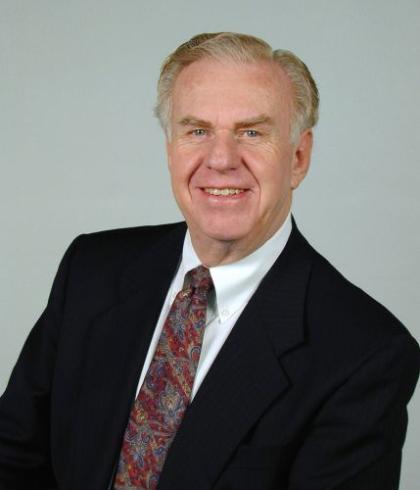
Remembering Rod

As delegates submitted nominations for Judicial Council last evening, I remembered when Rod Wilmoth, a pastor who served Hennepin Ave. UMC, a mega church in Minneapolis, asked me to help write his 100-word biography that had to be submitted to the DCA prior to the election.

“Should I say that I’m a progressive?” asked Rod, who was a classmate of mine at Iliff School of Theology. “I can’t give you any advice on that,” I responded. “You may gain some votes, but you will lose others.”

Rod decided to add that he was a progressive.

When the DCAs arrived in the morning, bishops who nominated Rod for the council said they were disappointed by Rod’s declaration.

Rod was elected as an alternate to the council.

I didn’t see Rod after the election.

A few months later, I received the devastating news that Rod committed suicide.

The act didn’t make sense to me then and it doesn’t make sense today. He was a highly respected pastor and he always had a smile on his face.

I know his act of self-destruction had nothing to do with the Judicial Council election, but it does make me wonder if I should have showed more interest in Rod than in his 100 word biography. That 100-word bio is now a part of history, but it does not tell the real story of Rod.

Only when we meet again somewhere beyond this planet will I know more about this man of faith who brought many people to Jesus Christ. I still wonder about the hidden demons that were troubling Rod and whether I might have done something to help exorcise them.


Like what you're reading? Support the ministry of UM News! Your support ensures the latest denominational news, dynamic stories and informative articles will continue to connect our global community. Make a tax-deductible donation at ResourceUMC.org/GiveUMCom.

Sign up for our newsletter!

Subscribe Now
Social Concerns
The Rev. Christopher P. Momany. Photo by Kristen Schell.

For every righteous ‘no,’ there must be a holy ‘yes’

Methodism’s Wesleyan-Holiness heritage holds principles that can be applied to today’s struggles around human dignity.
Church History
The Methodist Church’s 1956 General Conference meets from April 25 to May 7 in the municipal auditorium in Minneapolis. On May 4, the first Friday of the legislative assembly, the delegates voted to make women eligible for full clergy rights. “Now it is up to us to prove in clear and deep witness to the whole church our consecration and our loyal devotion to the work of the Kingdom of God,” said Margaret Henrichsen, a General Conference visitor, after the vote. In 1967, she became the first U.S. woman appointed district superintendent. Photo courtesy of Archives and History.

Why the 1956 women-clergy vote matters

Seventy years ago, the Methodist Church supported full conference membership for women clergy — a decision that would have a resounding impact when The United Methodist Church formed in 1968 and even today.
General Conference
Emily Allen, a veteran lay delegate from the California-Nevada Conference, delivers a report during the 2024 United Methodist General Conference in Charlotte, N.C. on May 3, 2024. Allen has been elected to serve as the interim General Conference secretary beginning July 1. She will lead the planning of The United Methodist Church’s international legislative assembly, scheduled May 8-16, 2028, in Minneapolis. Photo by Larry McCormack, UM News.

Bishops elect interim General Conference head

Emily Allen will lead the planning of The United Methodist Church’s international legislative assembly, next scheduled in 2028.

United Methodist Communications is an agency of The United Methodist Church

©2026 United Methodist Communications. All Rights Reserved