

When United Methodists meet this spring for their quadrennial legislative session, they will have to sort through approximately 1,500 to 1,600 petitions submitted by church agencies, regional conferences and other groups and individuals.
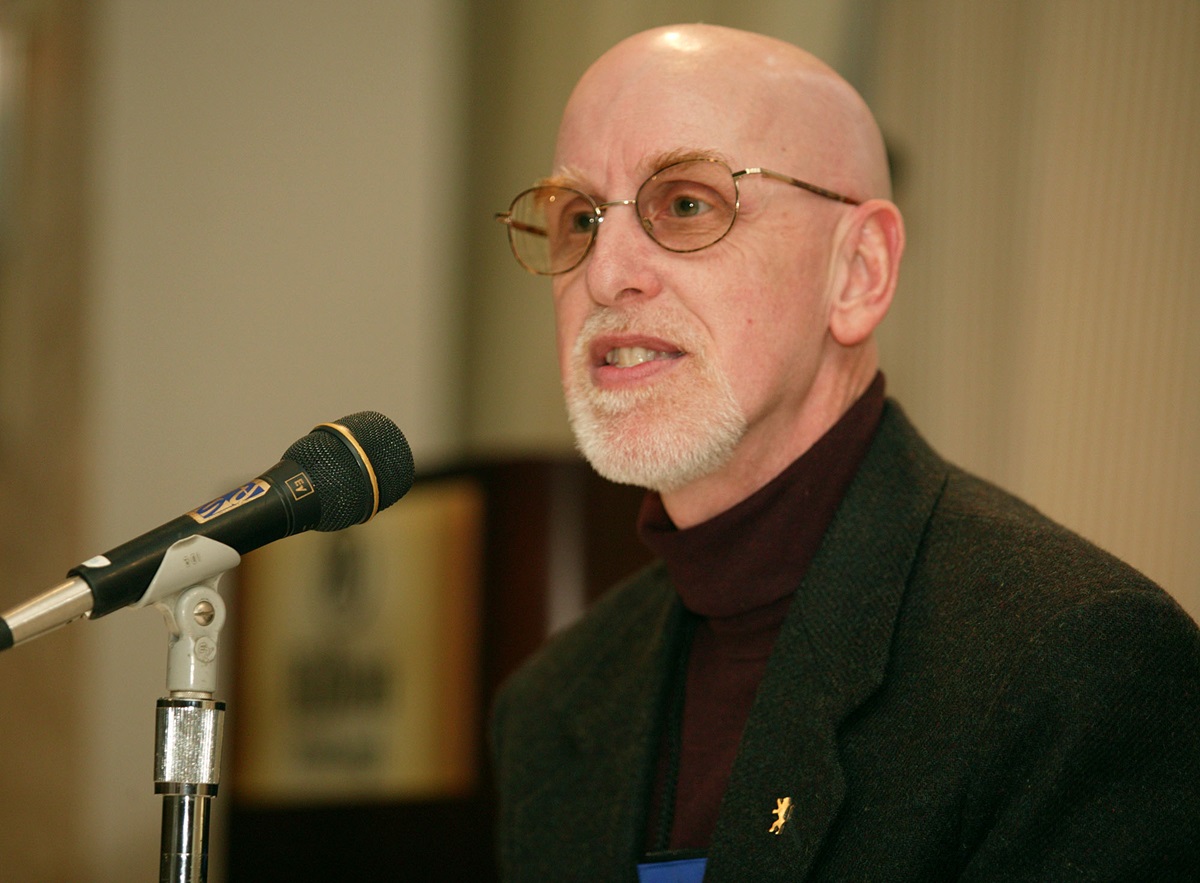
The total number of petitions for the 2004 General Conference - which cover everything from topics like homosexuality and abortion to concerns over church structure and pension plans to procedural issues such as selection of future General Conference delegates - will be down slightly from the 2000 meeting, according to the Rev. Gary Graves, General Conference petitions secretary.
As of late January, Graves had tallied up 1,200 petitions and was still processing another 250 e-mails with petitions. The petitions are expected to be available online soon after a print version of the Advance Daily Christian Advocate, which contains the petitions and other pertinent information about General Conference, is mailed to conference delegates.
"This was a year of transition for us because we were developing and using, for the first time, the new computer system," Graves told United Methodist News Service.
Computers were first used to track legislation during the 1992 General Conference in Louisville, under a system designed by John Brawn, a lay person and volunteer from San Jose, Calif. "Prior to that, it was typewriters and carbon paper," Graves pointed out.
But that system, which was DOS-based, became outdated, he added, and a development company was hired to create a new legislative-tracking system for the 2004 General Conference. "The technical parts have slowed us down at times," he said, but the overall benefit "will be very good for the future."
Part of the challenge of sorting the incoming petitions was the problem of people sending the same petition in several different forms - regular mail, e-mail and fax. The message for submitters to the 2008 General Conference, Graves said, would be "choose one form of submission, preferably e-mail."
Of the 500 e-mails received, most had anywhere from two to 25 attachments of various petitions, which also took time to sort. Graves was pleased that about half of those who sent petitions by regular mail included a downloadable diskette, as requested.
Graves said he received 25 or fewer petitions from church members or bodies outside the United States, but noted that church boards and agencies filed most of the petitions dealing with issues related to the Central Conferences.
When it comes to petition submissions, official church bodies do not necessarily receive preferential treatment. "Anything that is proposed by individuals, as long as it is actually requesting an action of the Discipline, those get equal attention," he noted.
If a petition was ruled invalid because the petitioner was requesting something that is not an action of General Conference, "we did our best here to refer that issue to the appropriate wing of the church" as well as contact the submitter about the referral, he said.
The link to the General Conference petitions will be available at www.umc.org, the official denominational Web site.
According to Graves, there was no particular issue that dominated the majority of petitions. As in past quadrennial meetings, a "good bit" of legislation was submitted relating to the issues of homosexuality and abortion, as well as the issue of same-sex unions. The legislation ranges from maintaining the denomination's current positions on those topics to altering the positions in a number of ways.
Spurring the debate on homosexuality - a controversial issue for every General Conference since 1972 - will be the recent election of an openly gay bishop in the Episcopal Church and a United Methodist Judicial Council decision regarding an openly gay clergywoman in the Pacific Northwest Annual Conference. The Rev. Karen Dammann now faces a clergy trial, as yet to be scheduled, and possible loss of credentials.
Some petitions relate directly to church structure as outlined in the denomination's law book, The Book of Discipline. The previous General Conference, for example had asked the United Methodist General Council on Ministries to "determine the most effective design for the work of the general agencies" and propose legislation for 2004. The council's proposal is that of a "Connectional Table" that would "integrate and synthesize" its work and the work of the General Council on Finance and Administration. Details are available at www.gcom-umc.org, the council's Web site.
Graves said he had received one alternative proposal so far to the "Connectional Table" proposal.
A large number of petitions were received in support of the Women's Division, a part of the United Methodist Board of Global Ministries, and the administrative body of United Methodist Women. But other petitions, he added, requested "some significant changes in the Women's Division and in local church women's ministries."
The United Methodist Board of Pension and Health Benefits has submitted proposals to change the retirement programs for clergy and for employees of church boards and agencies. "It's rewriting the entire existing document into a new form," Graves said.
The pensions board also has proposed alternate changes to the existing programs if the new programs are not accepted and individuals have filed petitions relating to the pensions issue, he noted. Both individuals and annual conferences have submitted petitions related to the creation of a denomination-wide health care plan.
Petitions relating to formulas for selecting jurisdictional delegates and the status of local pastors also have been filed.
The General Council on Finance and Administration recommends a general funds budget of $585.7 million for the next four-year period, which reflects a 7.3 percent increase. That proposal does not include funds for Igniting Ministry or some other special mission initiatives. As a cost-cutting measure, the council also is recommending disciplinary changes that would reduce the number of bishops eligible for election in the United States.
To continue Igniting Ministry, its churchwide advertising campaign, the United Methodist Commission on Communication is requesting $33.5 million to continue its core program and $5.4 million for a new youth component of the program. Other mission initiatives seeking approval and funding include a global education fund, a new division on ministries with young people in the denomination's Board of Discipleship, continuing programs for various ethnic ministries and new emphases on mission in Africa and Latin America.
Task forces and study committees mandated by the 2000 General Conference will present reports on Holy Communion, bioethics and the relationship of science and theology.
Among a variety of other issues covered by petitions are the death penalty, separation of church and state, terrorism, ratification of U.N. treaties and humanitarian intervention.
*Bloom is a United Methodist News Service news writer based in New York. News media can contact her at (212) 870-3803 or [email protected].
Like what you're reading? Support the ministry of UM News! Your support ensures the latest denominational news, dynamic stories and informative articles will continue to connect our global community. Make a tax-deductible donation at ResourceUMC.org/GiveUMCom.


