
Key points:
- A United Methodist pastor in Washington, D.C., raises alarms about the increasing number of National Guard troops in the nation’s capital.
- The rise comes at the expense of taxpayers and puts the safety of both residents and the troops themselves at risk, writes the Rev. Stephanie Vader.
- She calls on fellow United Methodists to write their governors to halt the deployment of armed troops.
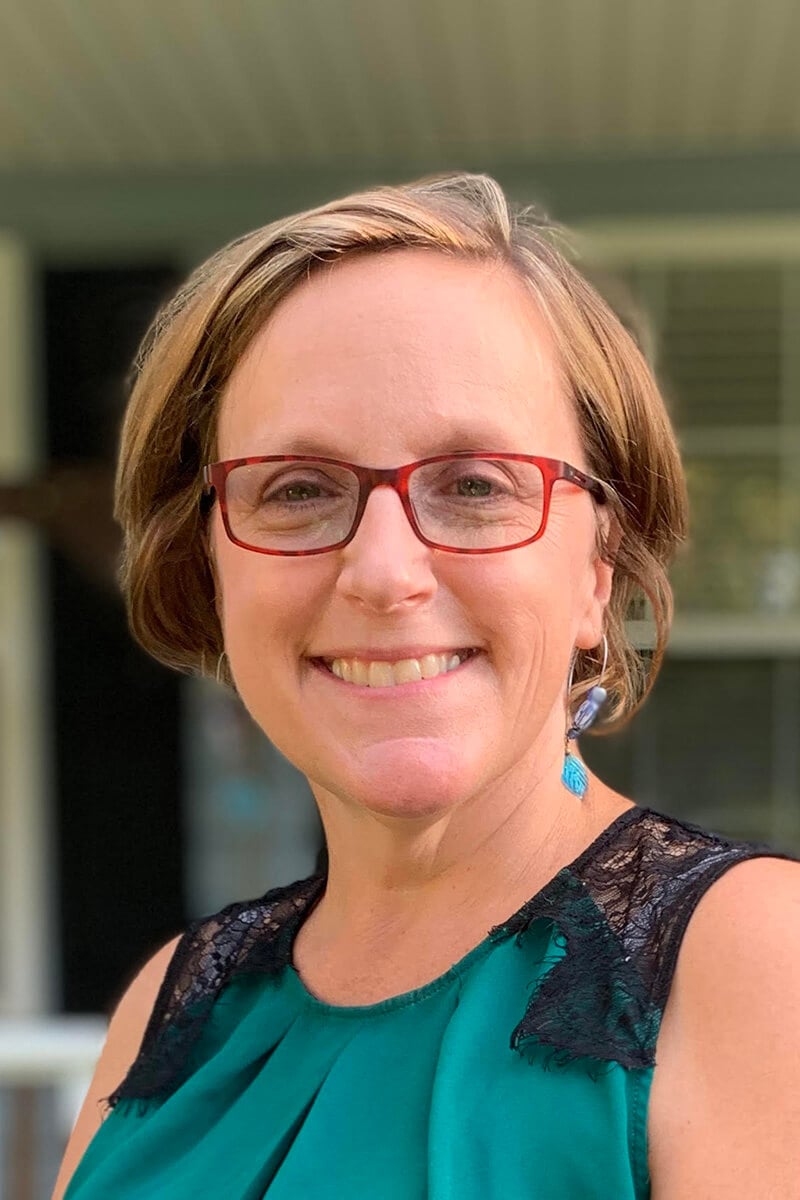
Photo courtesy of the author.
Commentaries
The Trump administration has made headlines for the ways it has spent millions of U.S. taxpayer dollars to reshape the White House and repaint the Lincoln Memorial Reflecting Pool in a move that turned the water green with algae.
What is not in the headlines is the fact that more than 700,000 residents of Washington, D.C., have now lived under a National Guard occupation for 11 months that has cost U.S. taxpayers nearly $1.65 million dollars a day, almost half a billion dollars since they were deployed in August of 2025. A federal court has ruled that Trump’s deployment of National Guard troops to D.C. is illegal and that ruling is consistent with other rulings from multiple states.
I am writing to ask for my fellow church members’ assistance because The United Methodist Church is a connectional church where members care for one another. The people of D.C. need your help as we continue to face the stressful occupation by armed National Guard troops.
Right now, President Trump’s “DC Safe and Beautiful” task force is dramatically increasing the number of armed soldiers in the U.S. capital, as part of observances for the nation’s 250th anniversary. At the beginning of June 2026, there were 2,500 National Guard Troops in the U.S. capital city. As of June 12, there were more than 3,400 — and the number is expected to rise to 5,000.
This increase is happening as D.C. residents are voting in the district’s primary election and as we head toward a mid-term general election this fall.
The troops have been deployed to provide law enforcement, something they have no training to do. That puts them and the residents of the city at risk for harm.
D.C. residents, particularly communities of color, have long borne the brunt of heavy-handed law enforcement. Turning D.C. neighborhoods into militarized zones has not made D.C. residents safer — rather the deployment has escalated tensions, fueled fear and eroded trust.
In August 2025, President Trump said that he was taking control of the D.C. police and deploying the National Guard, claiming the city was “overrun by violent gangs, bloodthirsty criminals, roving mobs of youth, drugged out maniacs, and homeless people.” President Trump’s statement about D.C. was not just inaccurate, it was also dehumanizing language about the over 700,000 human beings who call D.C. home.
The facts are that statistics from the U.S. Justice Department show crime in Washington is at a 30-year low. A January 2025 report states, “total violent crime for 2024 in the District of Columbia is down 35% from 2023 and is the lowest it has been in over 30 years, according to data collected by the Metropolitan Police Department.”
The National Guard should not be used for domestic policing, or as a political tool to intimidate civilians. The people who joined the National Guard are trained for combat and to provide aid in disaster situations, not civilian law enforcement. It endangers both the public and the service members to deploy them for tasks for which they are not trained.
Subscribe to our
e-newsletter
President Trump’s use of the military to further his desire to “take the district back,” “take it away from the Mayor,” and “run it the way it is supposed to be run” defies any notion of democratic representation and flies in the face of the more than 200-year-old fight by D.C. residents to achieve Home Rule. Historians remind us that District of Columbia residents’ fight for self-governance is intrinsically intertwined with racial justice and civil rights.
A study from the nonpartisan think tank Niskanen Center, released June 4, shows that President Trump’s deployment of the National Guard in Washington, D.C., has reduced petty property crimes, but has had little to no effect on violent crime, despite the high cost to taxpayers.
The residents of D.C. should not have to live under a military occupation that is costing millions of taxpayer dollars and not making residents safer.
Help us know that we are not alone. Write letters to the governors of the states and territories that have sent guard troops to D.C. Those states and territories are Alabama, Alaska, Arizona, Florida, Georgia, Indiana, Idaho, Kentucky, Louisiana, Mississippi, Nebraska, North Dakota, Ohio, Oklahoma, South Carolina, Tennessee, West Virginia, Puerto Rico and the U.S. Virgin Islands.
You can send a letter to the 19 governors with troops in the nation’s capital, telling them to get the National Guard out of D.C. now.
If you click on the link above, it will take you to a letter-writing campaign led by Free DC, a nonpartisan renewed campaign to protect Home Rule for D.C. residents and stop Congress and Federal administrations from overturning local laws, restricting and cutting D.C. budgets, and imposing their will on the people who live in the District of Columbia.
The United Methodist Church’s Book of Resolutions, which contains church stands approved at General Conference, supports voting rights for D.C. residents. Resolution #5086 states: “We call on all United Methodist congregations throughout the United States to support the people of the District of Columbia in this cause (the continuing disenfranchisement of the citizens of the District of Columbia is an egregious moral wrong that must be rectified) by calling upon their elected representatives in Congress to demand democratic rights for the District of Columbia.”
Tell these governors that you do not support the deployment of troops that costs millions of tax dollars and harms the National Guard members and the residents of D.C.
Vader is the senior pastor of Capitol Hill United Methodist Church.
News media contact: Julie Dwyer, news editor, [email protected]. To read more United Methodist news, subscribe to the free UM News Digest.


