
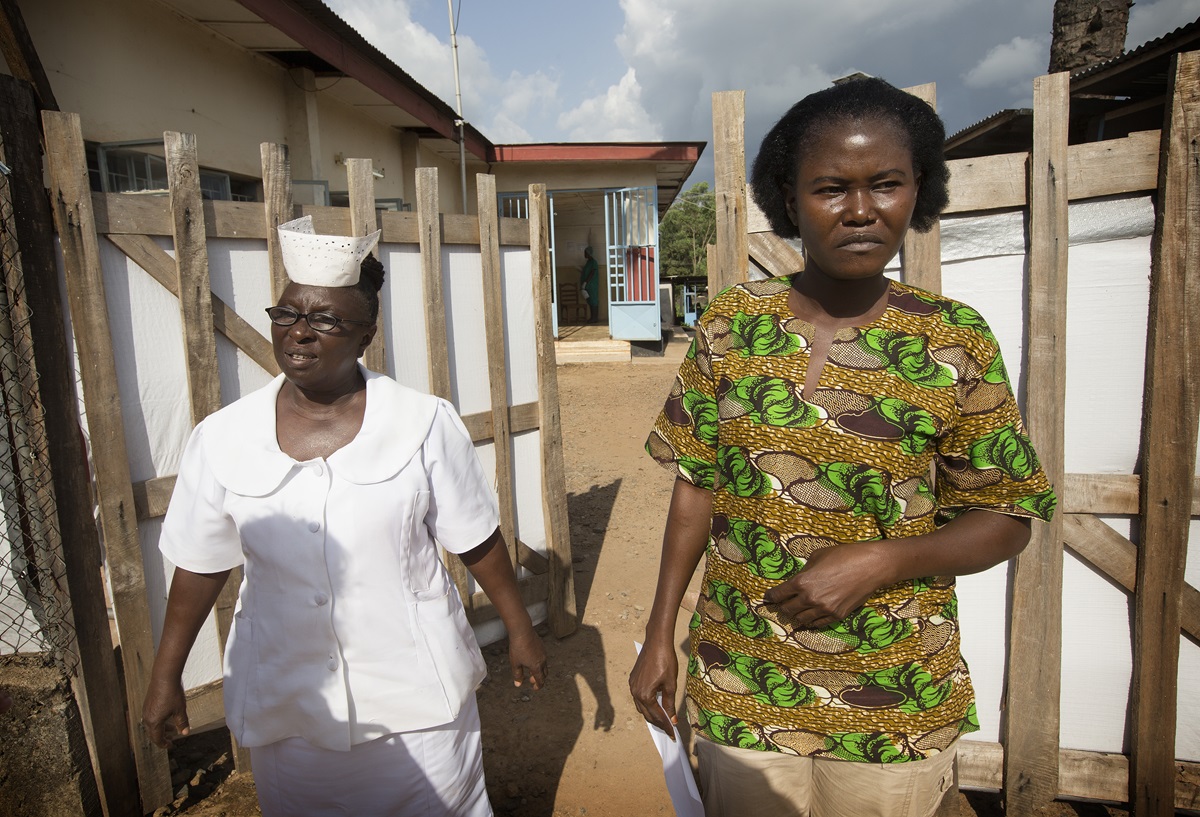
Mbalu Fonnie and Veronica Karoma, sweat beading on their faces, squinted into the hot afternoon sun on June 8 and talked about the panic they were feeling as nurses treating the first confirmed cases of Ebola in Sierra Leone at Kenema Government Hospital.
Both Fonnie and Karoma had moved past their panic and were determined to save lives, agreeing that they were called to be at the bedsides of those suffering.
“As we work, we talk Ebola; as we go to our homes, we talk Ebola; as we go into the market, we talk Ebola, but some even educated people don’t want to face facts,” Karoma told United Methodist News Service at the time.
Faithful responses
The Religious Leaders Task Force on Ebola in Sierra Leone, chaired by United Methodist Bishop John K. Yambasu, and the Liberian Council of Churches and other ecumenical bodies in Liberia have called for three days of fasting and prayer this coming Wednesday, Thursday and Friday (August 6-8). United Methodist Bishop John G. Innis also released a letter to United Methodists and Liberians in general to take the Ebola outbreak seriously.
Churches are asked to pray for all who are affected by this crisis, including healthcare workers. Gifts to UMCOR International Disaster Response, Advance #982450, will enable UMCOR’s response to this and other emergencies.
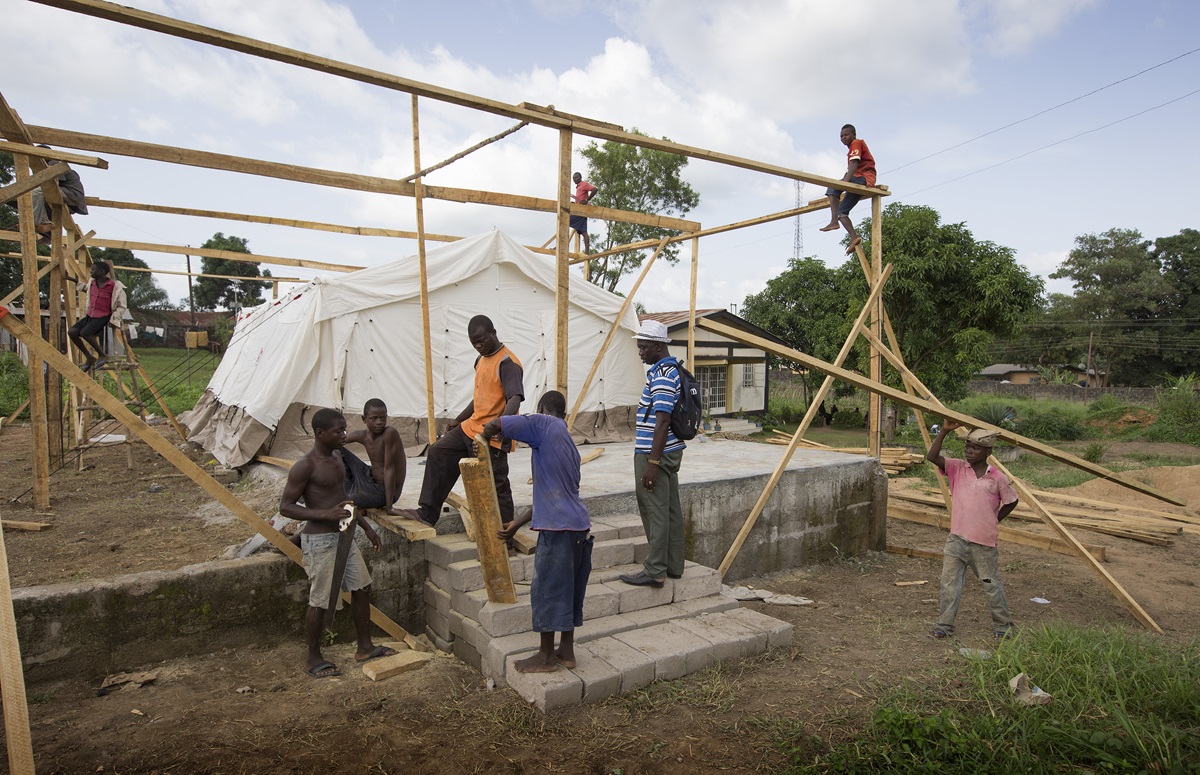
The small rural hospital would soon become overflowing with Ebola patients. Doctors Without Borders had just supplied the hospital with a tent and young workers were out using hand saws and hammers to build a structure over the tent, which already been blown over by a rainstorm.
Personal protective equipment was in short supply and mainly consisted of gloves and thin gowns.
Fonnie had been the head nurse at the small rural hospital for more than 25 years. Standing in her crisp white uniform that day, she presented herself as a solid barrier between the patients under her care and the world.
She spoke of the hospital’s first Ebola patient, a pregnant woman. “She lost her baby but she is much, much improved. She wants to move about, restricting her is our main problem at the moment,” Fonnie said, putting into practical terms what nurses do.
As she talked, colleagues behind her dressed in rubber boots, masks and medical scrubs were spraying the area with a bleach solution and scrubbing down doorways.
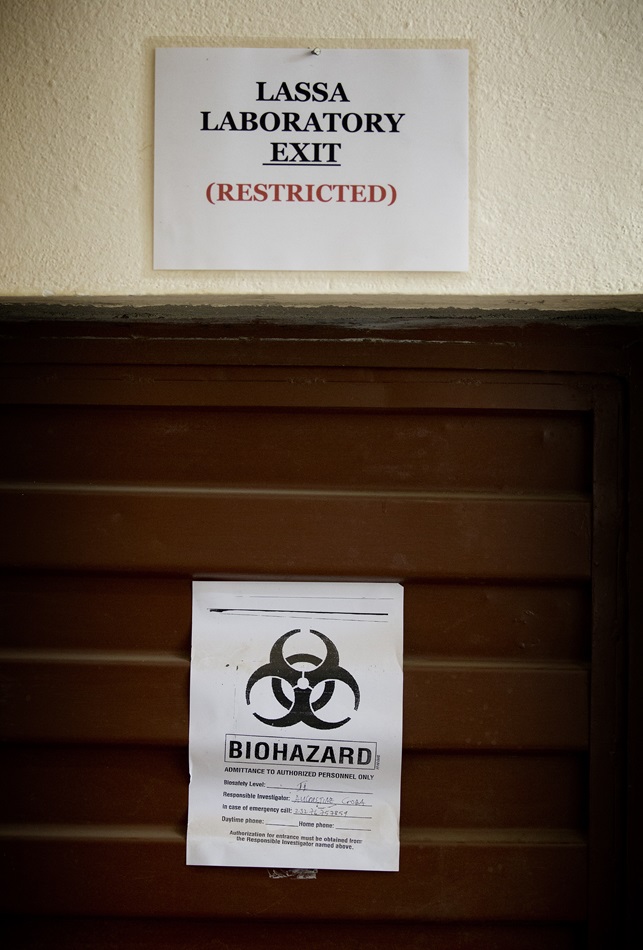
Both Fonnie and Karoma recalled surviving Lassa fever—another deadly viral hemorrhagic fever. “We are Lassa survivors, me and my boss,” Karoma said, smiling and looking over at Fonnie. “We know what it means to be infected with viral hemorrhagic fever. Our fight really is to get a lot of survivors. They will help us tell the story and sensitize the rest of the community.”
Disease takes its toll
Soon after that June interview, both women also became Ebola patients.
Fonnie died. Karoma is surviving.
Since the outbreak which started in late May, about 16 nurses at the Kenema hospital have died, including all of the nurses at the Ebola epicenter, reports Phileas Jusu, a United Methodist communicator in Sierra Leone.
Kenema hospital became the epicenter for testing and treating Ebola patients because of its long history of diagnosing and treating Lassa fever, more common to the area.
Karoma’s words that day became hauntingly true, “Come early (to the hospital) and you can make it,” she said, as a warning to anyone who was exhibiting signs of the Ebola virus. “Knowledge is power.”
Need for personal protection
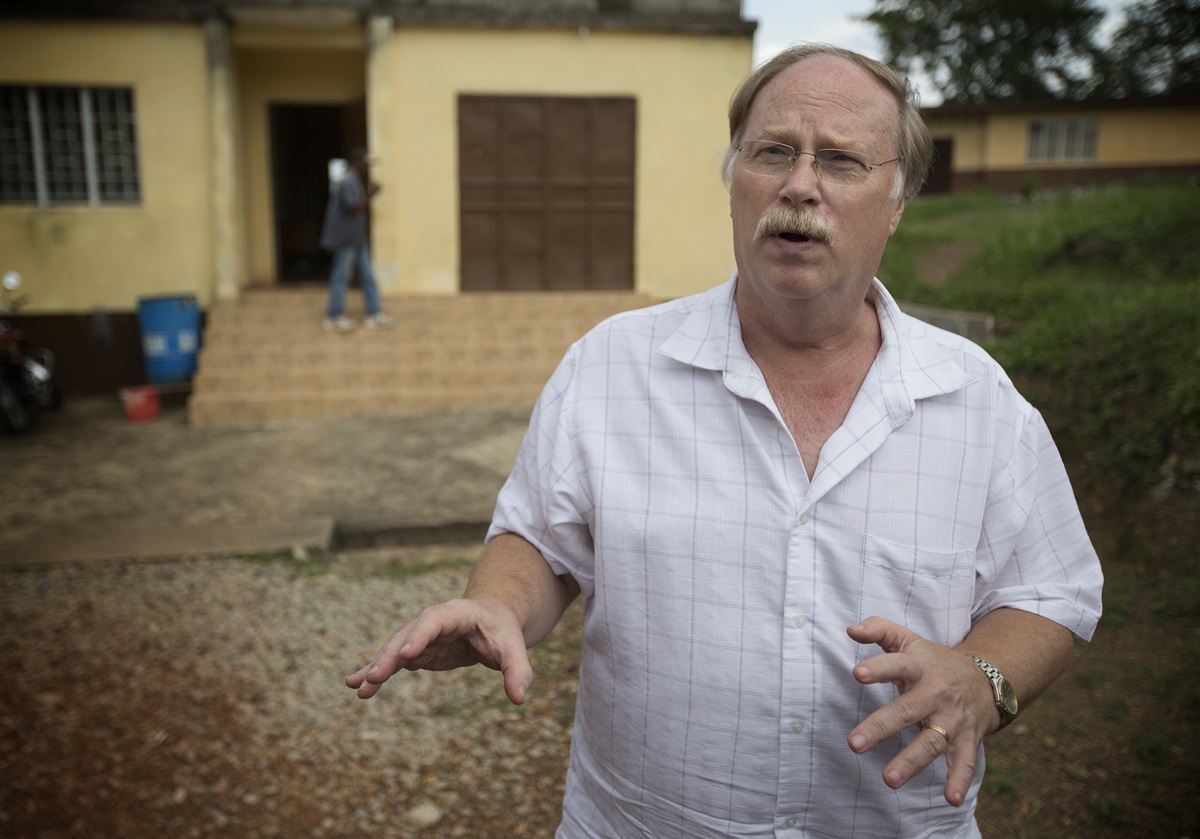
As soon as the first cases were known, Dr. Robert Garry, a professor of microbiology and immunology at Tulane Medical School in New Orleans, was called back to the hospital. He has worked there for the past decade studying Lassa fever. In June, he was emphasizing the need for more personal protective equipment.
“Gloves are the main protection, gowns and goggles,” he said. “It is very important to protect your eyes,” because of the danger of body fluids being splashed on a health care worker.
Garry has since returned to New Orleans and spoke of the losses at Kenema, including the death of Dr. Sheik Umar Khan, who had treated more than 100 Ebola patients.
“Dr. Khan was a brave and wonderful man,” said Garry, answering questions from United Methodist Communications by email about the healthcare workers.
The disease spread to Nigeria after a Liberian-American infected with Ebola flew from Liberia to Nigeria. He died and the Nigerian doctor who treated him has also been confirmed to have Ebola.
Recently, Nancy Writebol and Dr. Kent Brantly, two U.S. missionaries infected with Ebola made international news when they were flown to United Methodist Emory Hospital in Atlanta for treatment. Both seem to be improving.
Death toll above 880
The disease, which has no cure, has killed more than 880 and infected more than 1,600, according to the World Health Organization’s latest report. The disease can be up to 90 percent fatal but this outbreak has been about 55 percent fatal.
Ebola started in Guinea, and then traveled through the “porous” borders of Sierra Leone and Liberia.
The disease first spread to humans through eating bush animals such as fruit bats and monkeys. Most at risk are health care workers and family members who come into contact with body fluids from sick patients.
Symptoms are sudden onset of fever, intense weakness, muscle pain, headache and sore throat. This is followed by vomiting, diarrhea, rash, impaired kidney and liver function, and in some cases, both internal and external bleeding.
Introducing Fonnie and Karoma in early June, Garry said, “Mbalu has probably attended to more viral hemorrhagic fever patients than anyone in the world.
“It’s a long road ahead out of this still escalating crisis.”
Gilbert is a multimedia news reporter for United Methodist News Service. Contact her at (615) 742-5470 or [email protected].
Like what you're reading? Support the ministry of UM News! Your support ensures the latest denominational news, dynamic stories and informative articles will continue to connect our global community. Make a tax-deductible donation at ResourceUMC.org/GiveUMCom.


