
Through its grants with partners, the United Methodist Committee on Relief is able to reach out to vulnerable populations in the world’s crisis points.
But the denomination’s relief and development agency, part of the United Methodist Board of Global Ministries, also is increasingly focused on disaster preparedness, water and sanitation needs and projects that will help communities meet basic needs and sustain livelihoods.
Grants approved by UMCOR’s directors during their Oct. 12 meeting addressed all of those issues, as well as those related to the significant efforts of Global Ministries in the area of global health.
In addition, a $120,000 grant will help fund a denominational Africa Agricultural Summit Jan. 13-16 in Johannesburg, South Africa. The summit is designed as an initial and intentional effort by Global Ministries and UMCOR to support and develop new agricultural initiatives towards the sustainability of The United Methodist Church in Africa.
Larger international disaster response grants focused on projects in Lebanon, Laos, Yemen, Somaliland, Iraq and South Sudan.
Lebanon hosts the highest per capita population of refugees in the world, including an estimated 1.5 million Syrians fleeing that country’s war, along with 34,000 Palestinian refugees from Syria who joined a pre-existing population of nearly 280,000 Palestinian refugees there. A grant of nearly $500,000 will allow American Near East Refugee Aid, an UMCOR partner, to respond to economic, health and educational needs as well as emergency humanitarian aid.
In countries as distant as Lebanon and Laos, UMCOR is providing grants of $492,212 and $500,000, respectively, to the Mines Advisory Group. The organization is reducing risk to civilians affected by conflict by clearing landmines and unexploded bombs and supporting improved management of weapons and ammunition.
The worst period of civilian casualties since 2016 in Yemen’s civil war have brought a new wave of displacement and extreme needs for a humanitarian response. With a $500,000 grant, Muslim Aid — a longtime UMCOR partner — will work to provide access to water and improve public health and hygiene needs for 6,000 affected individuals.
Muslim Aid also received a grant of $495,140 to address food security issues brought on by displacement and a drought in 2016. An estimated 2.6 million Somalis are displaced from their homes and 4.6 million continue to require humanitarian assistance, UMCOR reports.
In Iraq, hundreds of thousands of displaced persons are returning to their homes after four years of intense combat in the conflict with the Islamic State. The International Blue Crescent Relief and Development Foundation will use a $505,500 UMCOR grant to provide immediate shelter to 22,750 vulnerable individuals returning to Ninewa.
UMCOR’s first large-scale grant exclusively aimed at gender-based violence is for $500,000 to IsraAID, working in South Sudan, where violence against women and girls is pervasive in conflict zones.
Those in conflict areas in Juba are the most vulnerable, the grant application said, and “almost a quarter of women who experienced this violence reported that they experienced multiple incidents of sexual violence.” The project will help some 21,095 individuals in urban Juba, Kajo Keji County and Greater Maridi in South Sudan.
Two other large disaster recovery grants were awarded in the U.S. With the help of a $204,700 grant from UMCOR, the Michigan Conference will staff a coordinator for disaster recovery ministries who will oversee other grants and provide leadership as the conference develops a long-term strategy to manage multiple recovery projects.
The Rio Texas Conference received a $500,000 grant to assist one or two areas impacted by floods several times over the past few years to mitigate against future damage and address long-standing community needs “in an area where poverty is so prevalent.”
Other significant disaster response grants went to flood recovery efforts in New Jersey, the Philippines and Côte d’Ivoire.
Sustainable development grants approved by UMCOR directors included an allocation of $943,057 for a water, sanitation and hygiene (WASH) project to assist vulnerable residents of the Alaska Native Village of Newtok, who must relocate because of climate change.
The several-phase project to maintain safe drinking water starts with the installation of 21 in-home portable sanitation systems. The system was developed through a partnership between the Alaska Native Tribal Health Consortium and the Cold Climate Housing Research Center.
In Nicaragua, a $138,162 WASH grant will help El Porvenir, a nonprofit partner to Habitat for Humanity, build effective water and sanitation infrastructures in schools and communities across three districts.
A hunger and poverty grant of $104,775 will help the Palestinian Agricultural Development Association enhance food security for small-scale olive farmers in Gaza.
Other significant sustainable development grants went to education for refugee children and others in East Darfu, Sudan; a clean water project in Kenya, United Methodist-related development offices in Africa and a food security project for a Native American eco-village in Alabama.
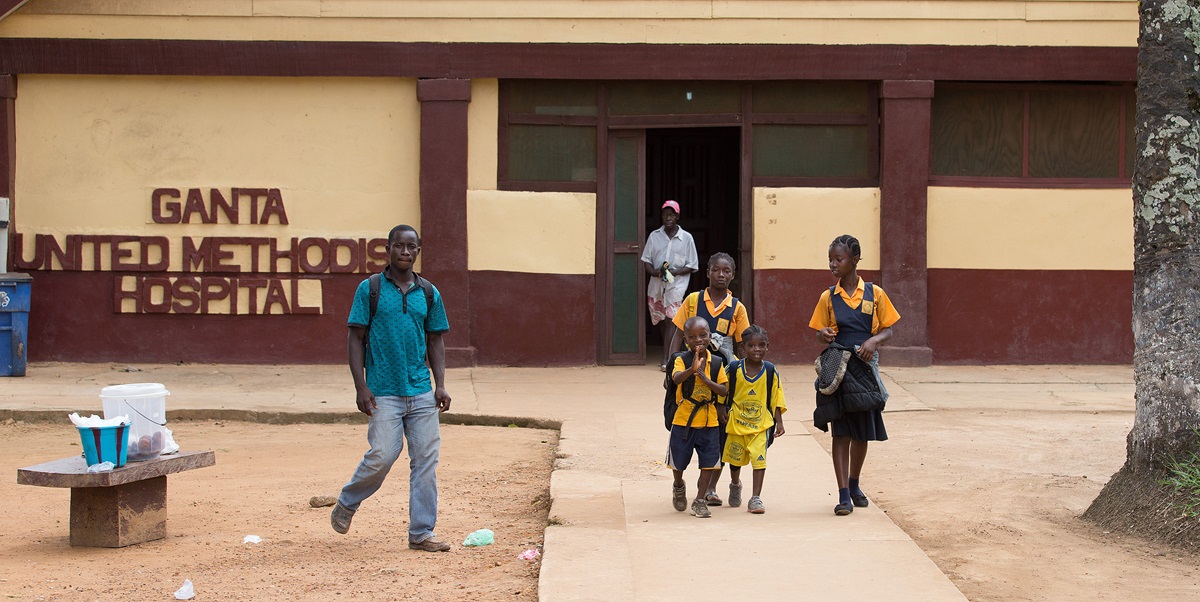
Global Health grants approved by UMCOR directors include a grant of nearly $800,000 for renovations at four health facilities overseen by the Central Congo Episcopal Area Health Board in the Democratic Republic of Congo and a $431,042 grant for the second phase of renovations at Ganta United Methodist Hospital in Liberia.
Several Imagine No Malaria project grants to United Methodist health boards in Congo included $473,845 for the East Congo Episcopal Area, $266,066 for the North Katanga Episcopal Area and $287,066 for the Central Congo Episcopal Area.
Bloom is the assistant news editor for United Methodist News Service and is based in New York.
Follow her at https://twitter.com/umcscribe or contact her at 615-742-5470 or [email protected]. To read more United Methodist news, subscribe to the free Daily or Weekly Digests.
Like what you're reading? Support the ministry of UM News! Your support ensures the latest denominational news, dynamic stories and informative articles will continue to connect our global community. Make a tax-deductible donation at ResourceUMC.org/GiveUMCom.


