
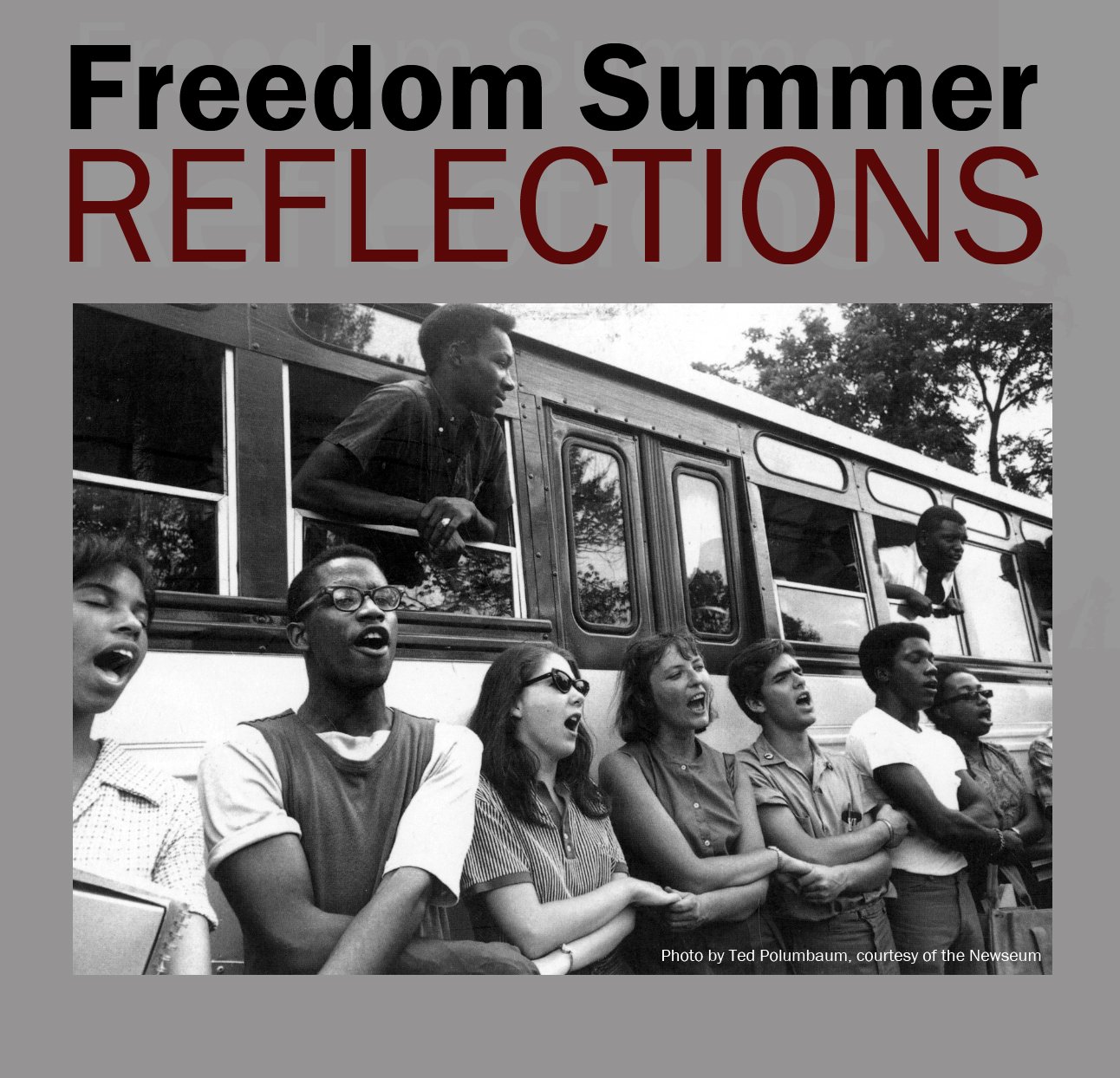
Freedom Summer changed history, shaped lives

Photo by Ted Polumbaum, courtesy of the Newseum.

What was Freedom Summer?

In the summer of 1964, thousands of civil rights activists went to Mississippi and other Southern states to help African Americans register to vote. At the time, only 6.7 percent of African Americans in Mississippi were registered to vote, the lowest rate in the country. Most of the activists were young white college students from the North.

Many suffered during that summer. Three young volunteers — James Earl Chaney, Andrew Goodman and Michael “Mickey” Schwerner — were murdered, churches, homes and businesses were burned. Activists were beaten by white mobs or police. At the same time, black and white Methodists and members of the Evangelical United Brethren Church were working alongside others to keep the efforts non-violent.

However, Freedom Summer left a positive legacy. The Civil Rights Act of 1964 and the Voting Rights Act of 1965 passed in part because the country had been educated by Freedom Summer.

Personal memories

These are reflections written by people who were in Mississippi that summer or elsewhere in the world watching and praying. It also contains reflections from those too young to participate but who feel blessed and influenced by the struggles of their Christian brothers and sisters during that summer 50 years ago.


Like what you're reading? Support the ministry of UM News! Your support ensures the latest denominational news, dynamic stories and informative articles will continue to connect our global community. Make a tax-deductible donation at ResourceUMC.org/GiveUMCom.

Sign up for our newsletter!

Subscribe Now
Church History
A 1961 map shows the location of churches and the borders of episcopal areas within the Central Jurisdiction, which the Methodist Church established to segregate Black members from the wider church. The union that formed The United Methodist Church in 1968 dissolved the Central Jurisdiction. During the Council of Bishops spring meeting in Jacksonville, Fla., bishops explored the legacy of the Central Jurisdiction as denominational leaders consider changes to the geographic jurisdictional system. Image courtesy of Archives and History.

Lessons from past shape jurisdictions’ future

United Methodist bishops learned more about the legacy of the segregated Central Jurisdiction and history of the jurisdictional system, as leaders contemplate possible changes to that system.
Human Rights
An illustration shows Wesley Chapel, built in 1768 and located in downtown Manhattan. The chapel was the first meeting house of John Street United Methodist Church, the New York City church that grew out of the first Methodist Society in North America and still worships near Wall Street today. The church played a role in balancing civic responsibility in the early days of the U.S. republic and faithfulness to God. Photo courtesy of John Street United Methodist Church.

As US 250th nears, bishops discuss democracy

United Methodist bishops and scholars from around the world examined Christian faith and democracy at the spring Council of Bishops meeting. The discussions came as democracy faces threats around the world.
Church History
The Methodist Church’s 1956 General Conference meets from April 25 to May 7 in the municipal auditorium in Minneapolis. On May 4, the first Friday of the legislative assembly, the delegates voted to make women eligible for full clergy rights. “Now it is up to us to prove in clear and deep witness to the whole church our consecration and our loyal devotion to the work of the Kingdom of God,” said Margaret Henrichsen, a General Conference visitor, after the vote. In 1967, she became the first U.S. woman appointed district superintendent. Photo courtesy of Archives and History.

Why the 1956 women-clergy vote matters

Seventy years ago, the Methodist Church supported full conference membership for women clergy — a decision that would have a resounding impact when The United Methodist Church formed in 1968 and even today.

United Methodist Communications is an agency of The United Methodist Church

©2026 United Methodist Communications. All Rights Reserved