
Key points:
- The United Methodist Church in Eastern Congo is appealing for help for 45,000 people left homeless by two fires in the Malicha and Bushushu camps for internally displaced people.
- Bishop Gabriel Yemba Unda expressed his compassion for those affected and said the church and other partners can play a role in easing the suffering of survivors.
- The camps were set up to offer shelter to people fleeing conflict and natural disasters.
The United Methodist Church of Eastern Congo has launched an appeal for help for 45,000 people left homeless by fires at two camps for internally displaced people.
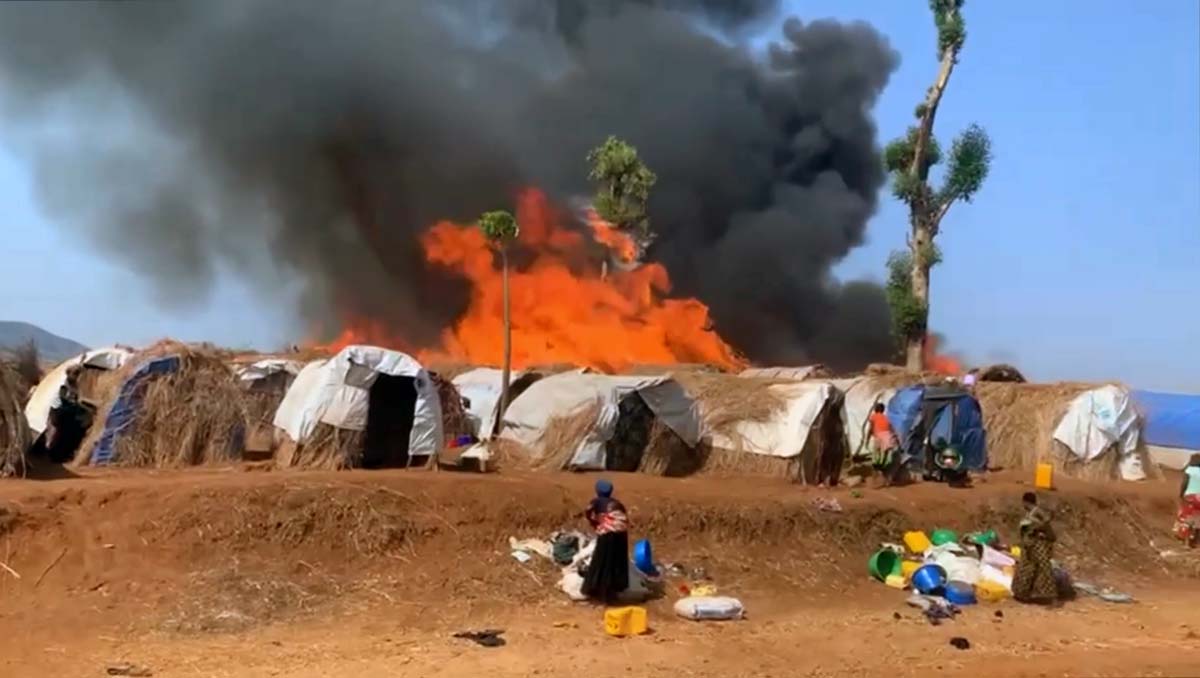
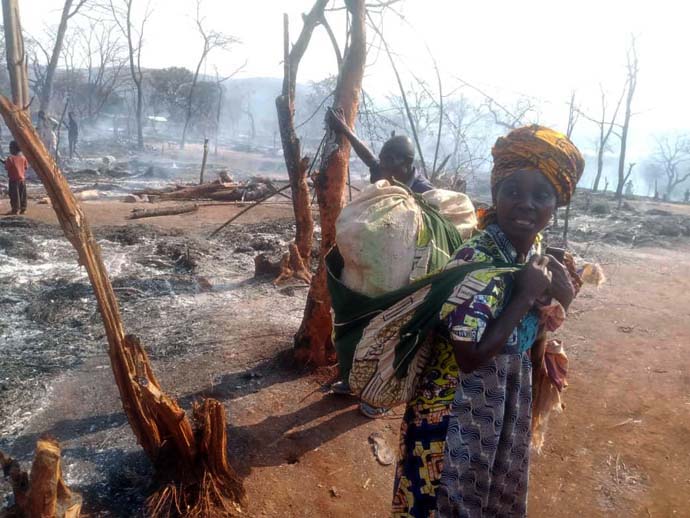
On Aug. 19, a fire swept through the Malicha camp in Fizi territory, in the province of South Kivu. More than 1,000 makeshift shelters were reduced to ash, leaving the displaced people homeless.
Later that same day in another territory of South Kivu, another fire ravaged the reception camp for flood victims in Kalehe.
“At least seven people were killed, including five children under the age of 18,” said Delphin Birimbi, president of the civil society consultation group in the Kalehe territory. Two other people were injured and more than 400 shelters were destroyed.
In May, the overflowing of two rivers following torrential rains had caused the death of over 400 people in the territory. One church family lost 13 members.
United Methodist Bishop Gabriel Yemba Unda expressed his compassion for these people of God.
“We are deeply saddened by these new tragedies,” said Unda. “Our thoughts and prayers are with the families and loved ones of the victims.”
The administrator of the Fizi territory, Samy Kalonji Badibanga, declared that the origin of the first fire was accidental. He added that the Bushushu fire was still under investigation.
“It was around 1 p.m. local time when a mother was preparing beans in her straw shelter and the oil caught fire,” said Badibanga.
He said all the relief kits and other items that partners had supplied to displaced people were burned.
“All their belongings and clothing also disappeared in the flames,” he said.
However, Badibanga specified that no loss of life had been recorded in the Malicha camp, although the material toll was higher.
Unda said the victims need help.
“The loss of their homes and essential possessions has exacerbated their already existing vulnerability,” he said. “It is vital to provide them with immediate support in terms of shelter, food, drinking water and medical assistance.”
How to help
The United Methodist Committee on Relief responds to disasters around the world through its International Disaster Response and Recovery Advance #982450.
Philippe Epanga, a volunteer with the church’s Disaster Management Office based in the Fizi region of South Kivu, said that many displaced people would like to return home.
“These people have told us that they need to go home because school will start again soon and it's the rainy season, which will allow them to return to farming,” he said.
The village of Malicha lies some 30 kilometers southwest of Baraka, Congo.
The camp was set up on Nov. 14, 2022, following conflicts between local and foreign armed groups fighting over mining areas, or inter-community conflicts.
Jean Tshomba, coordinator of the Disaster Management Office of The United Methodist Church in Eastern Congo, said the displaced were in a very difficult situation, spending the night under the stars.
“Their situation was already catastrophic,” Tshomba said, “but this fire has exacerbated their difficulties and requires special attention from the authorities and humanitarian organizations.”
Subscribe to our
e-newsletter
Tshomba said that the reconstruction of destroyed homes and the provision of adequate humanitarian aid are priority actions to enable people to recover and regain some stability.
Unda said the church and other partners can play a role in easing the suffering of survivors.
“It is essential that the international community becomes aware of this situation and provides financial and logistical support to alleviate the suffering of those affected by this fire in the Malicha IDP camp,” he said.
“The displaced people, who have already lost everything, are in need and deserve urgent help.”
Londe is a communicator and editor in Congo.
Contact: Julie Dwyer, news editor, [email protected] or 615-742-5469. To read more United Methodist News, subscribe to the Free Daily or Weekly Digests.


