
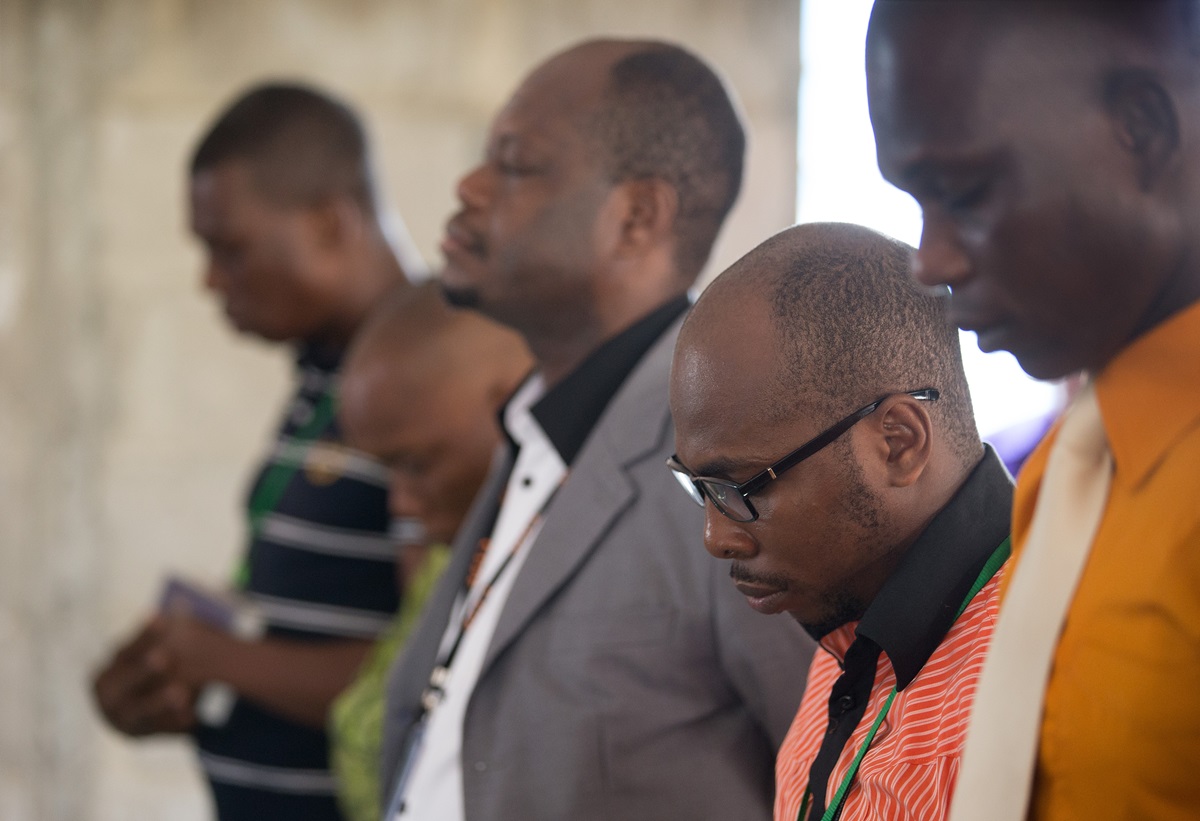

More than 20 people walked down a soundproof hallway, pushed open a heavy door and stepped into a soft pink room with half-concrete, half-sand floors to start their workday with prayer.
They will end the day the same way.
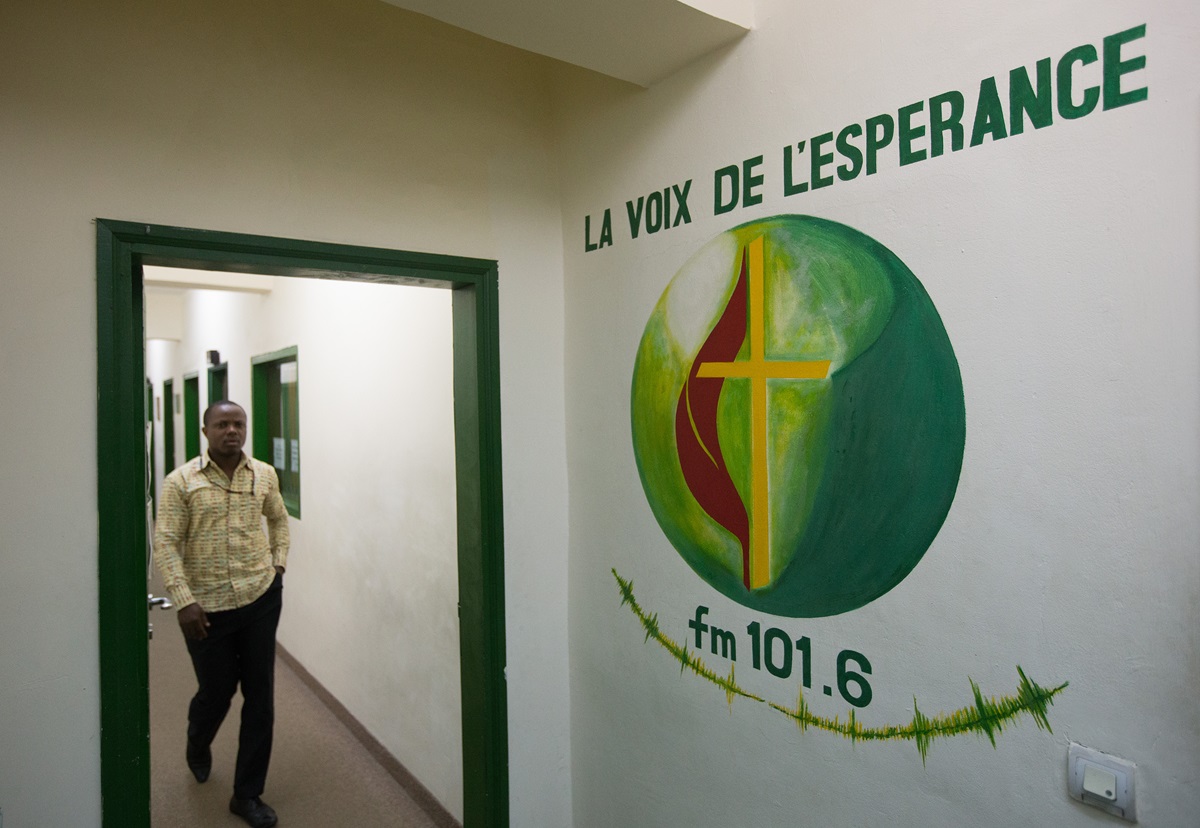
That daily ritual illustrates what powers the Voice of Hope, a radio ministry of The United Methodist Church that transmits to more than 1 million people in 18 languages daily. The station, central to the denomination’s efforts to inform the public about the deadly Ebola virus, celebrated its five-year anniversary during the crisis.
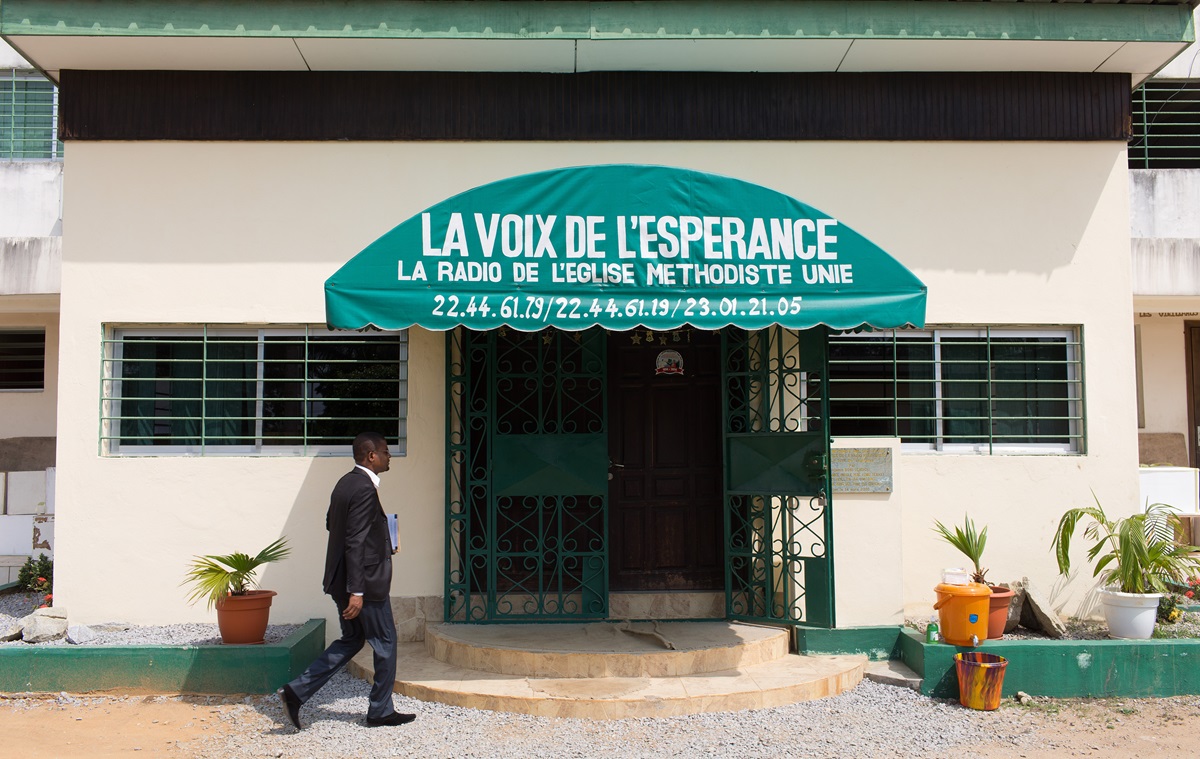
Housed in a green-and-white structure on the grounds of the United Methodist Côte d’Ivoire Conference offices, this radio station is in the heart of the community.
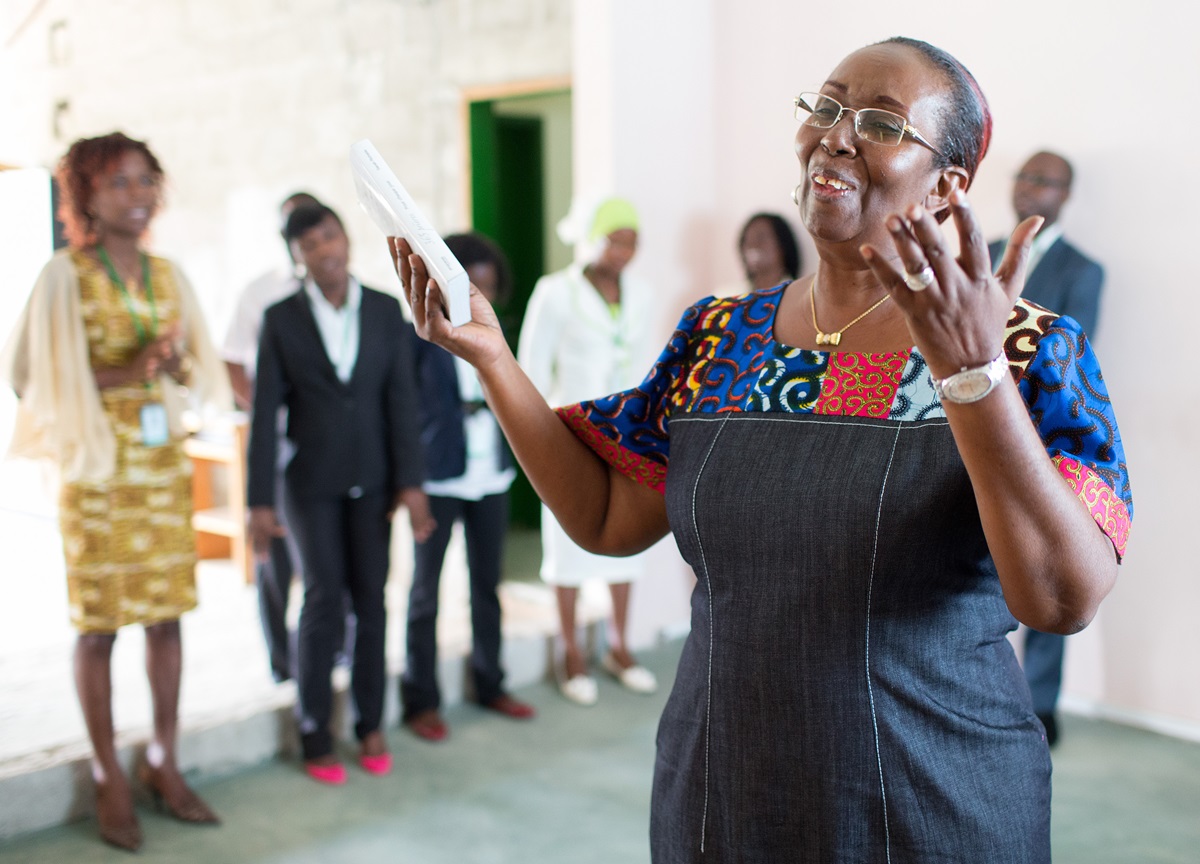
“We are not exclusively United Methodist, we fulfill our social mission in the audio/visual environment in Côte d’Ivoire,” said Lydie Acquah, director.
When the staff of young journalists gathers for each day for morning and evening devotionals, they form a circle and hold hands. Each prays aloud in their own faith and language. The room hums as each person pours out his or her hearts.
“Thank God for what He has done and commit yourselves for this week’s work,” Acquah said before the prayers began.
The motto of the radio is to promote hope and proclaim hope in Jesus Christ, she said. However, the staff, like their listening audience, includes Christians and Muslims.
“The Voice of Hope proclaims hope. We pray to understand the meaning of our ministry,” Acquah said. She is leading the devotional this morning, but the staff members all take turns leading.
A large pool of volunteers, many of them pastors and faith leaders, supplements the professional staff.
Volunteers fall into two categories — young people eager for their first experience working at a radio station, and seasoned faith leaders who share spiritual programs.
Addressing Ebola
When Ebola first surfaced in West Africa, the Voice of Hope didn’t wait for the government to come to them. “We felt as media we should position ourselves to possess that information,” Acquah said.
The health board of the Côte d’Ivoire Conference invested in a three-month campaign to inform the public about Ebola.
The chief editor of the radio station was designated the focal person to participate in “everything Ebola” she said.
“From the very beginning of the Ebola crisis we have invested in equipment, in sanitizers, because we receive many people at the radio station and want to be sure we put into practice the health recommendations.”
Growing a radio station
The Voice of Hope is celebrating its five-year anniversary. Acquah is proud that in the past five years the station has never been sanctioned or suspended despite the tight control of the government over all forms of media.
“We are free to give out information on all subjects; we are not censored,” she said.
Voice of Hope is “confessional” radio, which means it evangelizes. But the station also has programming on legal problems, issues important to women, the environment, human rights and education and development. It also has programming for young people.
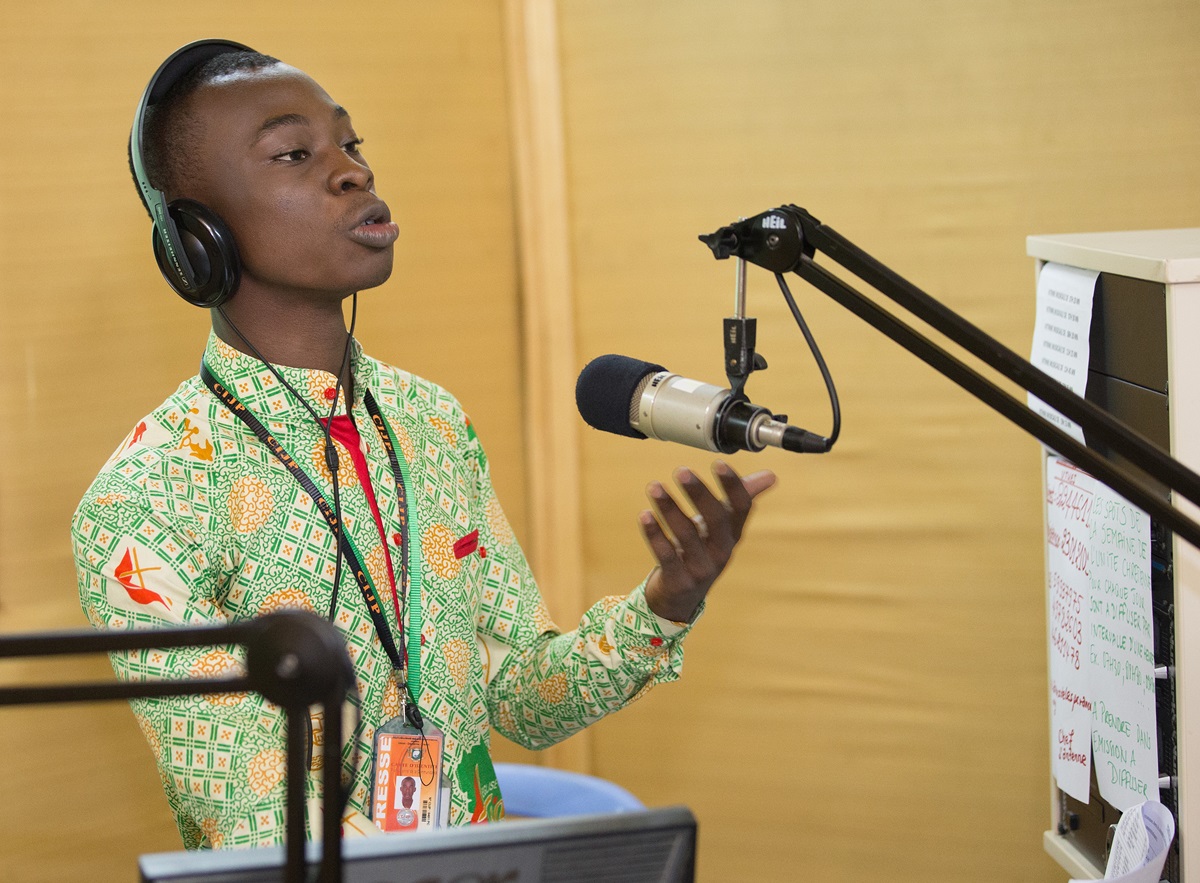
Beugre Franck Elisee produces a program on the importance of education for young girls.
“We bring hope to people and allow people to think about their future,” he said. “It is very wonderful to work for this radio, to bring life through Jesus Christ and talk about the wonderful things our God lets us have.”
The station began with five people, including Acquah, who had no experience with radio. The Côte d’Ivoire Conference collaborated with United Methodist Communications and the Texas Conference in launching the station, which was dedicated in March 2010.
“Today we can say we are the victims of the radio success,” she said laughing. Many come to the radio station asking for advice and requesting staff to address their organizations, she said.
“Each time I am in church services, people tell me, ‘I have a radio in my bedroom, one in living room, one in the kitchen and one in the bathroom — I listen to all the shows.’”
Acquah said the radio has also been the catalyst for conversions to Christ.
“Listeners come and see us and say, ‘I am Muslim, but I listen to your radio and I want to know about Jesus.’”
Acquah said those people are directed to pastors.
“In five years, we have had three cases of Muslim families who have joined The United Methodist Church.”
Beautiful adventure
Acquah produces a spiritual program based on her experiences.
“Life at my age has carried me in all directions and I want to share that experience. The program is inspired from my daily activities, my daily challenges.”
The Voice of Hope came at a point in Acquah’s life when she thought she was ready to retire.
“It has been a beautiful adventure. It was a turning point for my spiritual life … it is extraordinary.”
Donations can be made to this ministry through The United Methodist Advance #3020725.
Gilbert is a multimedia news reporter for United Methodist News Service. Contact her at (615) 742-5470 or [email protected].
Like what you're reading? Support the ministry of UM News! Your support ensures the latest denominational news, dynamic stories and informative articles will continue to connect our global community. Make a tax-deductible donation at ResourceUMC.org/GiveUMCom.


