
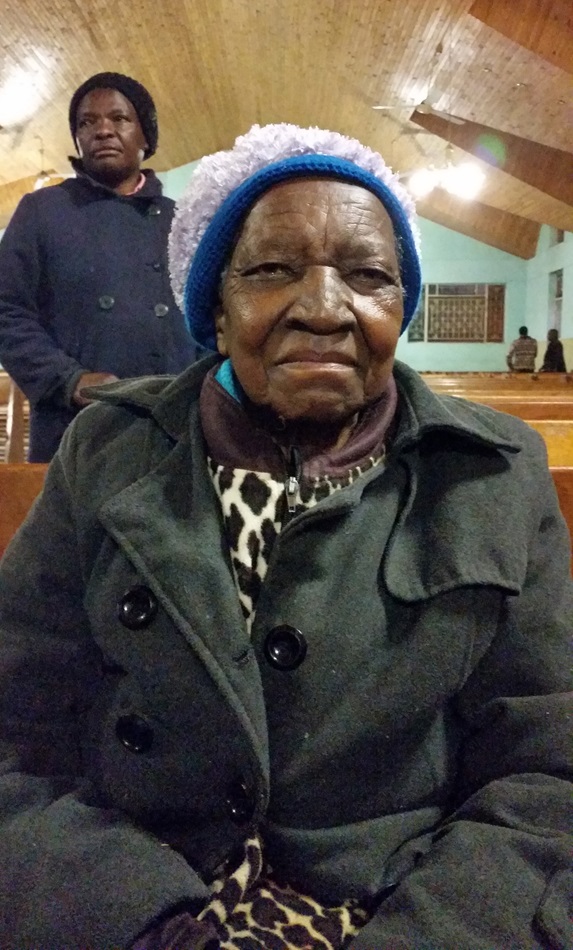
Eggester Jokomo sits huddled near the church pulpit, eyes closed and her lips muttering an inaudible prayer. Around the 80-year-old, people of varying ages pray. A few women kneel at the altar, while others pace the sanctuary, praying loudly.
It is 4 o’clock in the morning, and the church is half filled with people focusing their energy on crying out to the Lord. One woman kneels beside Jokomo and presents her prayer requests. The two hold hands as Jokomo prays for her and assures her all will be well. They embrace when the prayer is over.
Welcome to early morning prayer at St. Mark United Methodist Church.
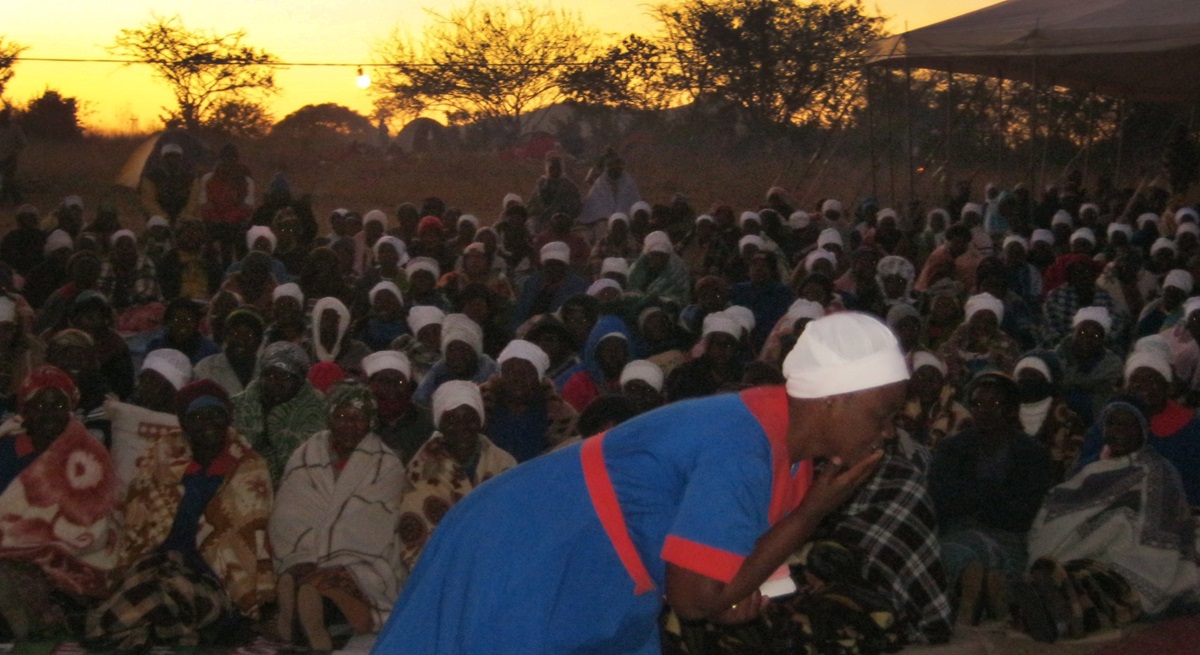
Known as rumuko in the local chiShona language, the St. Mark United Methodist Church prayer gathering now attracts members of other denominations, at times drawing more than 500 people of different ages to the church.
“Early morning prayers are more powerful than those done at any other time,” Jokomo said. “That strength and determination which is required to enable you to rise from the warmth and comfort of your bed makes rumuko the trademark of a prayer warrior.”
The Rev. Vienna Mutezo, Harare Central district superintendent, said the rumuko programs are spiritual and orderly with a concentration on individual prayers.
“Attending rumuko is a sacrifice of time and home comfort, especially during the winter time,” she said. All circuits in Harare Central hold rumuko prayers, but most are on Sunday, and St. Mark has the most vibrant program, she said.
Jokomo is hailed as the pioneer of the St. Mark program.
“Initially I would come to the sanctuary to pray with Selina Masango, the late Approniah Mapfeka, Lizzy Murahwa and Lydia Mandizera early on Sunday mornings. We used the opportunity to pray for the church and our pastors. We also held Monday evening prayers, but the program failed when I was no longer able to walk unaided,” said Jokomo, who uses a walker.
In Zimbabwe, early morning prayers were originally held only by women.
“Rumuko is drawn from the Resurrection where Mary Magdalene and other women went to the tomb very early in the morning, with spices to treat the body of Jesus and found that he had risen. Women were the first to learn of the Resurrection, and we believe there is great power in the early morning prayers,” said Eunice Muponda, evangelism chairperson for the Zimbabwe East Conference women’s union.
A long tradition
From the establishment of the Zimbabwe women’s union in 1929, the late Lydia Chimonyo was known as a prayerful woman who communed daily with God around 4 o’clock every morning. Since then, rumuko is an integral part of all women’s district revivals and conference conventions.
Men and teenagers take part now.
The St. Mark rumuko has become so renowned that Joshua Mufunde, who lives in the city of Chitungwiza, 30 kilometers (19 miles) away, attends the service.
“I have been inspired by the advanced ages of the worshippers and the level of commitment exhibited by the St. Mark parishioners. I am hoping to launch a similar program at my church.”
Mufunde, a member of St. Andrew’s United Methodist Church, said his church currently holds rumuko on Sunday mornings.
Jokomo and the St. Mark church lay leader, Davison Mauwa, attributed the phenomenal growth to the participation of one of the church’s evangelists, Fred Bande Mutemera.
Praying changing lives
Mutemera, 39, said he started attending rumuko six years ago, after he was involved in a car accident.
“I had an accident in September 2009, and I started coming to the early morning prayers when I realized the court case was not proceeding the way I expected,” Mutemera said.
As the legal action dragged on for more than eight months, Mutemera experienced the power drawn from rumuko: “Coincidentally, each time I missed the rumuko prayers, the case would weigh heavily against me. I remember two occasions when I did not attend rumuko, my lawyer failed to appear at the courts and the magistrate issued a warrant for my arrest.”
Jokomo said the teachings conducted by Mutemera and other leaders have enhanced the early morning prayers because congregants keenly follow the daily lessons and do not want to miss them.
Babrinna Madyira, 49, said the daily teachings have enriched her family life: “We were taught about dreams by Mutemera. I had a son who consistently had nightmares and because I had a better understanding of what was happening, I was able to pray for him and break the chain of dreams he was experiencing,” she said. Four members of her family attend rumuko every day.
“We have witnessed many breakthroughs from the early morning service. Women who suffered from infertility managed to conceive after consistently attending rumuko. Other women whose babies were lying in breech position turned and were safely delivered,” Jokomo said.
She also testifies to the power of rumuko in resurrecting some aspects of her life: “When I started the program, people assumed I was a widow. My husband had abandoned our matrimonial home. He decided to return after 28 years,” she said.
Chikwanah is a communicator of the Zimbabwe East Conference.
News media contact: Vicki Brown, news editor, [email protected] or 615-742-5469.
Like what you're reading? Support the ministry of UM News! Your support ensures the latest denominational news, dynamic stories and informative articles will continue to connect our global community. Make a tax-deductible donation at ResourceUMC.org/GiveUMCom.


