
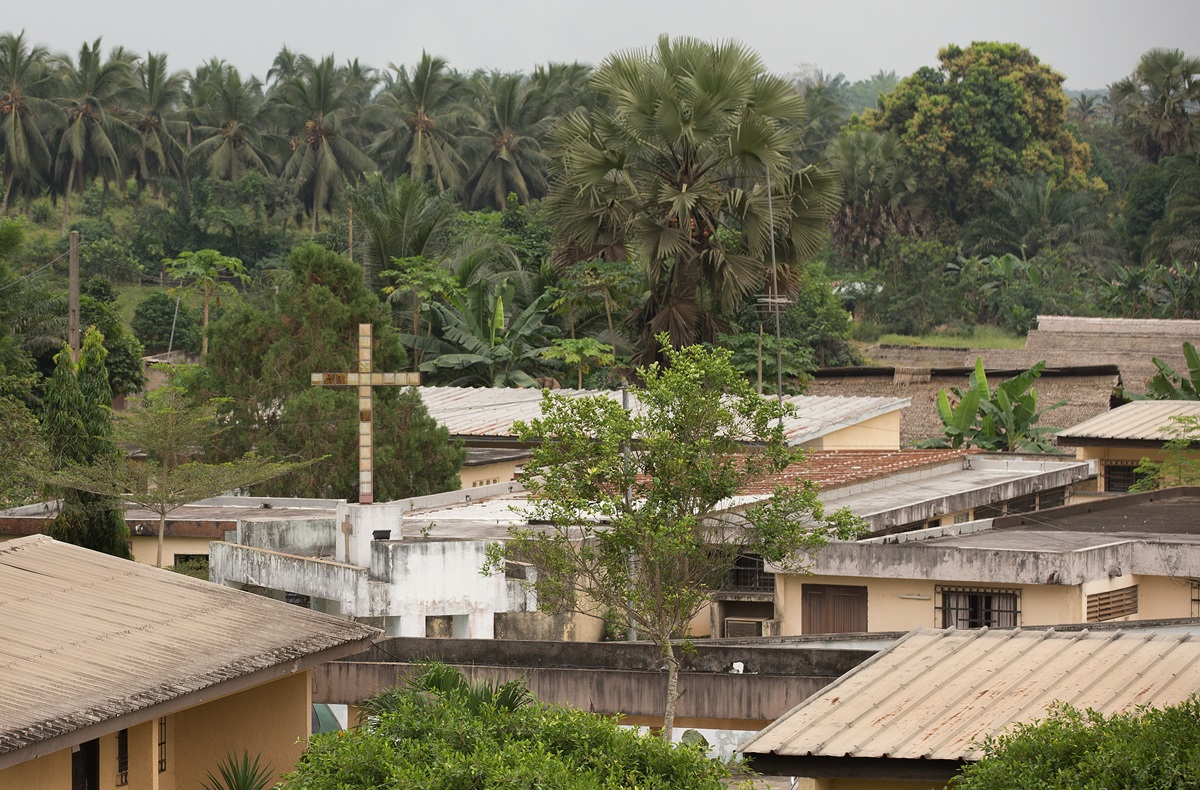

Tété Gnamba Laurent Martial, a freshman at the United Methodist seminary located in this isolated village, has spent $400 making copies of textbooks in the past four months.
With no Internet connection at the Institut Supérieur de Théologie d’Abadjin-Doumé, the 36-year-old seminarian can’t do online research unless he goes to downtown Abidjan, which is 40 kilometers (about 25 miles) away.
Anytime Martial is in Abidjan, he tries to research his subjects on the Internet only to find that the free resources available in theology are in English.
But a program to provide e-readers for theological students in Africa and the Philippines has brought relief for 50 students and faculty members at the theological school. The project is a partnership of the United Methodist Discipleship Ministries and Board of Higher Education and Ministry.
 TWEET THIS
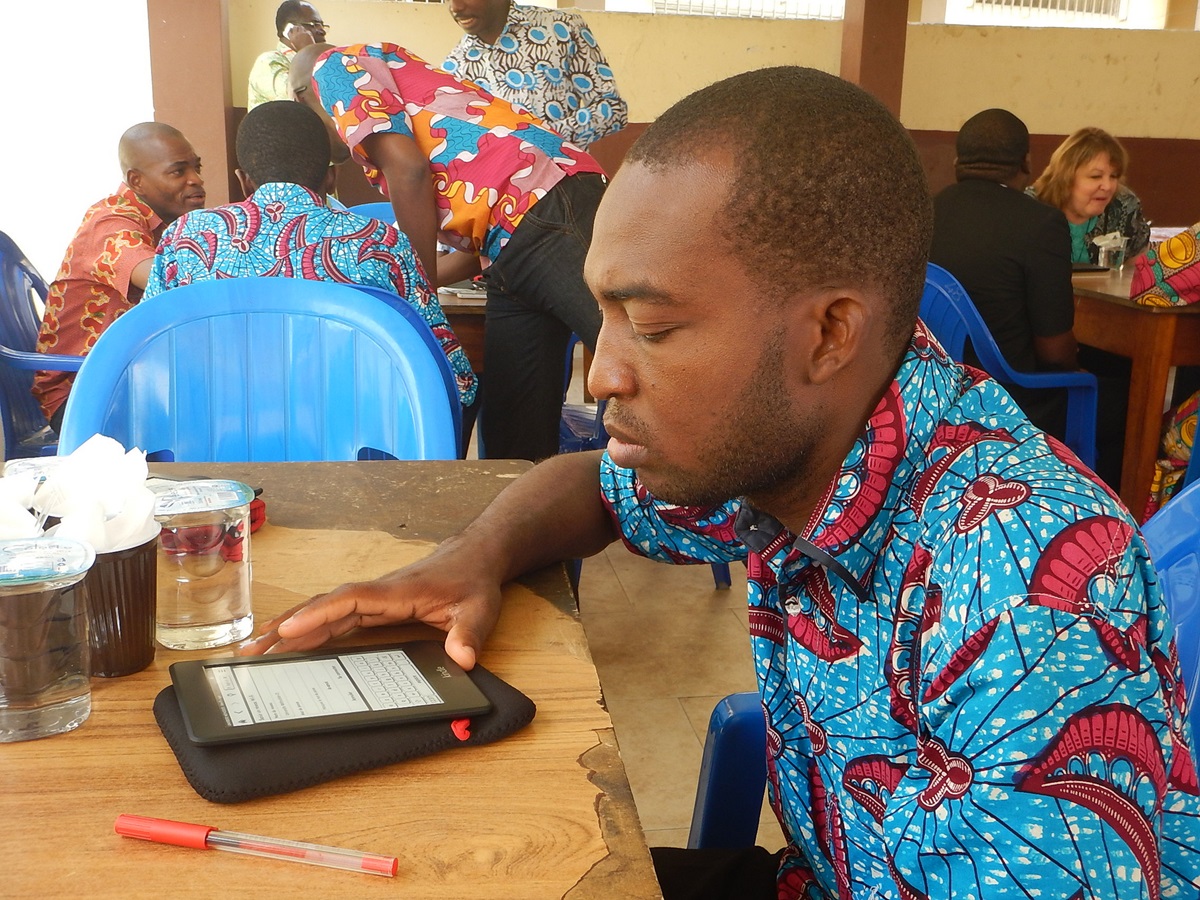
The students and faculty members received e-readers uploaded with theological texts in French.
“We are taking technology happening in the United States and sharing it across Africa,” said Robin Pippin of Discipleship Ministries. She said the e-readers work well in Africa since “they are steady, keep their charge for a long time and hold thousands of books at a time.”
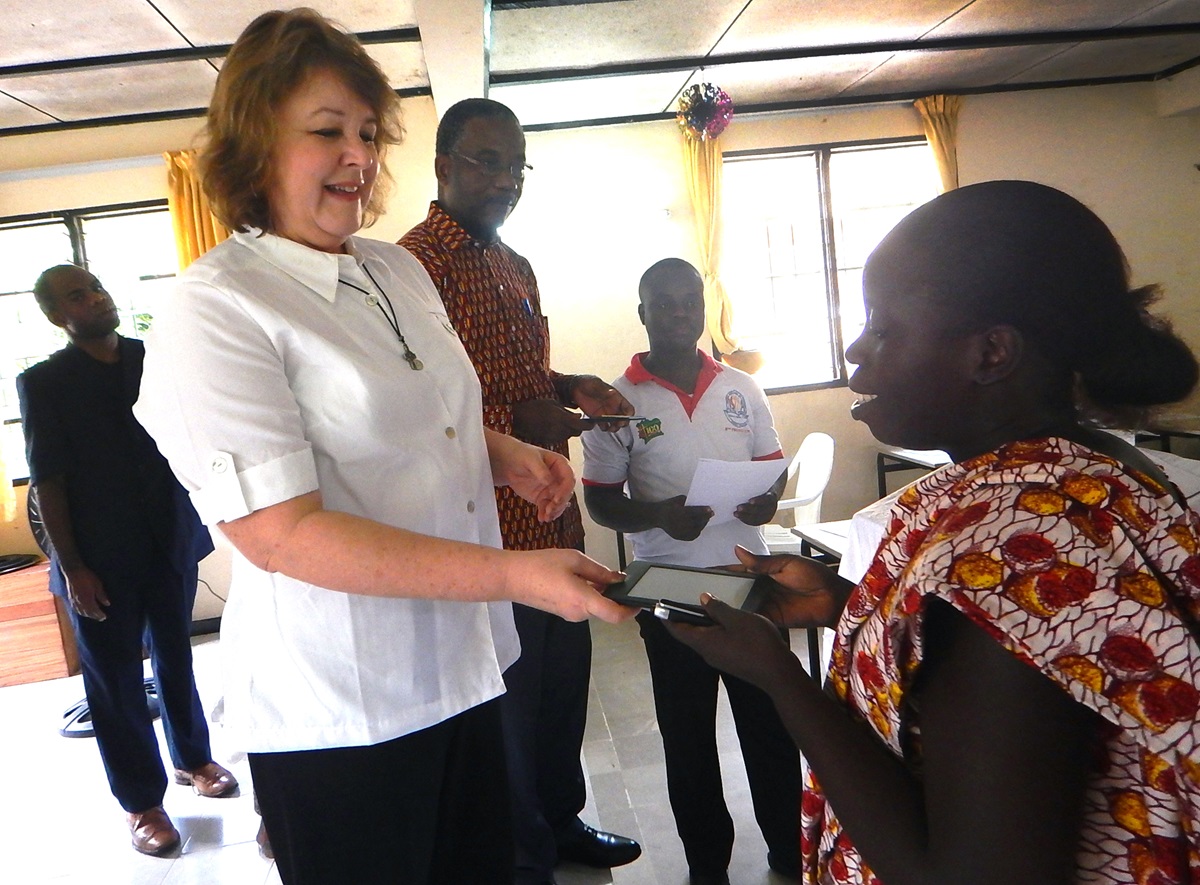
She led a workshop on Feb. 7 at the Université Méthodiste de Côte d’Ivoire (Methodist University) in Abidjan to demonstrate how to use the e-readers. Pippin said students quickly learned how to use the e-readers and were soon helping others.
Tété said he went through the list of 200 books loaded on to his e-reader. “I realized that I had none of them. They come in complementary of the books I already have.”
E-readers are "a revolution"
Support E-reader project
Learn more about supporting theological education in Africa or donate to the E-Reader Project at www.umcereader.org.
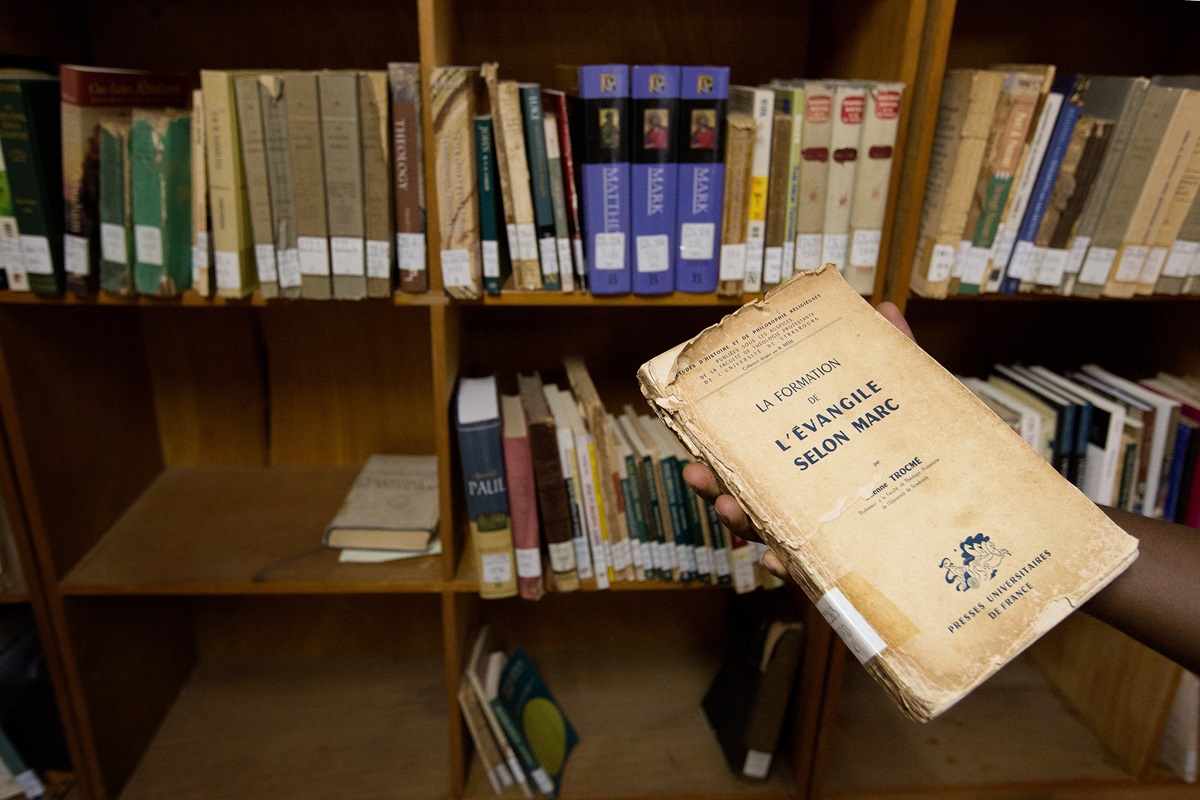
Judith Gbangbo, the librarian at the seminary, said the e-readers are “a revolution.” She said many of the library books cannot be lent out to students because they are too rare, old, or large. “Now, they can have access to knowledge at any time even without Internet,” she said.
She hopes the 2,200 books in the library can be scanned and archived on the e-readers. Three e-readers will be kept in the library, along with nine chargers for students who don’t have computers to charge the e-readers.
Students will pay $60 each for their e-reader, with the fee spread out over the academic year. The e-readers cost about $300 each when loaded with texts.
French theological texts harder to find
Pippin said compiling resources in French hasn't been as easy as getting texts in English and Portuguese.
“Many of the French resources are Roman Catholic or secular texts and few in the theological perspectives that our seminaries hold,” she said.
That is why Discipleship Ministries is negotiating with six to eight French Christian publishers to try to get access to their digital files. She is also working with the United Methodist publications team in Côte d’ Ivoire to get resources in French and other local Ivorian languages.
The Rev. Adriano Quelende, a United Methodist Board of Higher Education and Ministry staffer, helped direct the workshop.
Quelende said the project equips the schools so that the schools can make changes that are “only possible through education.”
The goal for the next two years is to supply all 16 United Methodist theological schools in Africa.
Quelende said during a meeting with Bishop Benjamin Boni that the second phase of the project will expand distribution to all African United Methodist pastors.
Bishop Boni ordered an emergency disbursement of $ 1,600 to get the equipment through customs and refused to be reimbursed. “We all have to contribute in the formation of emerging leaders for the church and the world,” he said.
Pippin praised work by United Methodist Communications’ ICT4D Division (Information and Communication Technology for Development) to help get a server that Discipleship Ministries can use to update e-reader content. Quelende expressed hope that this partnership with UMCom would help provide solar panels for rural pastors to charge their e-readers. That has been done in Mozambique.
Students, faculty, donors and agency staff involved in the project all said they hoped the e-readers will foster an even greater culture of reading and more interaction between students and faculties around those readings.
Meanwhile, Martial said he is “the happiest man on the earth,” now that he has easy access to French theological texts.
Martial said he “blessed the name of the Lord” that he had entered seminary at a time when the e-readers were available.
Broune is the communicator for The United Methodist Church in Côte d’Ivoire.
News media contact: Vicki Brown at (615) 742-5470 or [email protected].
Like what you're reading? Support the ministry of UM News! Your support ensures the latest denominational news, dynamic stories and informative articles will continue to connect our global community. Make a tax-deductible donation at ResourceUMC.org/GiveUMCom.


