
Key Points:
- The Korean War Armistice Agreement included an obligatory provision stating that, within three months of signing the pact, the parties involved should discuss a peace treaty between North Korea, China and U.N. forces. Such discussions never occurred.
- The National Council of Churches in Korea, serving as a theological and religious lever for the democratization of South Korea and peace and unification of the Korean Peninsula, issued the Declaration of the Christian Church in Korea on Feb. 29, 1988.
- Advocates call for “an immediate formal declaration of the end of the Korean War and swift steps toward the adoption of a peace treaty to replace the 1953 Armistice Agreement, as a starting point for further progress toward the realization of a permanent peace regime on the Korean Peninsula.”
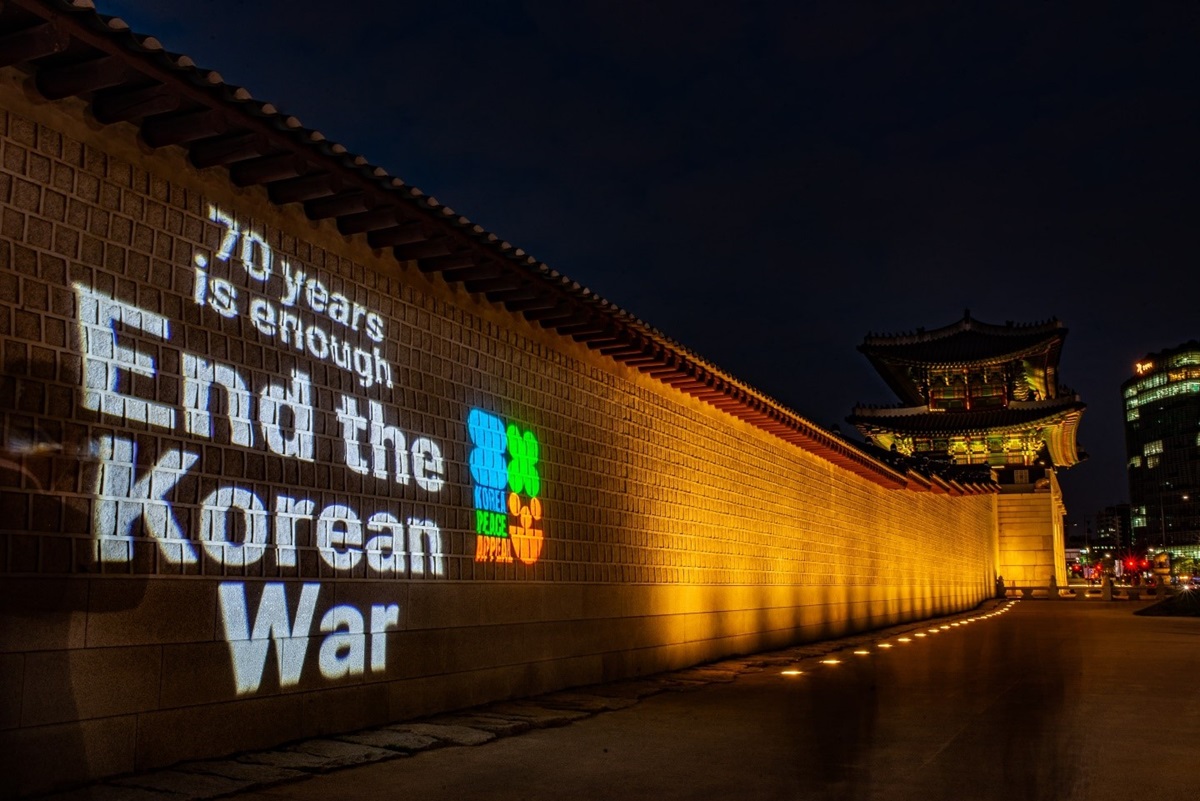
As the 70th anniversary of the Korean War Armistice Agreement approaches, Christians worldwide, including the World Council of Churches, the National Council of Churches in Korea and The United Methodist Church, are calling for an end-of-war agreement and a peace treaty.
The Korean War, which broke out on June 25, 1950, resulted in the deaths of 500,000 Chinese soldiers, about 50,000 U.S. and U.N. forces, and 3 million people in both North Korea and South Korea, including civilians. On July 27, 1953, a military armistice agreement was signed. This year marks the 70th anniversary of that agreement.
By definition, an “armistice” is a “temporary stopping of warfare by mutual agreement, as a truce preliminary to the signing of a peace treaty.
The armistice agreement was signed only by the commanders of North Korean and Chinese forces and the United Nations; neither South Korean nor American forces signed it.
In 1954, it was decided to hold detailed discussions in Geneva on a possible peace treaty for the Korean Peninsula, but consultations never occurred.
More than 370 Korean civil and religious organizations, including the National Council of Churches in Korea, and more than 70 international partner organizations, including the World Council of Churches, are participating in this campaign internationally.
The Korea Peace Appeal began in 2020, the 70th anniversary of the outbreak of the Korean War, and is aiming for a million signatures for Korea Peace by 2023 to end the Korean War and to transition from armistice to peace.
The National Council of Churches in Korea, serving as a theological and religious lever for the democratization of South Korea and peace and unification of the Korean Peninsula, issued the Declaration of the Christian Church in Korea on Feb. 29, 1988. It is considered to have played a significant role in activating discussions on unification and speeding the announcement of the July 7 Special Declaration by President Roh Tae-woo 35 years ago. It included “a peace treaty and nonaggression to ease tensions between the two Koreas and promote peace.” The document called for the ultimate withdrawal of U.S. forces from Korea, disarmament and denuclearization. For the first time, it raised the need for a peace treaty between North Korea and South Korea.
On June 25, 2020, WCC member churches, including the National Council of Churches in Korea and the National Council of Churches in the United States, announced the “Joint Ecumenical Peace Message on the occasion of the 70th anniversary of the start of the Korean War.” It calls for the military armistice agreement to be converted into a peace treaty.
Specifically, the message calls for “an immediate formal declaration of the end of the Korean War and swift steps toward the adoption of a peace treaty to replace the 1953 Armistice Agreement, as a starting point for further progress toward the realization of a permanent peace regime on the Korean Peninsula.”
Dr. Jerry Pillay, secretary general of the WCC, which has expressed active support and solidarity for the peace movement on the Korean Peninsula, spoke recently about the meaning of a peace treaty.
The 11th General Assembly of the WCC, held in Karlsruhe, Germany, in 2022, ratified a “Minute on Ending the War and Building Peace on the Korean Peninsula,” and asked member churches and partners to participate with Korean churches in the Korea Peace Appeal campaign to end the Korean War.
To support the Korea Peace Appeal, the WCC will publish a physical book in Korean and English titled, “The Light of Peace: Churches in Solidarity with the Korean Peninsula.” Published as an e-book in 2020, it contains interviews with church leaders and experts related to the peace movement on the Korean Peninsula.
The WCC is also scheduled to attend the Peace Conference on the Korean Peninsula on July 27, the 70th anniversary of the signing of the Armistice Agreement, and has requested member churches to participate in the Prayer for Peaceful Reunification of the Korean Peninsula on July 30.
The United Methodist Church has adopted resolutions on peace in Korea at every General Conference since 1988. The 2016 resolution includes a recommendation for United Methodists to “participate in a worldwide campaign to replace the 1953 Armistice Agreement with a peace treaty.”
Korean churches and pastors of The United Methodist Church are also preparing for and participating in the Korea Peace Appeal.
The Rev. Chongho James Kim of First United Methodist Church in Flushing, New York, said the most urgent matter pending for the Korean Peninsula is to replace the Armistice Agreement with a peace treaty along the lines of the resolution “Korea: Peace, Justice and Reunification,” adopted by the 2016 General Conference.
The Rev. Yohan Ko of the New England Conference said that the Korean Caucus submitted a resolution to the conference to pray for peace on the Korean Peninsula on Sunday, July 30, the 70th anniversary of the Armistice Agreement, and to participate in the Korea Peace Appeal.
The Korean Caucus of the Northern Illinois Conference passed a resolution, “Praying for Korea’s Peace,” at the 2022 annual conference and will worship and pray for peace on the Korean Peninsula during the 2023 annual conference.
The resolution reads, “On the occasion of the 70th anniversary of the armistice of the Korean War, praying for replacing the armistice treaty with a peace treaty, for peace and reconciliation for Korea’s separated families and their descendants, for the descendants of those who were killed in the Korean War … and for the world community to work for greater peace in the world.”
Wisconsin Conference Bishop Hee-Soo Jung emphasized the denomination’s call to sow the seeds of justice and harvest peace.
“The church community should be a seedbed for cultivating social integration and the ecology of life for peace,” he said. “Based on ‘Minute on Ending the War and Building Peace on the Korean Peninsula,’ ratified at the 11th WCC General Assembly, it is the task of churches of the world to replace the Armistice Agreement with a peace treaty.”
Jung also said that a peace treaty could nurture healing in the Korean Peninsula.
“If a peace treaty is reached and diplomatic ties between North Korea and the United States are established through normalization of relations, the topography of the Korean Peninsula will be changed more than expected, the Cold War and confrontational structure will be dismantled, and it will be the way to heal the wounds inflicted by the era of division,” he said.
Thomas E. Kim is the director of Korean and Asian news at United Methodist Communications.
News media contact: Julie Dwyer at [email protected]. To read more United Methodist news, subscribe to the free Daily or Weekly Digests.


