
Key points:
- The Tanganyika Annual Conference celebrates the work of Banza Lubange Kaluwashi by naming a newly built church in his honor.
- Kaluwashi, a former slave, became an evangelist in Angola before returning to his home area in the Congo, where he planted churches.
- Today, his grandchildren’s vision is to promote mission and evangelism in the Tanganyika Annual Conference.
A Congolese man who came out of slavery to become an evangelist was honored at the recent Tanganyika Annual Conference for his role in spreading Methodism.
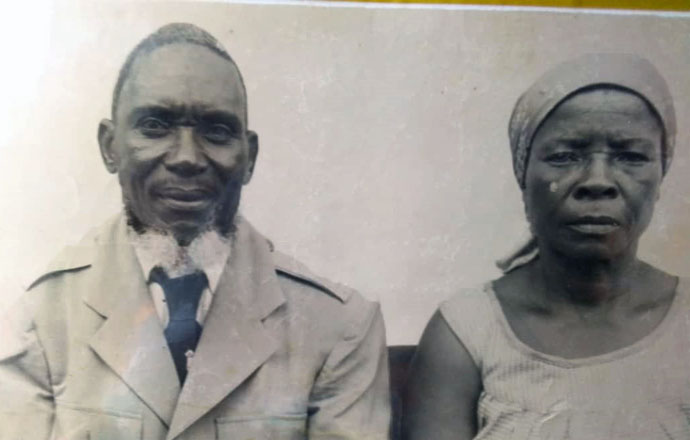
“Born in 1869, Banza Lubange Kaluwashi was a Black lay missionary,” said Bishop Mande Muyombo.
One of seven children of Nzovu and Kulenda ya Malenge, Kaluwashi was taken by Arab slave sellers and brought to Angola. In Angola, he became a Christian and eventually was freed from slavery.
“He was capable of hard work,” said Banza Kibwe Bernard, a Kaluwashi descendant. “Thanks to his physical strength and volunteer work, he motivated his master to hire him as a car repairer and house builder until he became an evangelist trained at a pastoral school in Angola. From there, he decided to leave Angola and start mission work in Kapanga village where he met the chief, Mwant Yav.”
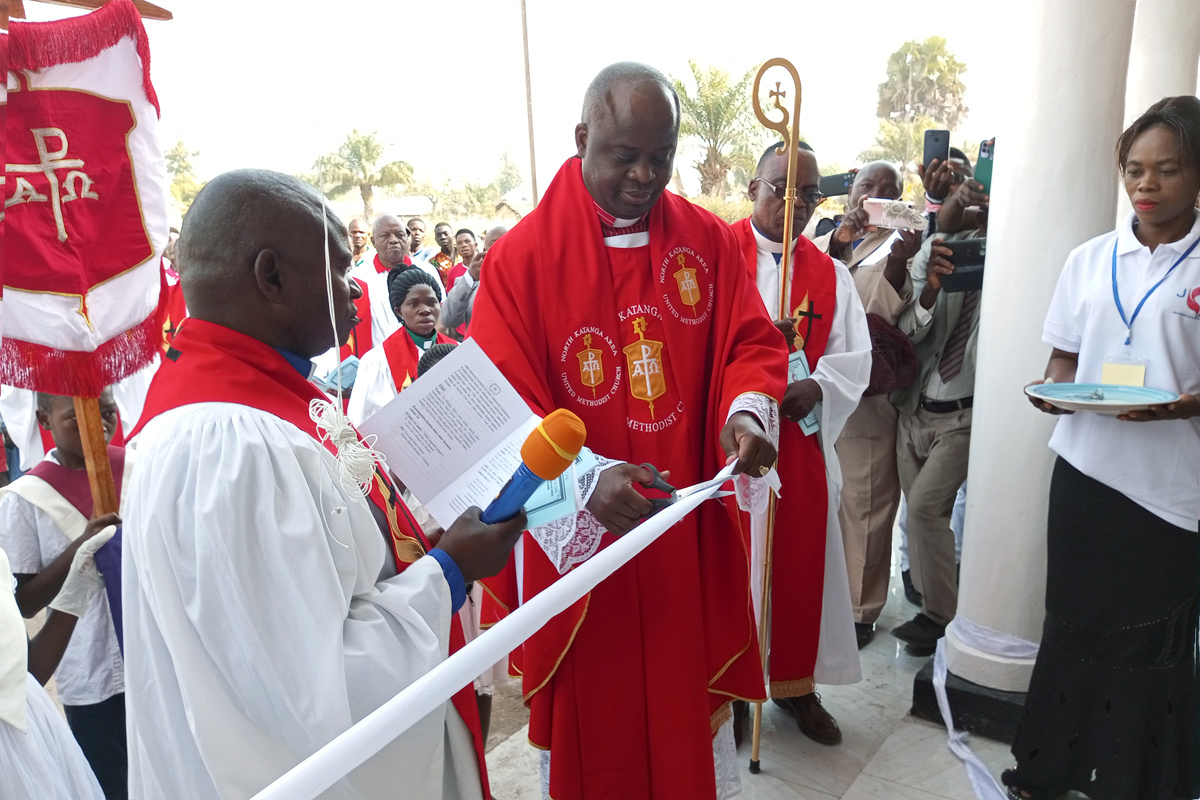
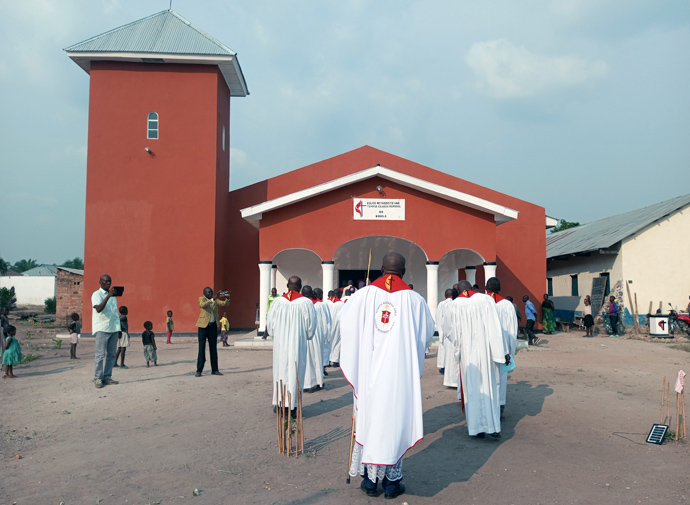
During the 30th session of the Tanganyika Annual Conference in Kabalo, Democratic Republic of the Congo, laity and clergy from 13 districts celebrated Kaluwashi’s life and mission work. Wearing T-shirts with Kaluwashi’s picture, conference members named a newly built church in his honor.
The new church is one of three in the Tanganyika Conference funded by an anonymous layperson. The other two churches are in Kiyambi District and Manono.
On the continent of Africa, missionaries from the U.S., as well as Europe, played key roles in developing the work of The United Methodist Church and its predecessor bodies. The church’s approach to mission on the continent included preaching the gospel, educating people of all ages and providing health care.
“Kaluwashi did not labor in vain, and he is our role model as laity,” said Kahenga Balimwacha Prosper, school inspector and lay leader of Kalemie District. “Kaluwashi looked at Congo as his parish.” He planted local churches in Kabalo villages.
Kaluwashi studied music and translated English into local languages. Recognizing his work, American missionary friends organized his wedding to Debeta wa Mabundu Alphonsine, daughter of King Mabundu.
Returning home around 1910, Kaluwishi met John McKendree Springer, an American Methodist missionary, and Kayeka Changand, a Congolese who started the Methodist church in the Belgian Congo in Kapanga, Katanga Province. The three men met Yav, the Lunda emperor.
Kaluwashi built churches in Kambove, part of today’s South Congo Episcopal Area.
When Springer faced budget constraints, he went back to America to raise funds for the Katanga mission. Kaluwashi wrote to Springer about the ministry in Congo, and the American missionary shared the letter with his friend, Milton Wilson, from Evanston, Illinois. Touched by the letter, Springer and Wilson decided to fund the mission work in Katanga.
Springer traveled through Zambia and the Belgian Congo toward Angola on his way to the U.S. Returning to Africa, he worked in the southern part of the Belgian Congo, establishing a first mission station in Lukoshi in 1911. In 1915, it became the Congo Mission Conference.
In 1920, U.S. bishops serving in Africa were “general superintendents.” In 1936, the central conference used its right to elect its own bishop, and they chose Springer. He retired in 1944. Other U.S. bishops continued oversight for the next 20 years.
Subscribe to our
e-newsletter
Inspired by his love for mission and evangelism, Kaluwashi worked with a missionary friend in Mwanza and Malemba. Kaluwishi contributed to church planting as a builder, a music composer and a translator. Moving from Malemba Territory to Kabongo, he continued planting churches and building schools.
He continued his journey until he reached his village – Kabalo – where he met leaders of Brethren and Pentecostal churches. He asked permission of local authorities to plant a Methodist church. First, he started the Katelwa church; later, he planted churches in Kabalo Territory. He paid schoolteachers from his own money, and today his grandchildren’s vision is to promote mission and evangelism in the Tanganyika Annual Conference.
In his episcopal address at the June 17-21 annual conference, Muyombo invited members to reclaim, revive and renew their faith in God and encouraged them to stay United Methodists.
Honoring the mission work seen in Kabalo Territory, a pillar was built and named in memory of Methodist pioneer Kaluwashi.
Ndala Lumwango Cosmas, a retired local pastor, participated in the Kaluwashi funeral more than half a century ago. “I know the Methodist doctrine,” he said, “thanks to Kaluwashi as our first missionary in Kakuyu, Katelwa and whole of Kabalo District.”
“Above all that Kaluwashi did as a church worker,” noted Munga Mulongoy, a lawyer from Kabalo district, “he is a legacy and [one of the] rich resources of Kabalo.”
Sangaji Mujinga Albertine, a Kaluwashi granddaughter and now the Kabaloville women’s treasurer, thanked leaders of the episcopal area and described Kaluwashi as “a man of great faith.”
“Today’s celebration,” she said, “is a great history to our family. History was made and recognized, thanks to our grandfather’s faith. Now to us and the next generation, we will keep the great memory of our grandfather in growing in faith.’’ His family hopes to continue his mission by constructing more churches, schools and hospitals in his name.
Musau is director of communications for the North Katanga Episcopal Area. Some historical information is from “History of The United Methodist Church in Africa,” umc.org.


