
Burundi United Methodist ministry encourages inclusion

Key Points :

  • The United Methodist Church of Burundi has created a new ministry to welcome, support and share the Gospel with people who are Deaf or who have partial hearing loss, thanks to support from the United Methodist Deaf and Hard of Hearing Ministries Committee and Global Ministries.
  • The program will enable more than 580 Methodists living in the region to participate in and understand the essential messages during services and various church meetings.
  • This initiative marks a turning point for the Burundi United Methodist Church, which had lacked outreach programs specifically designed for people with hearing loss.

The United Methodist Church of Burundi has taken a crucial step toward inclusivity by launching a new ministry focused on welcoming, supporting and sharing the Gospel with people who are Deaf or who have partial hearing loss.

“The mission of Jesus Christ should not be limited to people without disabilities,” said the Rev. Emmanuel Sinzohagera, Burundi Conference legal representative and dean of superintendents. “Jesus saved us without any discrimination.”

Support from the United Methodist Deaf and Hard of Hearing Ministries Committee and the United Methodist Board of Global Ministries made it possible to launch the ministry in the conference. The initiative marked a turning point for the Burundi United Methodist Church, which has lacked outreach programs specifically designed for these constituents.

The program will enable more than 580 United Methodists living in the region to participate in and understand the essential messages during church services and various meetings.
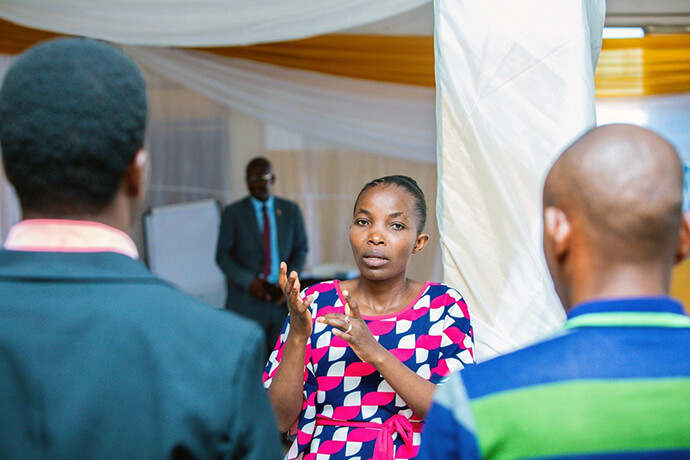
Sign-language interpreter Micheline Nkundwanabake explains signs to participants at a training session for local United Methodist clergy and laity in Burundi. The training is part of a new initiative The United Methodist Church in Burundi launched with support from the United Methodist Deaf and Hard of Hearing Ministries and United Methodist Board of Global Ministries. Photo by Rev. Niyiragira Ladislas, UM News.

In March, the church officially launched sign-language interpretation courses for lay and clergy representatives of the 10 districts of the Burundi Conference, as well as for members of the conference’s evangelism committee.

The program, which began with a keynote address by Sinzohagera, was followed by comments by Prempeh Collins Kwasi, a special envoy from Global Ministries, as well as representatives who oversee Burundi’s ministries with people with disabilities.

Kwasi, who is Deaf, congratulated the conference “for taking the step of reaching out to people like me.”

“I’m Deaf, but I’ve had the privilege of going to school,” Kwasi said. “I’ve finished my university studies in theology at Africa University. I encourage families with children who have hearing and speech problems to send them to school instead of discriminating against them. They have the ability to communicate like everyone else.”
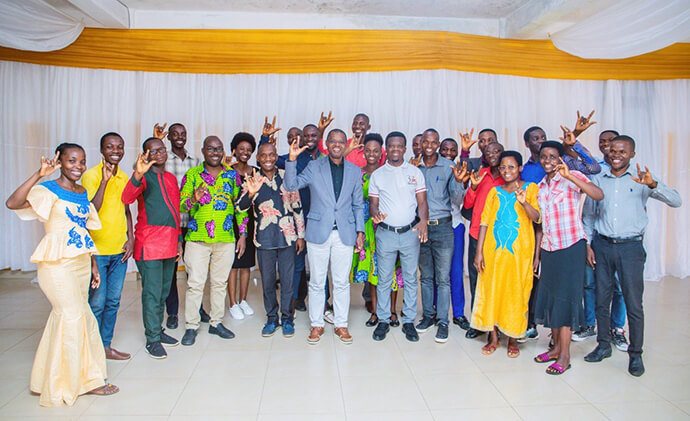
The Rev. Emmanuel Sinzohagera (center, blue jacket), Prempeh Collins Kwasi (to his left) and United Methodist lay and clergy raise their hands to say “I love you” in sign language during a training course sponsored by the church in Burundi. This new ministry will enable some 588 United Methodists who are Deaf or have partial hearing loss to participate in and understand the essential messages of the church during worship and meetings. Photo by Rev. Niyiragira Ladislas, UM News.

The five-day training session enabled over 20 participants to acquire basic sign-language skills. Participants expressed gratitude for the opportunity but also highlighted the need for further training and resources.

“We are happy to have learned the basics of sign language, but this is just the beginning,” said Ahishakiye Chantal, Cibitoke Parish.
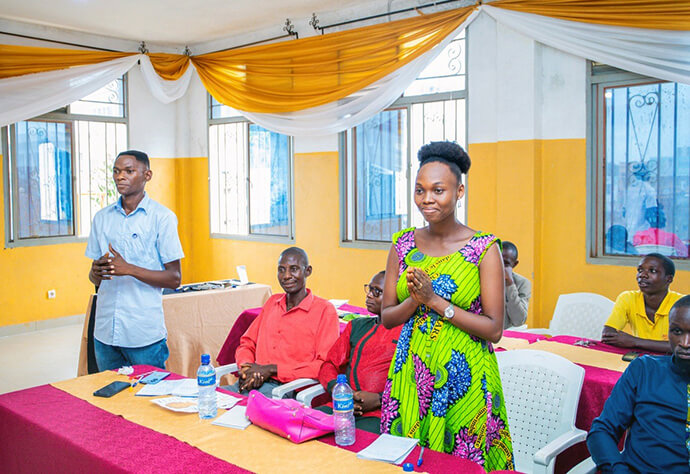
Ahishakiye Chantal from The United Methodist Church’s Cibitoke Parish expresses thanks for the sign-language training course provided by the church in Burundi. Chantal is interpreted by M. Charles Ndayisenga, her colleague from the Rohero Parish in the Bujumbura District. The five-day training session enabled over 20 participants to acquire basic sign-language skills. Photo by Rev. Niyiragira Ladislas, UM News.

Salomon Munyembabazi of the Rohero Parish agreed.

“We are asking for further training opportunities, learning materials such as videos, and the possibility of participating in future sessions with a partner from our district for ongoing support.”

Subscribe to our
e-newsletter

Like what you're reading and want to see more? Sign up for our free daily and weekly digests of important news and events in the life of The United Methodist Church.

Keep me informed!

Sinzohagera praised the participants for their dedication and the superintendents who facilitated their involvement. He emphasized the crucial role they will play in ensuring that people who are Deaf or who have partial hearing loss receive God’s message.

“You are now instruments in God’s service,” Sinzohagera said. “We hope that partners such as Global Ministries will continue to provide financial support to improve your skills. Our ultimate vision is to establish dedicated services for the Deaf and hard of hearing, ensuring their full participation in the United Methodist community in Burundi.”

Niyiragira is secretary of the Burundi Conference.

News media contact: Julie Dwyer at [email protected]. To read more United Methodist news, subscribe to the free daily or weekly Digests.

Sign up for our newsletter!

Subscribe Now
Global Health
Janat Twahirwa from Wiceceka distributes condoms to participants during a World AIDS Day event on Dec. 1 in the Mukamira Sector of Rwanda’s Nyabihu District. “Wiceceka” means “do not keep silent” in English.  During the event, Twahirwa had a particular focus on providing condoms to peer educators, so that they can further share them with their peers as part of ongoing HIV prevention efforts. Photo by Samuel Iraguha Shema.

Church, Rwandan officials unite to fight AIDS

In a significant shift, United Methodists in Rwanda are working to prevent the spread of HIV and AIDS in full public partnership with the East African country’s authorities.
United Methodist Men
(From left) Steven Scheid, director of the Center for Scouting Ministries for United Methodist Men, receives communion from Bishop L. Jonathan Holston, who leads the North Alabama and Alabama-West Florida conferences, and Bishop Nelson Kalombo Ngoy of the Tanganyika Episcopal Area. The communion service was part of a meeting held Dec. 9-11 by the Commission on United Methodist Men at Africa University in Mutare, Zimbabwe. About 30 men gathered to discuss how to grow men’s ministry on the continent. Photo by Eveline Chikwanah, UM News.

Equipping men in Africa to make disciples

United Methodist Men gathered African church leaders for a historic meeting to share ideas and collaborate on a vision for men’s ministry on the continent.
Immigration
In a Nativity scene at Oak Lawn United Methodist Church in Dallas, Mary, Joseph and the baby Jesus are depicted being held in a detention center, as a protest of how immigrants are being treated in the United States. “We feel it’s important to depict the parallel of what’s happening in our world with what we understand to have been happening in the biblical story of the birth of Jesus,” said the Rev. Rachel Griffin-Allison, senior pastor of Oak Lawn. Photo courtesy of Oak Lawn United Methodist Church.

Nativity scenes, art spotlight immigration

Some United Methodist churches are reimagining their annual Christmas Nativity displays to protest the federal government’s raids on suspected undocumented immigrants.

United Methodist Communications is an agency of The United Methodist Church

©2026 United Methodist Communications. All Rights Reserved