
Even on the small print at the bottom of the voucher signed by each family, the message is loud and clear: Dead mosquitos don’t bite — sleep under treated bed nets.
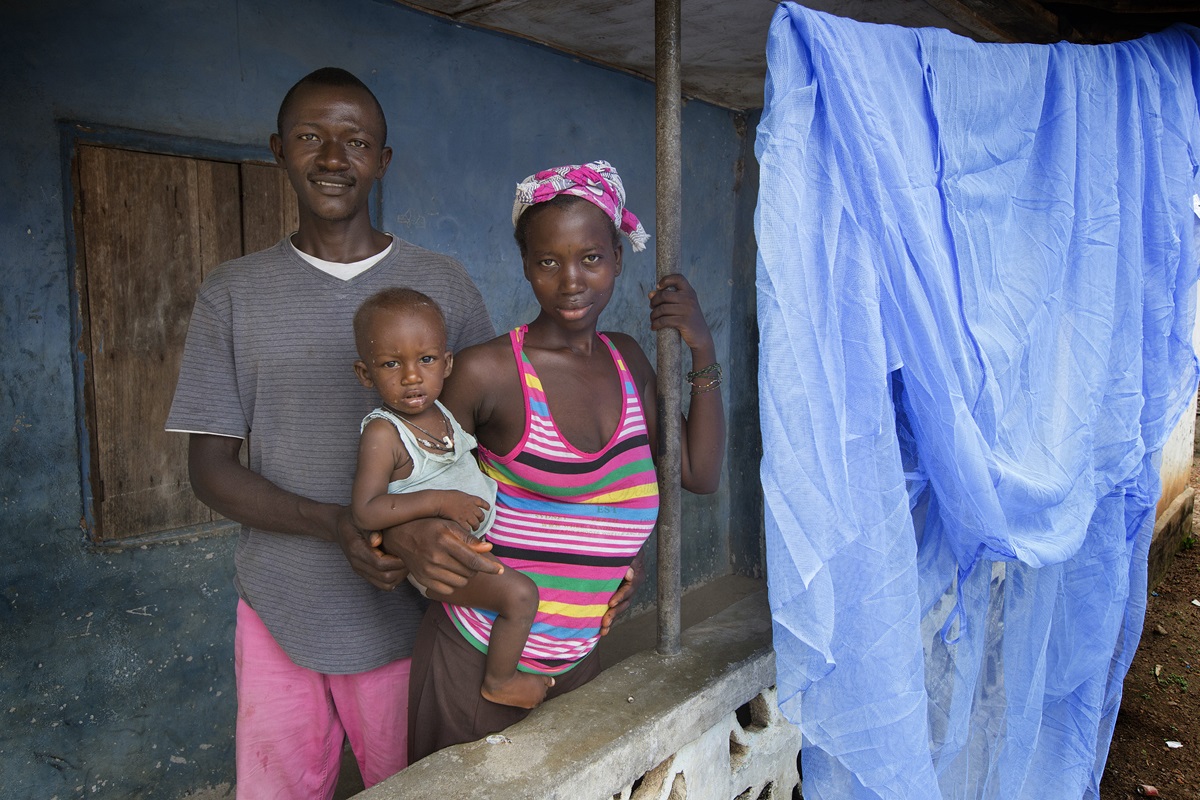
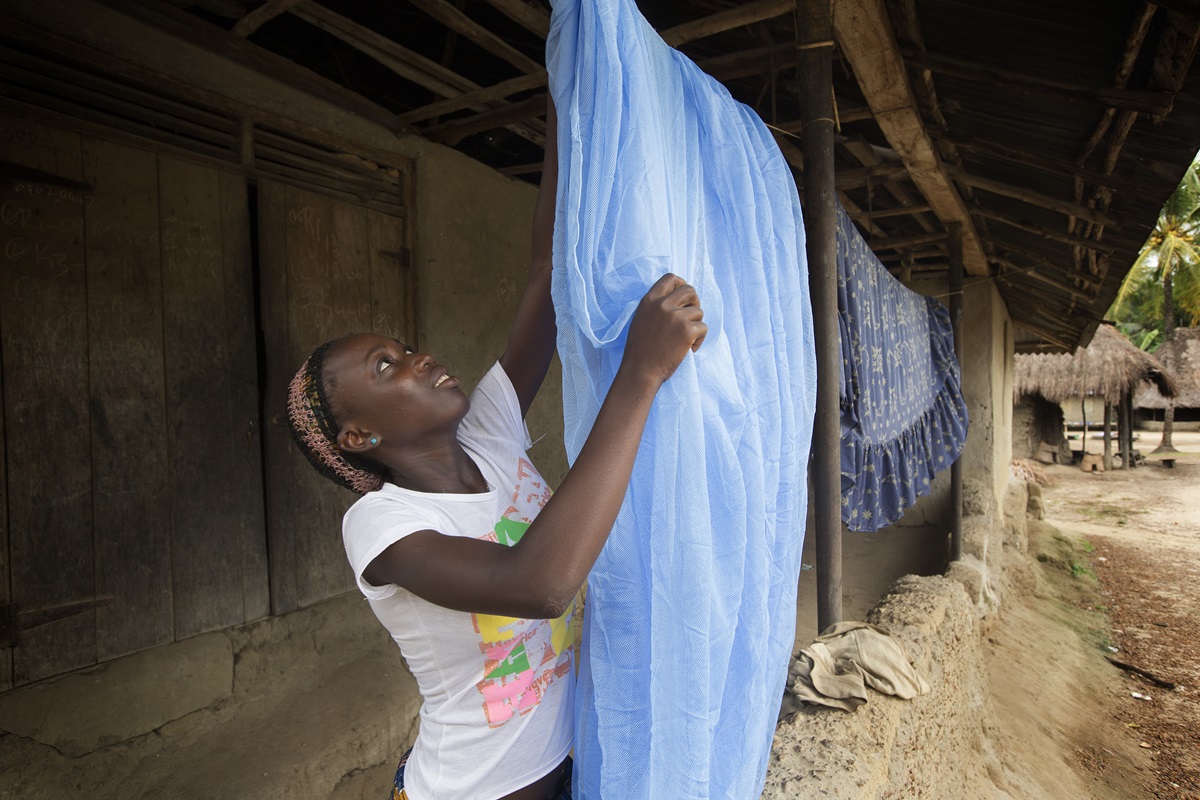
By noon on June 6 — the first day families could pick up their bed nets — hundreds of blue nets were blowing gently in the breeze from front doorsteps, trees and bushes as families followed instructions and hung their new nets outside to air out.
Video Diary: Distribution Friday
See full news coverage»
View photos from the trip»
Watch other videos»
Learn more about Imagine No Malaria»
After the nets are removed from their sealed plastic bags, it takes only a few hours for the strong insecticide smell to mellow enough for the families to hang them in their small thatched huts.
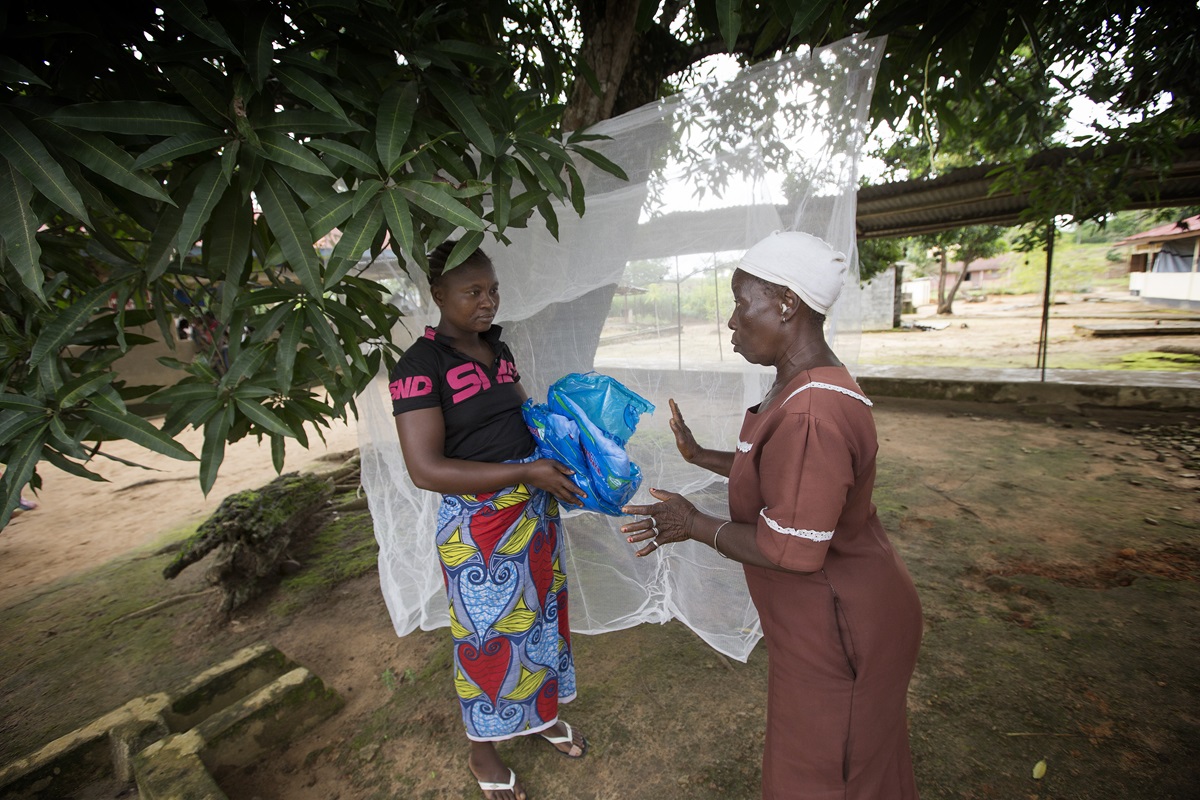
Mohamed Juana, a national monitoring and evaluation officer for the net distribution in the Bo district of Sierra Leone, gave an informal lecture to a crowd of women outside a clinic in Gerihun, one of the distribution sites for a campaign to get treated bed nets to every family in Bo.
“Hang the nets out before having morning prayers and leave them hanging until noon prayers,” Juana said.
“Bury the empty package the nets come in so children can’t get them,” he warned.
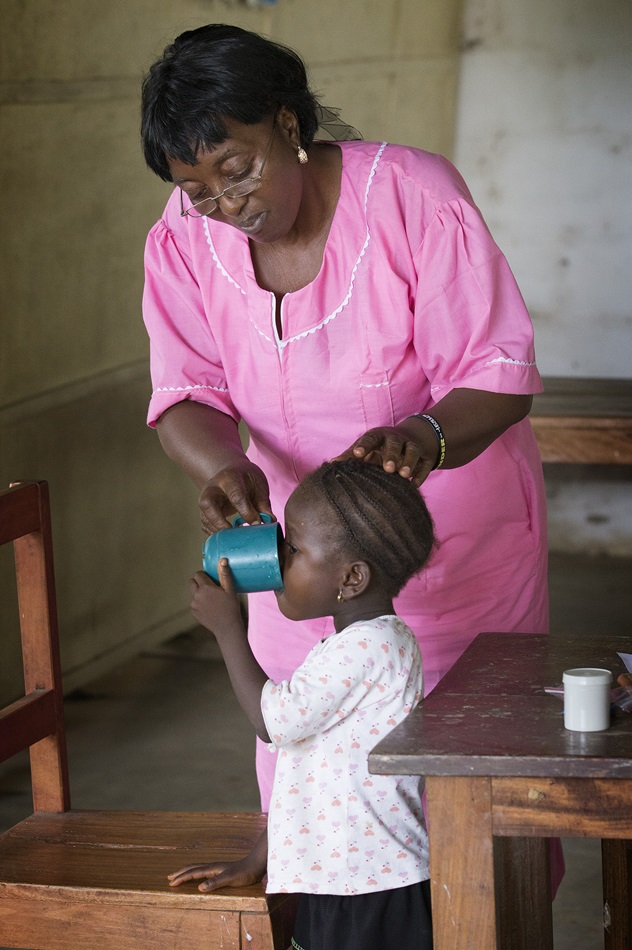
While Juana’s demonstration was going on under a tree, Veronica Jabba, a maternal and child health care worker, was giving vitamin A and de-worming medicine to howling babies under the tin-roofed clinic.
Young mothers with infants and toddlers were waiting in line for Jabba to sign their children’s medical health forms and give each baby either a blue capsule — for children six to 11 months — or a red capsule, for children 12 to 59 months.
Jabba expertly opened each little mouth and dropped in the liquid from the capsules. Then the babies were given a dose of de-worming medication she had ground up with a sip of water. Even though the babies didn’t appreciate it, the mothers clearly did. They all left the wooden shed smiling.
Getting the word out
On a busy market day, members of a drama group from the health education unit were stopping traffic with skits about getting and using mosquito nets.
“Stop buying and selling — go get your nets,” a tall, thin man in a top hat yelled into his microphone. The drama and comedy team is working with the Ministry of Health to educate people about using the nets. The team gets across the serious message with a few jokes and gigantic loudspeakers.
It seems to be working.
About 10 miles from the main highway on a winding red dirt road, health care workers were busy handing out nets at a clinic in Benduma.
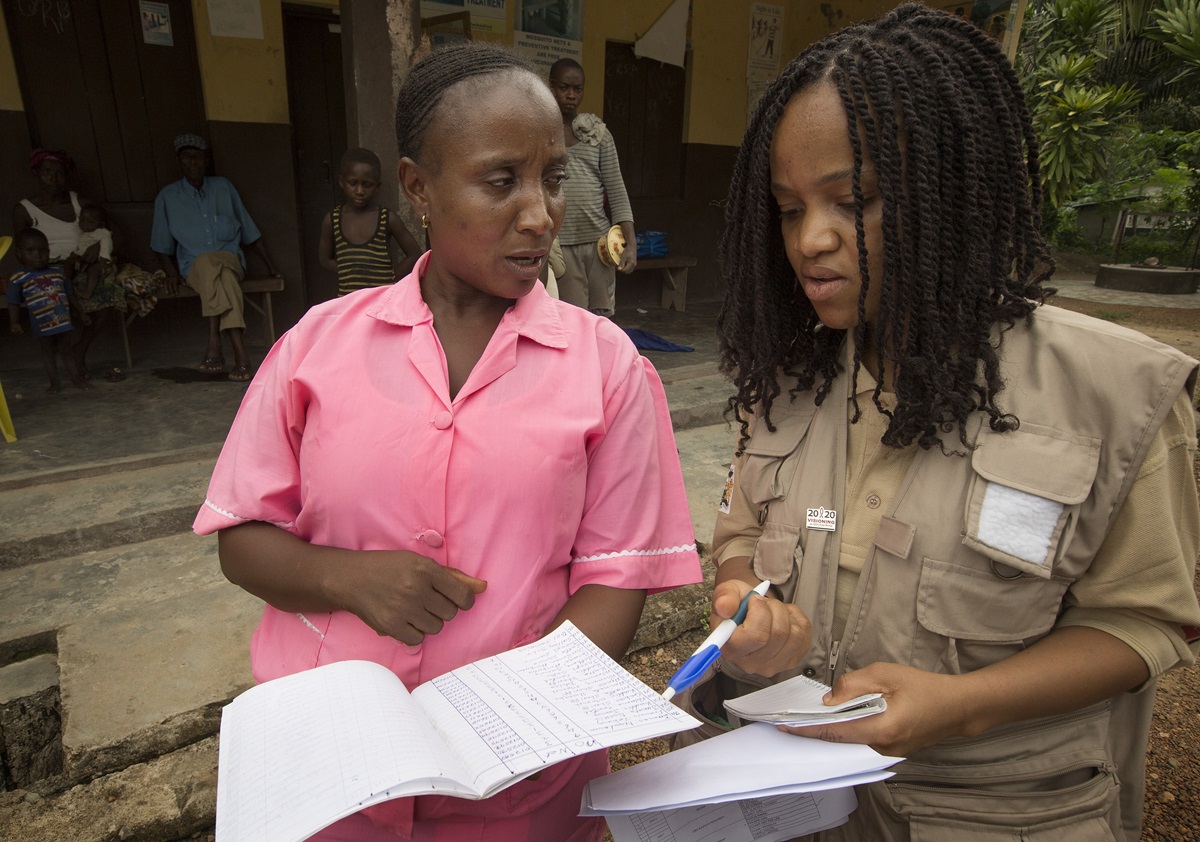
Again, Juana and Nyamah Dunbar, program manager for United Methodist Committee on Relief, quizzed Ramatuloie S. Conteh, the nurse in charge of that distribution center, on the procedures she was using to make sure the right number of nets got to each household.
Conteh brought out a small red notebook in which she had a handwritten record of about 300 households who had come through her center.
Solomon Forbie, a health care worker who lives in the area, was going door to door to give out vouchers.
“The people are very excited to get the nets that will help prevent malaria because they know mosquito bites causes malaria,” said Forbie, who has been a health care worker for nine years.
Forbie is used to giving rapid diagnostic tests to people in his community with malaria symptoms and then administering drugs to treat the disease.
Replacing old nets
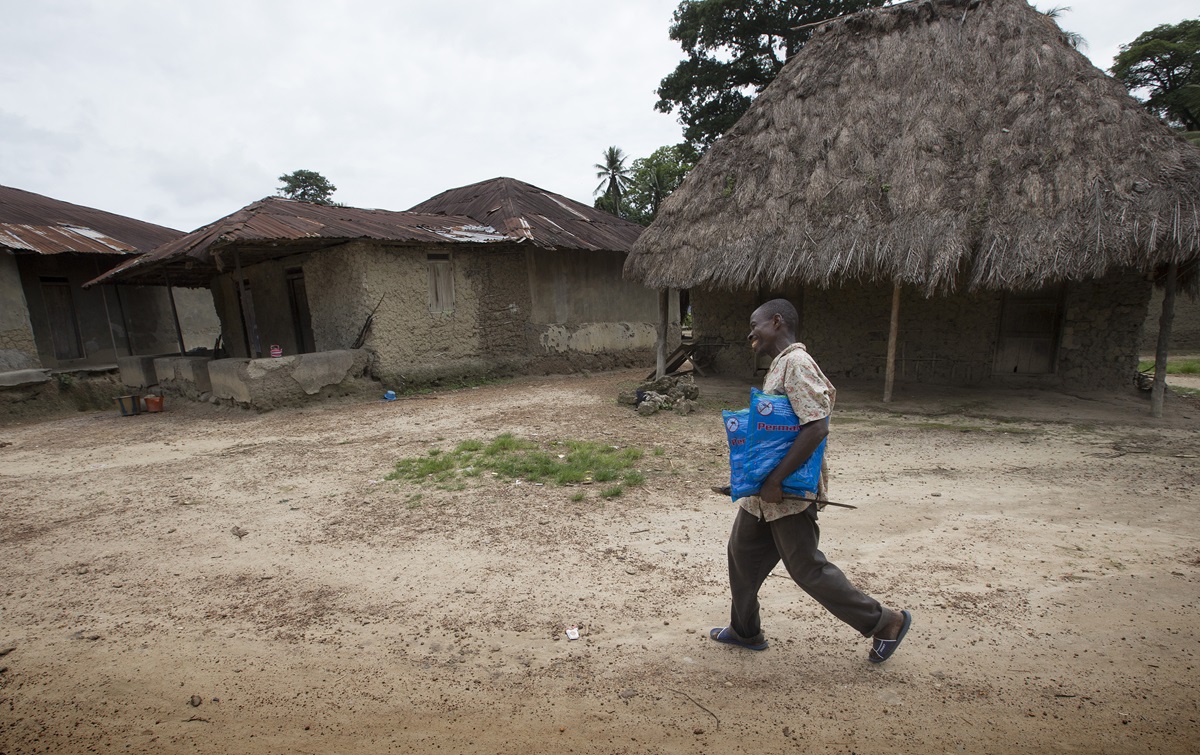
From the distribution center in Benduma, Boboro Josimba carried two blue bags down the dusty road to his home in the small village of Kpetema. He was smiling as he shook out the treated nets and hung them outside to air out.
Abdul Koromoa, another resident of Kpetema, was visiting with his neighbors who were also hanging out their new nets.
Kpetema was included in The United Methodist Church’s 2010 net distribution, but the 3-year-old nets are mostly filled with holes and at the end of their useful life as a barrier against mosquitos.
However, one family has recycled their old nets into a barrier to keep chickens out of the rice and grain.
Gilbert is a multimedia reporter for United Methodist News Service in Nashville, Tenn.
Like what you're reading? Support the ministry of UM News! Your support ensures the latest denominational news, dynamic stories and informative articles will continue to connect our global community. Make a tax-deductible donation at ResourceUMC.org/GiveUMCom.


