
For the United Methodist bishops and spouses visiting Cherokee Nation on Nov. 13, an opportunity to step outside of meetings and breathe in the brisk mountain air was probably reason enough for a field trip.
Before the bishops boarded three buses for the 45-minute ride from Lake Junaluska to Cherokee, N.C., they were briefed about the trip's higher purpose.
"There have been chapters in the history of the United States that have not beenpleasant to read, talk or even think about," said Charlotte (N.C.) Area Bishop Larry M. Goodpaster, who leads the Western North Carolina Conference, which includes Cherokee.
The visit to Cherokee was planned with a desire for church leaders to have an "immersion experience" during this week's annual meeting of the United Methodist Council of Bishops, Goodpaster said. "This came out of the Act of Repentance at the 2012 General Conference and the commitment the Council of Bishops made to be engaged in this act over the quadrennium."
This year marks the 175th anniversary of the start of the Trail of Tears, the forced removal of the Cherokee people and other tribes from their homelands in the Southeast to what is today Oklahoma, Goodpaster said. The U.S. government also celebrates November as Native American Heritage Month.
In April 2012, the United Methodist General Conference repented for the Trail of Tears and other past injustices through a ceremonial "Act of Repentance toward Healing Relationships with Indigenous Peoples" in Tampa, Fla.
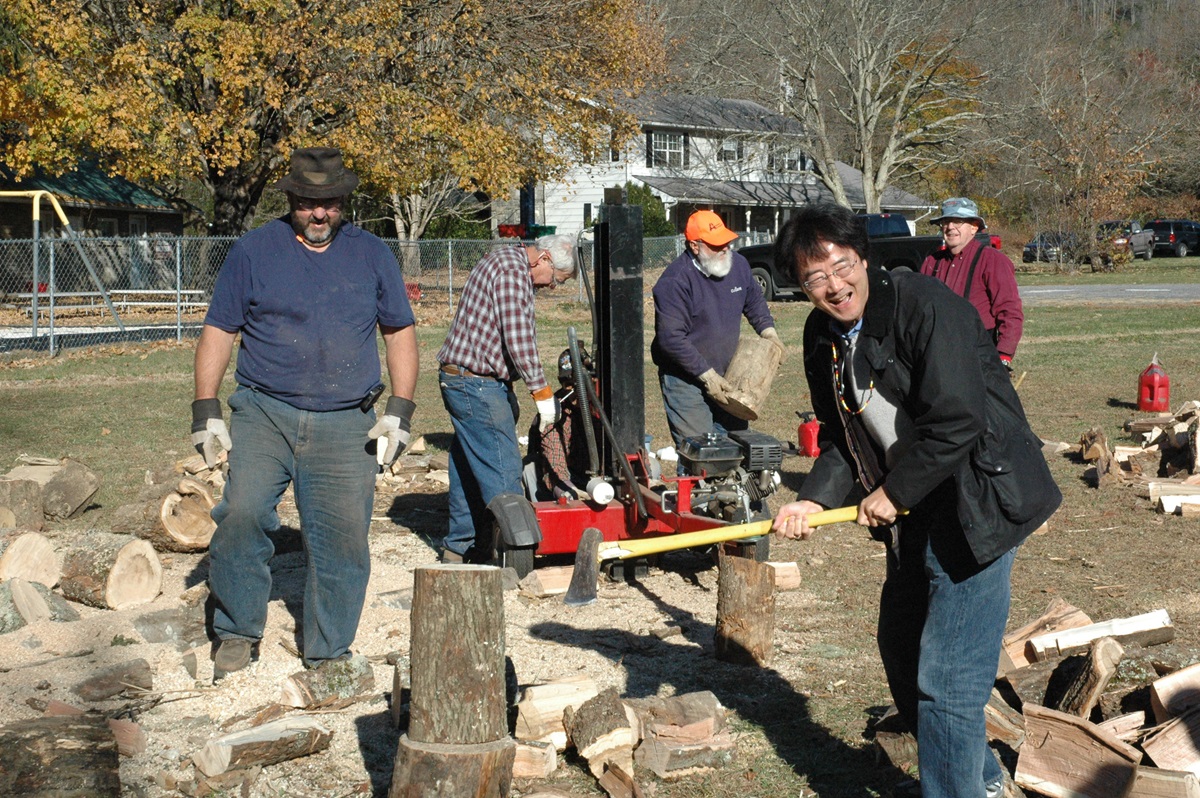
While the bishops were invited to try wielding an axe against a chunk of firewood and to sample biscuits and beans at the hearth of a 19th century log cabin, they were also reminded that North Carolina was one of the beginning points of the Trail of Tears.
"We're starting here this year, and next year, the Council of Bishops will meet in Oklahoma at the end of the Trail of Tears," Goodpaster said.
Job's tears
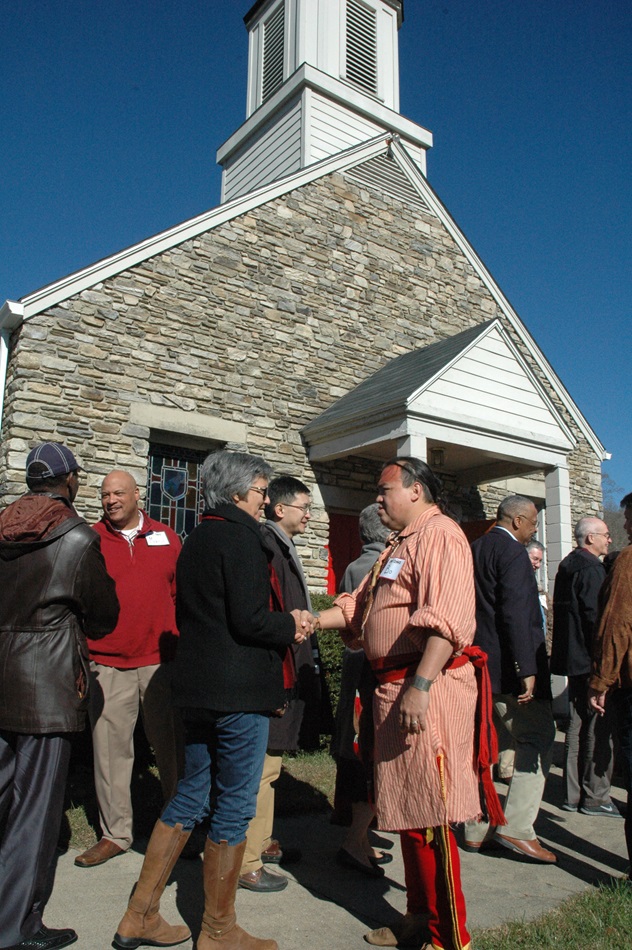
After arriving at Cherokee United Methodist Church, the visiting bishops and other guests received the gift of "Job's Tears" necklaces from the congregation.
Dressed in native clothing and red paint, church member Bo Taylor explained that the necklaces were made from corn beads representing the tears of Native Americans forced to leave their homes in the 1830s. Thousands died from starvation, exposure, and disease on the walk to Oklahoma.
"Everywhere they cried, their tears left a seed," he said. "The seeds are the color of misery. They're gray and dark and sad."
Cherokee United Methodist Church was founded in 1830 but was "decimated" eight years later when its members were forced to leave, said the Rev. John Ferree, pastor of the Cherokee congregation.
Today, Cherokee United Methodist Church has 15 to 30 in worship attendance, hosts 20 mission teams each year, and provides firewood, food, clothing, and other ministries for an impoverished community, said Marcus Robinson, the church's missions coordinator.
The visiting bishops stood to applaud one longtime church member, Jerry Wolfe, recently honored as the local tribal council's "Beloved Man." He is the first to receive the title in 200 years, Taylor said.
Wolfe presented baskets of honeysuckle and white oak to Goodpaster and to Germany Area Bishop Rosemarie Wenner, president of the Council of Bishops.
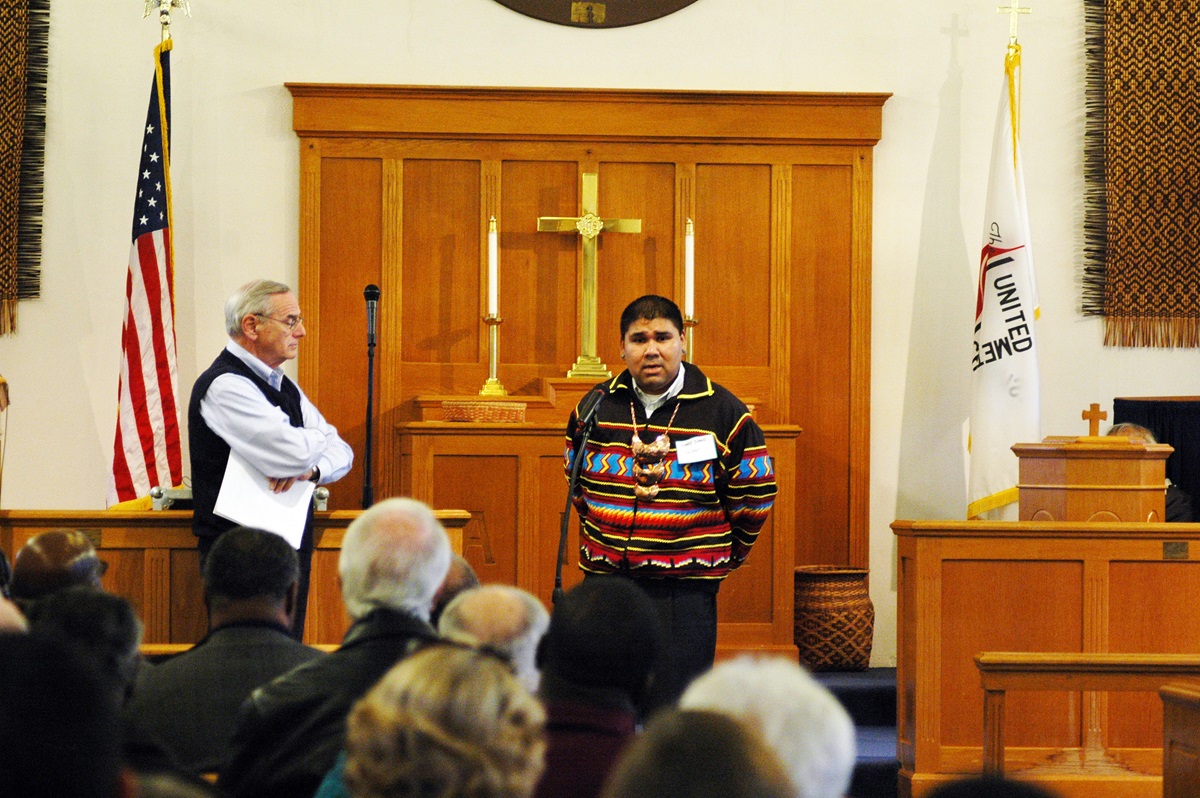
The bishops also heard from the Rev. Glen Chebon Kernell, executive secretary for the Native American and Indigenous Ministries at the United Methodist Board of Global Ministries.
"This work is just beginning," said Kernell, who also serves as Council of Bishops coordinator for the Act of Repentance. "What will our churches and annual conferences do to show a true act of repentance?"
Before contact with European people, Native Americans numbered more than 10 million, Kernell said. "During the time of removal those people dwindled to just over 240,000."
He challenged bishops and churches to "choose to be a catalyst of healing and reconciliation," rather than "perpetuating and continuing to push a people to the point of extinction."
'Carry on'
Stepping outside the Cherokee United Methodist sanctuary, the bishops strolled the church grounds where a team of 50 was chopping firewood.
For the past 21 years, First Broad Street United Methodist Church of Kingsport, Tenn., has organized volunteer teams to help keep elderly Cherokee residents warm over the winter, said Danny Howe, mission director. The team included members from other churches, conferences, and denominations.
Also on the church grounds, bishops visited a restored 1847 log-cabin parsonage, where Ferree said "circuit riders once gathered around the fire" and "14 members of the pastor's family slept."
The bishops concluded the afternoon outing with a bus tour of the area and a visit to the Museum of the Cherokee Indian.
"This was fabulous, just being with the community, meeting the people and hearing their stories," said Wisconsin Area Bishop Hee-Soo Jung. Noting the large Native American population in his own conference, Jung said that United Methodists "have got to work together on acts of repentance."
As he was departing the museum, West Ohio Area Bishop Gregory Palmer said he was "struck by the depth of atrocities of forced removal.
"But what I found poignant was the perseverance and resilience of the people to carry on," he said.
*Spence is the editor of The Call at the Holston Annual (regional) Conference.
News media contact: Maggie Hillery, Nashville, Tenn., (615) 742-5470 or[email protected].
Like what you're reading? Support the ministry of UM News! Your support ensures the latest denominational news, dynamic stories and informative articles will continue to connect our global community. Make a tax-deductible donation at ResourceUMC.org/GiveUMCom.


